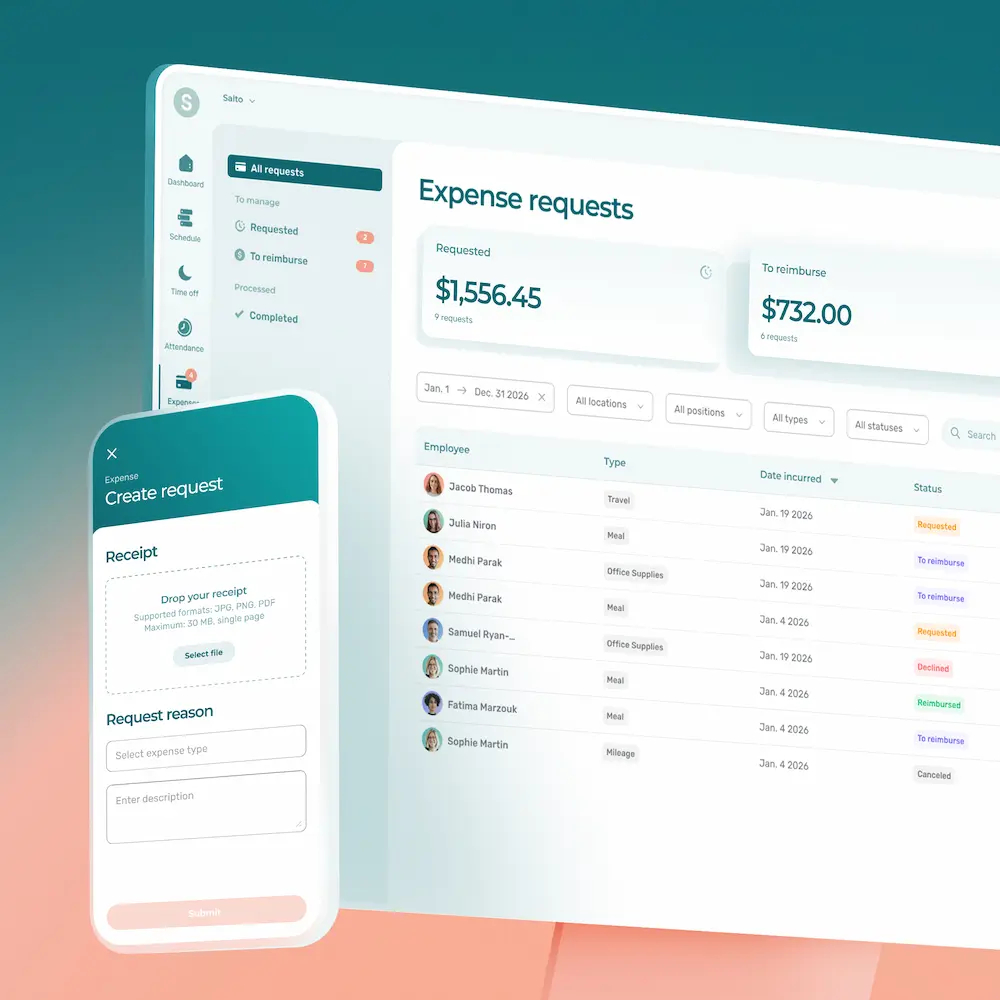










A per diem is a fixed daily amount an employer pays an employee who is travelling for work, meant to cover the expenses of a day on the road, such as meals and incidental costs. It is set in advance and paid as a flat amount, without the employee breaking down each expense receipt by receipt. It differs in this way from an expense report, which reimburses a real expense backed by proof of purchase.
What is a per diem used for?
A per diem covers an employee’s travel costs through an amount set per day, rather than by reimbursing each expense at its exact cost as an expense report does. This difference affects the tax treatment, covered below.
The employer chooses between the two methods: paying a flat allowance to keep tracking simple, or reimbursing actual expenses against receipts. The two methods cannot be combined for the same expense.
How is a per diem set?
In Canada, the Canada Revenue Agency does not set fixed per diem amounts for private-sector employers. The business sets its own per diem in its expense policy, as long as the amount stays reasonable given the expenses the employee is expected to take on during the trip.
The Canada Revenue Agency does provide a reference point for the meal portion. It generally considers a meal allowance of up to $23 per meal, taxes included, to be reasonable. This figure is an administrative reference, not a legislated cap: a higher amount can still be reasonable where meals cost more in the location visited.
For lodging, there is no reasonable flat amount set on a general basis for the private sector. The employer bases the allowance on the lodging costs it expects the employee to take on.
Is a per diem taxable?
As a rule, a reasonable per diem is not taxable. The employee receives an amount meant to cover work expenses; it is not part of their pay. It therefore appears neither on their T4 slip, the federal year-end statement, nor on their RL-1 slip in Quebec.
Reasonableness is the central condition. If the allowance is not reasonable, it becomes taxable and its full amount is included on the employee’s tax slips
Two situations make a per diem taxable. An amount that clearly exceeds what an employee would spend in the same circumstances is treated as income. A flat cash amount paid with no link to a real business trip is also taxable.
Do you need to keep receipts for a per diem?
The flat rate frees the employee from reporting on each expense, but it does not free the employer from documenting the trip. The employer keeps proof of the travel: the dates, the location, and the business purpose of the trip. This proof establishes that the per diem covers a real trip, which is the condition for it to stay non-taxable.
A written expense policy sets out the amounts paid, the situations that qualify, and the details to record. An expense management tool brings these details together in one place. To keep employee claims consistent, a ready-to-use expense report template gives a starting point.