








A business expense is a cost a business incurs to earn income: buying supplies, commercial rent, a work trip, or a share of vehicle costs. It can be deducted from the business’s taxable income if it is reasonable and tied to the activity. The Canada Revenue Agency sets it apart from a personal expense, which is never deductible.
What is a business expense?
A business expense is a cost incurred to earn business income. This includes one-time purchases like work tools and recurring costs like rent.
To be deductible, an expense has to meet two conditions. It has to serve the earning of income rather than a personal purpose and it has to stay reasonable in relation to the business activity.
When an expense serves both work and personal life, only the business portion is deductible. For example, a mobile phone used half the time for work qualifies for half the amount.
Business expenses and employment expenses are not the same thing. A business expense is incurred by a business or a self-employed person for their activity. An employment expense is paid by an employee to hold their position, and the employee can deduct it under stricter conditions, covered below.
What are examples of business expenses?
These are the expenses most businesses incur and can deduct, in full or in part:
- Wages, benefits, and employer contributions
- Commercial rent, electricity, heating, and internet
- Supplies and small equipment
- Advertising and marketing
- Business insurance
- Accounting, legal, and banking fees
- Vehicle costs, for the portion used for business
- Business travel: transportation, accommodation, and meals
- Subscriptions to software used in operations
What types of expenses can a business deduct?
There are two categories of deductible expenses, based on how long their usefulness lasts.
Current expenses cover the running of a single year: wages, rent, supplies, insurance, advertising, or office costs. The business deducts them in full in the year it incurs them.
Capital expenses buy a lasting asset, such as equipment or a vehicle. The business does not deduct them all at once: it claims a portion each year through capital cost allowance.
Some expenses carry their own limit. Meal and entertainment costs are generally only 50% deductible. That 50% applies to the lesser of the two following amounts: the amount actually paid, or an amount that is reasonable in the circumstances. A few cases fall outside the limit, notably meals billed to a client and those provided at an event for all staff.
Is a business expense taxable for the employee who pays it?
No. An expense reimbursement is not taxable for the employee, as long as it matches a real expense incurred for work.
For the business, the expense is not income: it lowers taxable profit. For the employee, everything depends on how the money comes back to them.
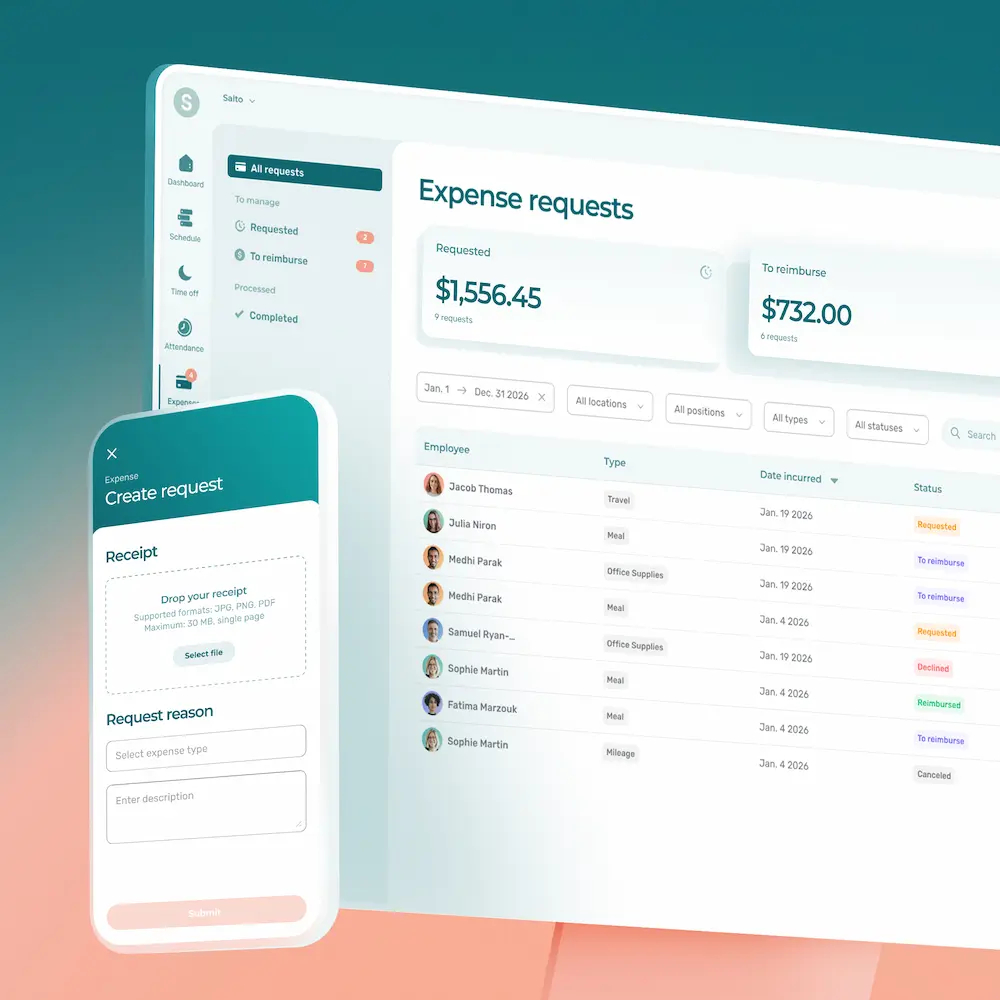
An employee who pays a work expense that the employer reimburses does not receive extra pay. The reimbursement stays out of their income and does not appear on their T4 slip. A reimbursement that goes beyond the real expense, or that covers a personal purchase, is added to taxable income. The reimbursement usually goes through the employee’s expense account.
How long do you have to keep supporting documents?
A business has to keep its accounting records and supporting documents for six years after the end of the tax year they relate to. The Canada Revenue Agency can ask for these documents throughout that period.
A receipt or invoice has to show the date, the amount, the supplier, and the nature of the purchase. A credit card statement on its own is generally not enough. Expense management software gathers employee receipts as requests come in, with each approved amount staying attached to its supporting document.