








Pay Transparency Policy Template
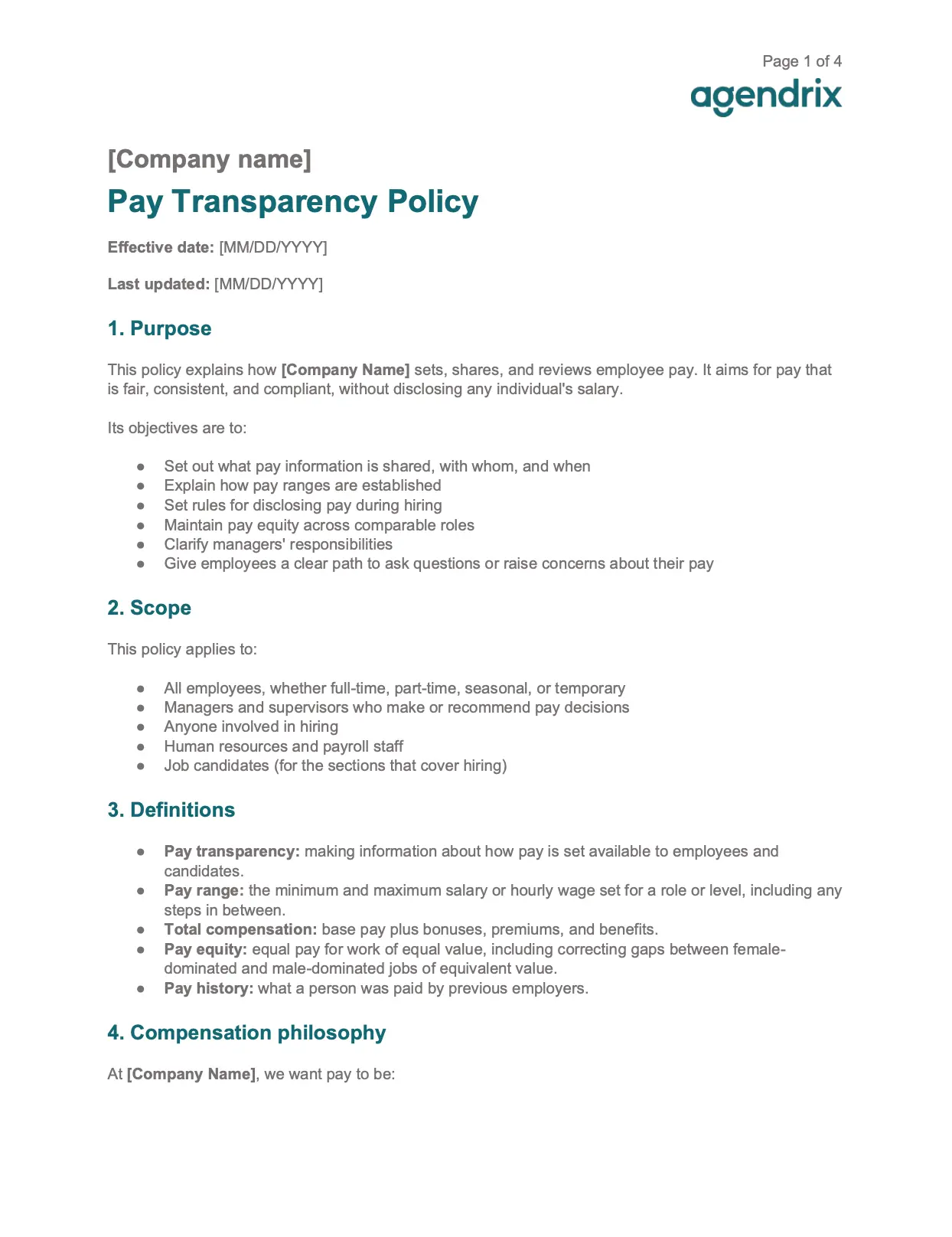
This pay transparency policy template helps you explain how salaries are set, communicated, and reviewed. It covers pay scales, salary disclosure in job postings, pay equity, the role of managers, and the steps for asking a question about compensation.

To which address should we send your resource?
What is a pay transparency policy?
A pay transparency policy is an internal document that explains how a business sets, shares, and reviews pay. It spells out what pay information employees and candidates can see (pay ranges, raise criteria, salary ranges in job postings) and what stays confidential, such as each person’s exact pay. Unlike a general compensation policy, it also sets the rules for sharing pay information.
What should a pay transparency policy include?
A solid pay transparency policy usually covers:
- The company’s compensation philosophy
- How pay ranges are set
- What pay includes (base pay, bonuses, premiums, benefits)
- Rules for including pay in job postings
- What’s shared publicly, internally, and on request
- A pay equity commitment
- Managers’ responsibilities
- How employees can raise questions, and protection against retaliation
Is pay transparency mandatory in Canada?
It depends on the province. British Columbia, Prince Edward Island, Ontario, and New Brunswick require pay information in job postings. Newfoundland and Labrador has passed a law, but its pay transparency provisions aren’t in force yet. Nova Scotia bans salary history questions but doesn’t require pay in postings. Quebec has no pay transparency law, only a separate pay equity obligation for businesses with 10 or more employees. For a province-by-province breakdown, see our overview of pay transparency in Canada.
What does Ontario’s pay transparency law require?
Since January 1, 2026, Ontario employers with 25 or more employees must include the expected pay or a pay range in publicly advertised job postings. When a range is used, it can’t exceed $50,000 per year. Employers must also follow up with candidates they interviewed within 45 days of the interview.
How can Agendrix help with pay transparency?
Agendrix’s HR software centralizes your employees’ hourly rates, rate history, and HR documents in one place. That makes it easier to spot gaps between comparable roles and keep your pay ranges up to date at each review.