

Key takeaways
- Manage shift swaps with clear rules: deadlines, manager approval, limits on allowed swaps, and fairness between coworkers.
- Centralize everything in employee scheduling software: post open shifts, automate approvals, keep the schedule up to date, and communicate with the team.
- Monitor payroll and compliance (overtime, local rules in Canada) by linking schedules to time tracking and payroll to prevent errors.
- Gain more flexibility for employees, reduce last-minute emergencies for managers, and improve retention and customer service levels.
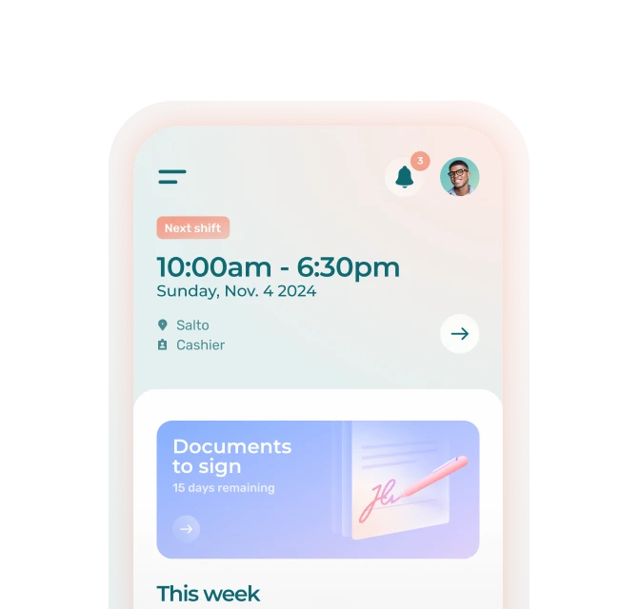
- Employee scheduling software: a tool like Agendrix streamlines swaps, documents changes, and reduces conflicts.
Swapping shifts at work is common in industries like restaurants and healthcare. But without clear guidelines, shift swaps can quickly lead to real issues such as staff shortages.
In addition to helping employees manage their personal commitments, shift swaps provide an effective way to cover unexpected absences and keep operations running smoothly.
But when swapping shifts is poorly managed, it can lead to schedule gaps, team conflicts, and even a drop in service quality. It can also place extra workload on employees and harm their overall well-being.
As a manager, your role is to create the right conditions to ensure that shift swapping runs smoothly.
Shift Swaps Can Take Many Forms
There are several types of shift swaps, including:
A swap between two employees: Two employees agree to trade shifts on a one-time basis.
🏄♀️ Mary takes Jonathan’s Thursday night shift, and Jonathan takes Mary’s Sunday morning shift.
Giving away a shift (no exchange): An employee gives up a shift without asking for one in return, often to free up personal time.
🏄♀️ Emily can’t work on Friday and asks Chantal to cover for him, without taking another shift back.
Picking up an extra shift: An employee volunteers to cover an additional shift that was posted at the last minute.
🏄♀️ Vince picks up a Saturday night shift to cover for a sick coworker.
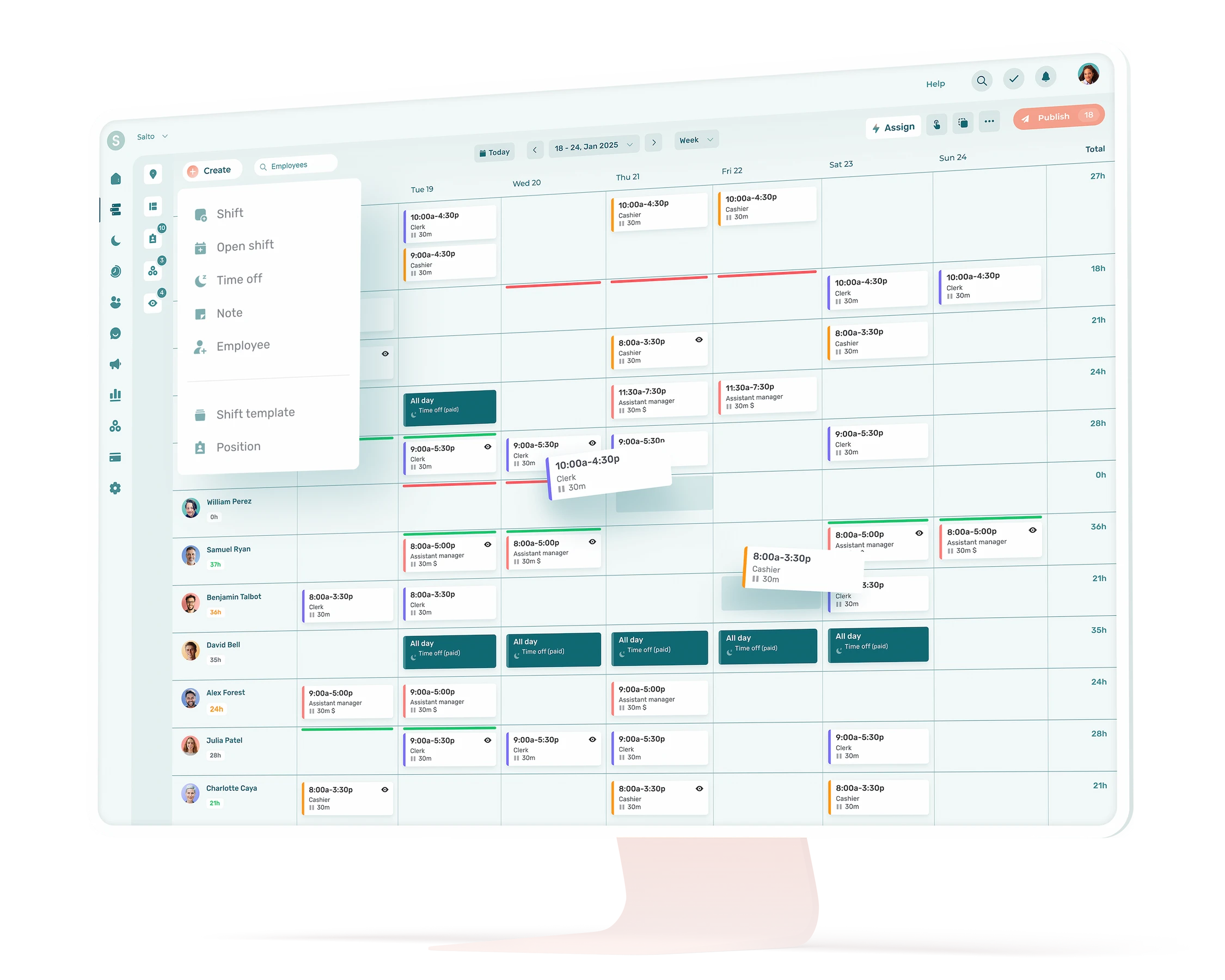
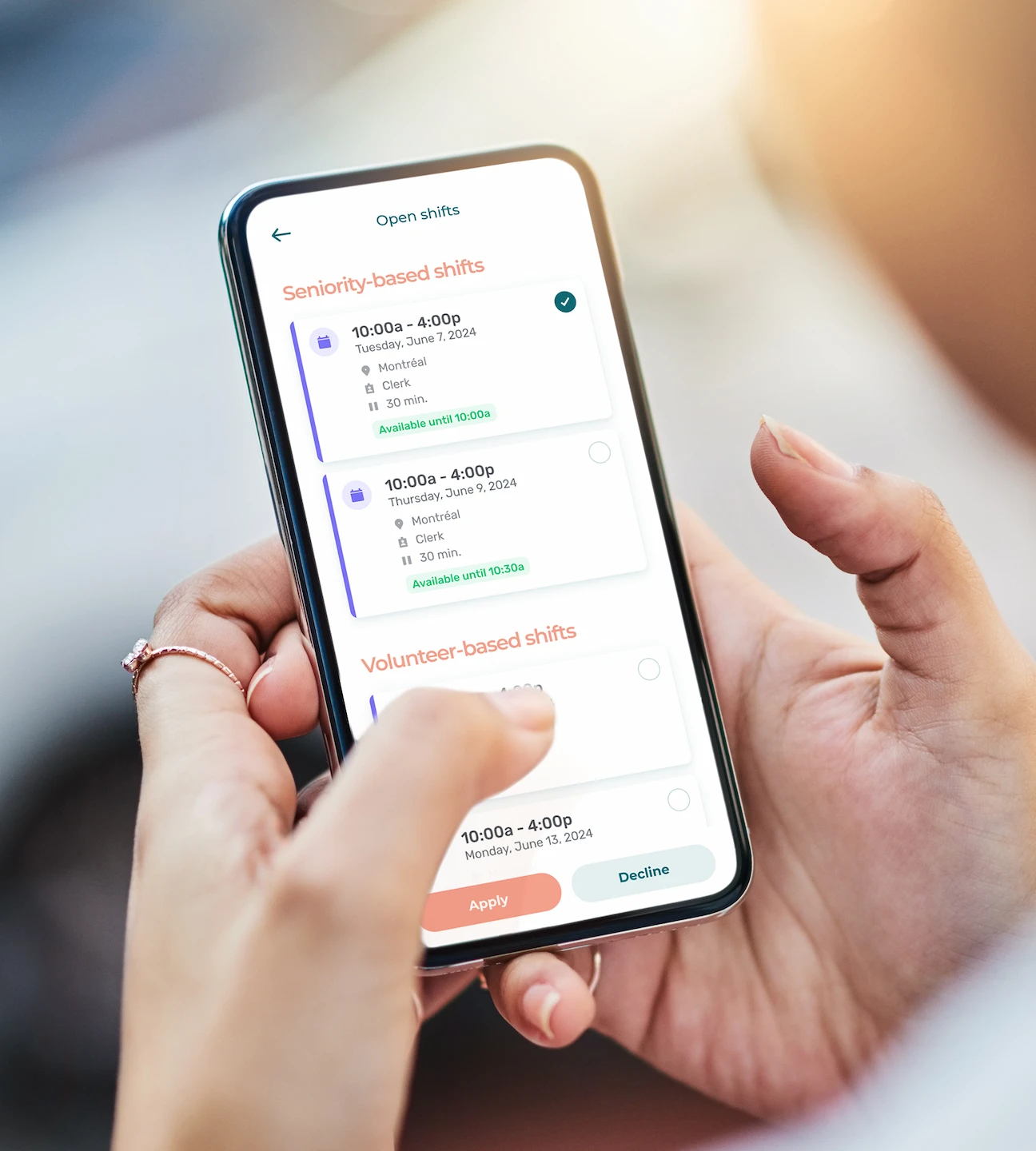
Open shifts: Managers create these shifts as needed but don’t assign them to anyone. They post them on the schedule, and eligible employees can assign themselves if they wish.
🏄♀️ Farrah is a nurse at a clinic that posts open weekend shifts. She can choose to claim one if it becomes available.
Cross-role shift swap: Two employees with compatible skills swap shifts even though they usually work in different roles.
🏄♀️ Jason normally works as a floor clerk but has also been trained as a cashier. William can also work in both positions. They agree to swap a cashier shift and a clerk shift.

Why Allow Shift Swaps?
Allowing shift swaps is an important step for managers who want to offer flexible scheduling. When properly managed, swapping shifts at work can become a real performance driver for your business.
Still unsure about putting this practice in place? Here’s why more and more managers are choosing to adopt shift swapping.
Cover Last-Minute Absences More Easily
When an employee can’t make it to work, the option to swap their shift increases the chances it will be covered in time, without requiring your last-minute intervention. This helps reduce unexpected absences.
Make the Most of Your Resources
A shift swap still means the shift is worked by one of your employees, instead of being absorbed by a manager or the rest of the team. This ensures optimal use of your available resources.
Empower Your Employees
By giving employees some control over scheduling, they become more proactive and accountable for showing up to work. This lightens your workload as a manager and encourages individual responsibility.
Boost Team Motivation
Offering more flexible schedules allows employees to better balance work with personal commitments. This strengthens their engagement, motivation, and overall job satisfaction.
Improve Employee Retention
Schedules that adapt to employees’ needs are a key retention factor, especially in high-turnover industries. Flexible scheduling helps keep your team loyal.
Foster Team Cohesion
The ability to swap shifts encourages mutual support and teamwork when an employee is ill or has a family emergency. This contributes to a more positive workplace atmosphere.

5 Common Shift Swapping Mistakes
Shift swaps aren’t a problem in themselves. More often, it’s management mistakes that make the process messy. Here are 5 common shift swapping mistakes managers make, and how to avoid them with ease.
Not Establishing Clear Rules
Ambiguity is the enemy of organization. There’s nothing worse than unclear responsibilities or vague instructions. Without clear rules, you open the door to confusion among employees and risk unauthorized shift swaps taking place.
❌ Two hotel front desk clerks swap a shift without informing their manager. The result: neither shows up, and the manager has to step in at the last minute.
✅ To avoid situations like this, create a written policy that outlines clear guidelines for shift swapping: required notice, each person’s responsibilities, the approval process, and any exceptions that may apply.
9 Examples of Fair Rules for Shift Swapping
Prevent conflict with rules that are both fair and easy to understand. Here are a few examples:
- Limit last-minute swaps
Ex.: Shift swaps must be arranged at least 24 hours in advance, except in the case of an approved emergency or unplanned absence. - Set a maximum number of swaps per month
Ex.: An employee cannot swap more than 5 shifts per month to avoid abuse. - Require reciprocity in frequent swaps
Ex.: If two employees often swap shifts with each other, the swaps must be fair (it can’t always be the same person getting the “better” shifts). - Ban swaps on critical shifts
Ex.: No swapping is allowed for weekend evenings or peak periods like the holiday season, unless special approval is given. - Allow swaps only between shifts of equal length
Ex.: An 8-hour shift cannot be swapped for a 4-hour shift unless an exception is approved (to prevent unnecessary overtime). - Reject swaps that unbalance the team
Ex.: A senior server cannot swap shifts with a junior if it would affect service quality. - Create a “no swapping to avoid tasks” rule
Ex.: If someone always tries to swap out of cleaning or closing shifts, the manager can deny the request. - Prioritize fairness over seniority
Ex.: Senior employees do not automatically get approval for swaps if it would undermine a fair distribution of shifts. - Ensure balance across shift types
Ex.: Each employee must keep a fair share of day, evening, and weekend shifts.
Some of these examples may resonate more than others depending on your industry and business reality. Use them as inspiration to create rules that make sense for your team.
Not Using the Right Tools to Manage Shift Swaps
Shift swaps require a certain level of logistics. Without a proper framework to manage them, both you and your employees will struggle to stay on track. Miscommunication. Uncovered shifts. Two employees showing up for the same shift. You name it.
❌ A restaurant manager who relies on text messages to coordinate swaps ends up with two bartenders showing up for the same lunch shift. The result: unnecessary tension in the team that could have easily been avoided.
✅ Use a dedicated digital tool to centralize shift swapping, including work schedules, employee availability, and communication. This ensures that every shift swap is managed in a transparent and well-documented way.

Overlooking Payroll and Legal Compliance Issues
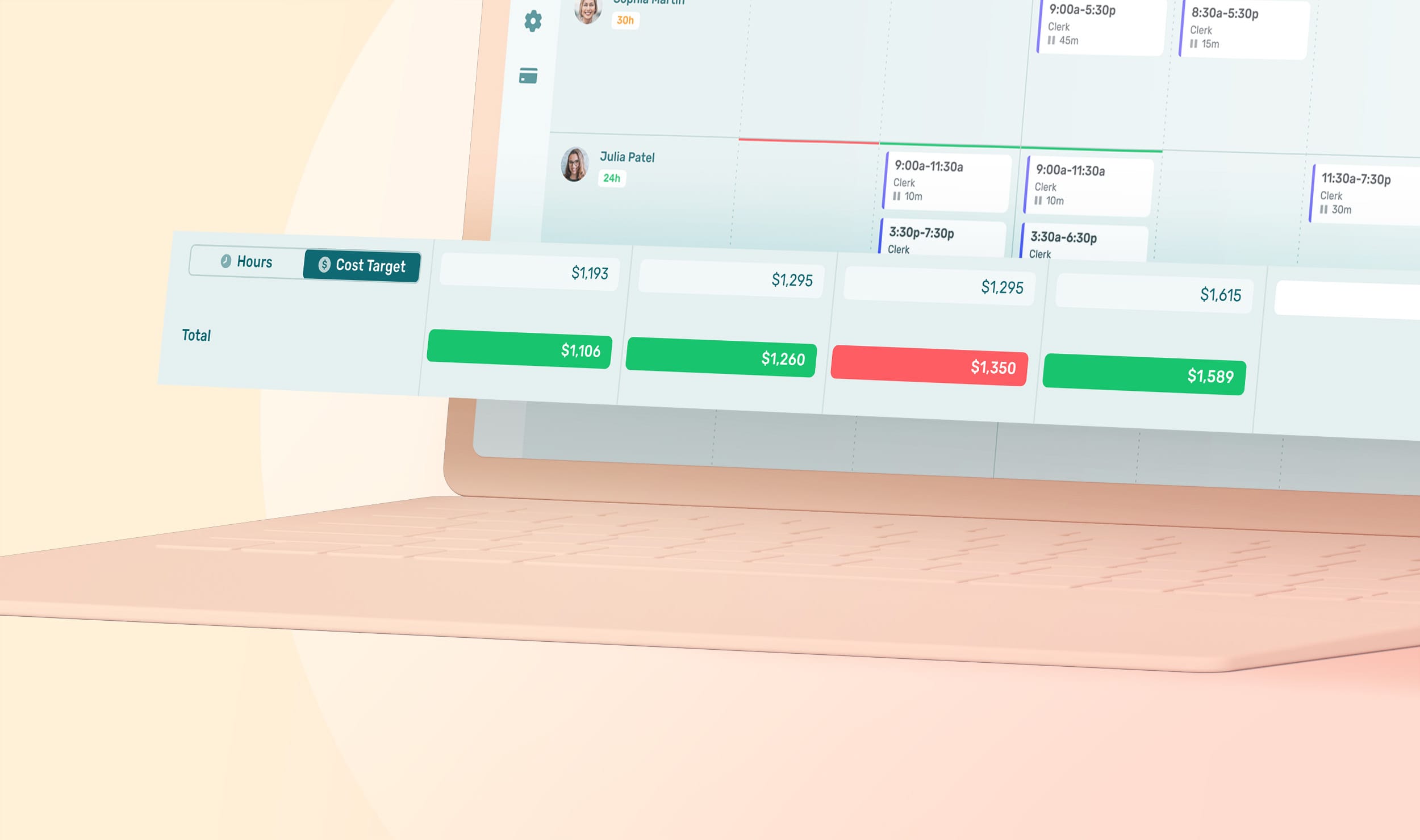
Shift swaps can have a direct impact on payroll and compliance. Whether it’s unplanned overtime or accidental breaches of labor laws, the costs can be significant for employers.
❌ A pharmacy technician picks up an open shift, but their total work hours aren’t properly updated. Although they end up working overtime, their additional hours aren’t paid at double time as required. The result: they file a complaint with labor standards authorities.
✅ If you use scheduling software that allows employees to swap shifts directly in the schedule and integrates with payroll, staying compliant with local regulations becomes much easier. You’ll be able to track overtime accurately and set rules to avoid crossing legal thresholds.
Neglecting Communication
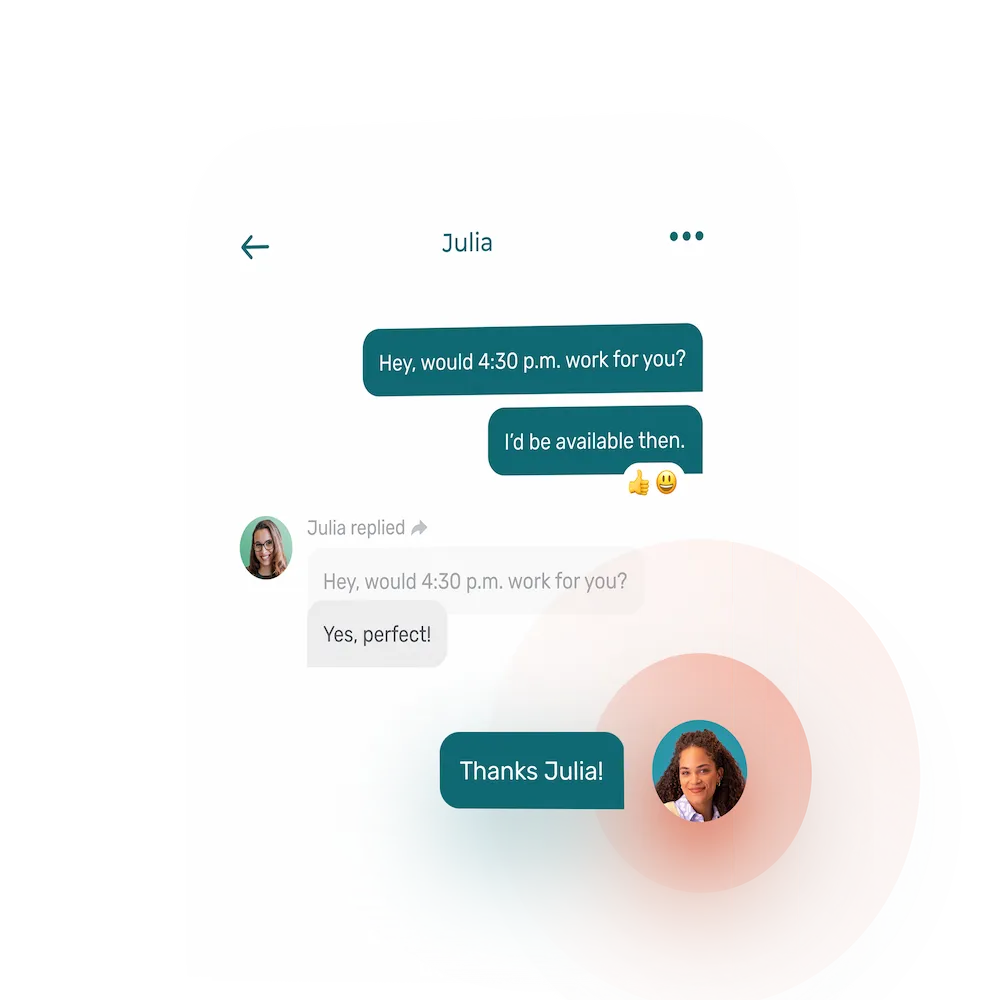
Clear communication goes hand in hand with successful shift swapping. If messages are only partially shared, sent inconsistently, or not at all, employees may become frustrated. Some may even feel a sense of unfairness if it seems like certain team members are getting privileged information.
❌ In a senior living facility, a manager texts the team about an open shift but forgets to include three employees in the message. One caregiver finds out too late that she could have taken the shift. Frustrated, she feels management is favoring her coworkers.
✅ Whether it’s informing the team about rules, announcing schedule changes, sharing open shifts, or handling last-minute replacements, good communication is essential for shift swaps to run smoothly.
Leaving Shift Swaps Unsupervised
Flexibility should never come at the expense of structure. The last thing you want is unqualified or undertrained employees showing up for a busy shift.
❌ In a restaurant, a cook swaps their Thursday evening shift, known to be one of the busiest, with a less experienced coworker. The result: slower service and a negative impact on meal quality.
✅ Set up an approval system where managers validate shift swaps by checking skill compatibility. Scheduling software can help automate this process by allowing only employees with the right qualifications to swap or claim shifts.
Your Checklist for Managing Shift Swaps Effectively
Here’s a 10-point checklist to help you successfully implement shift swaps within your team.
- Put your shift swapping rules in writing: Create clear rules that specify who can swap with whom (based on roles, training, or certifications), how requests should be submitted, and how they must be approved. The clearer and more detailed your rules, the less chance there is of misunderstandings or problems.
- Present the rules to your team: Take 10 minutes in a meeting to explain them, then post the rules near the schedule or in your scheduling software. You can also share them in the team’s communication tool.
- Limit last-minute swaps: Set a clear rule: for example, all requests must be made at least 48 hours in advance, except in the case of emergencies.
- Decide whether manager approval is required: In your business, should no swap take place without a manager’s final say? Or are you comfortable letting employees swap shifts on their own in certain situations?
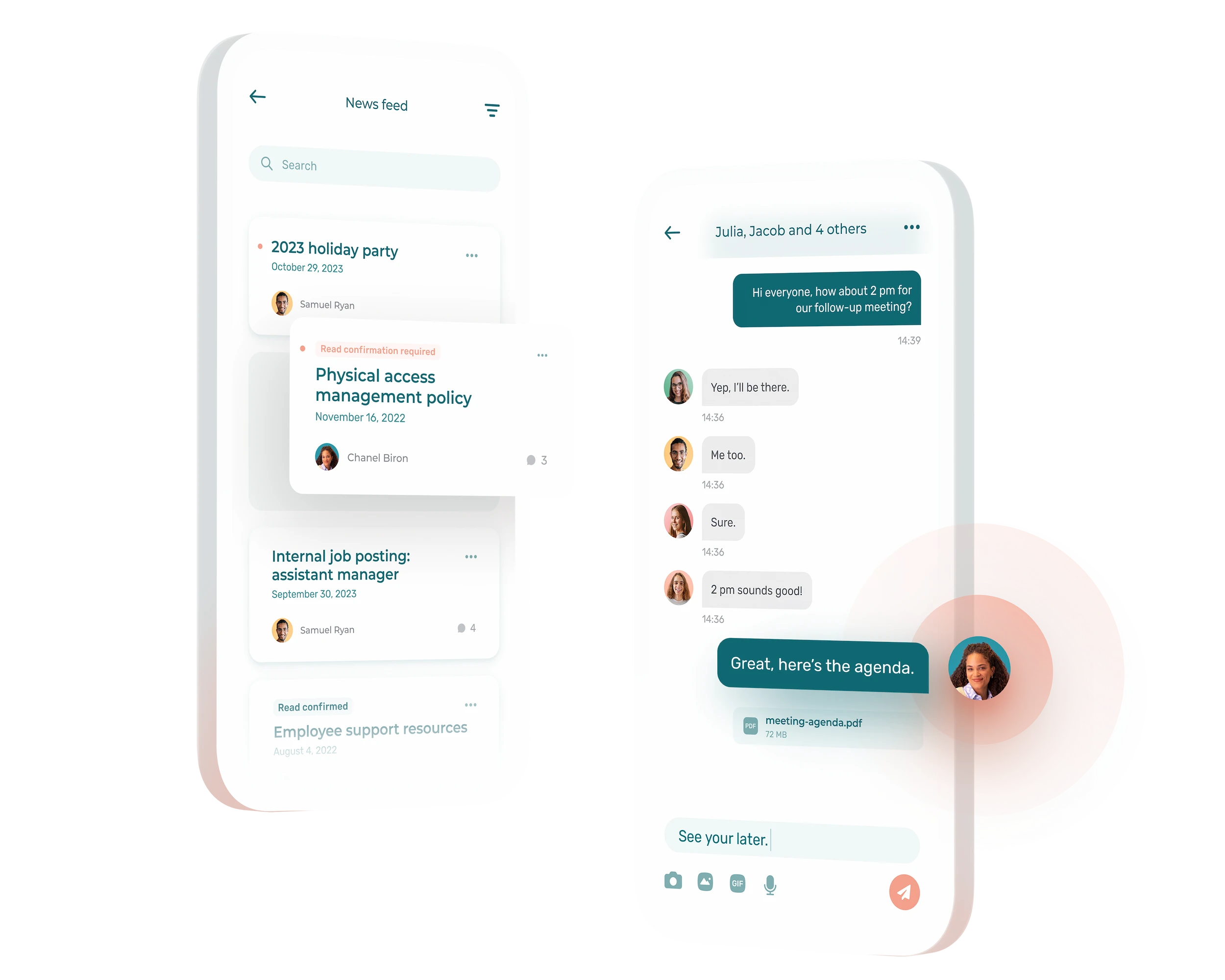
- Use a tool that centralizes everything: Forget about text messages and Facebook group chats. Use scheduling software to manage swaps easily, avoid mistakes, and keep a complete history of all changes.


- Configure permissions in your scheduling tool: Make sure employees only swap into roles they’re qualified for. For example, a clerk shouldn’t take a cashier shift unless they’ve received the proper training. Allow employees to submit swaps, but keep final approval rights if you prefer.
- Watch out for unplanned overtime: A swap can quickly push someone over full-time hours without you realizing it. Make sure shift swaps don’t accidentally trigger unplanned overtime. Scheduling software can alert you if an employee exceeds the desired number of hours or is scheduled for overtime.
- Keep the schedule up to date: As soon as a swap is approved, update the schedule and notify your employees. If you use scheduling software, this will happen automatically.
- Keep a record of all swaps: Track who is swapping shifts frequently, and why. If one employee is requesting swaps too often, it may be a sign of overload or that their availability isn’t being considered when creating the schedule.
- Hold employees accountable: Remind your team that when they accept a shift swap, they are fully responsible for working it, even if something unexpected comes up.
Making Flexibility Work for Everyone
Shift swaps can bring flexibility and boost engagement within your team. But to get the most out of them, they need to be supported by clear rules, the right tools, and ongoing communication.
Take a moment to reflect on your current practices. Can your employees swap shifts easily but safely? Are the rules clear and respected? Putting the right solutions in place will help you avoid unnecessary headaches.
What Are the Benefits of a Well-Defined Shift Swap Policy?
A clear policy for managing shift swaps helps prevent misunderstandings, structure the process, and ensure that every shift is properly covered. It reduces last-minute absences, improves team organization, and contributes to overall employee satisfaction.
How to Involve Employees in the Shift Swapping Process?
Start by clearly explaining the rules and procedures to your employees. Give them an easy-to-use tool to submit or accept swaps, and encourage open communication among team members and with managers. The better they understand the process, the more proactive and responsible they’ll become.
What Tools Make Shift Swapping Easier?
Scheduling software like Agendrix makes managing shift swaps much simpler thanks to features that automate the process. Employees can submit a swap in just a few clicks, managers keep control with an approval system, and the schedule is automatically updated for everyone.