

Key takeaways
- As of March 11, 2026, Quebec retailers can open from 6 AM to 9 PM, Monday through Sunday (excluding statutory holidays), as part of a one-year pilot project.
- The measure is voluntary: no retailer is required to extend their hours.
- Managers who choose to extend their business hours will need to update their schedule templates, manage employee availability more closely, and keep a tighter watch on overtime.
- Quebec’s labour standards (CNESST) continue to apply in full.
Quebec’s retail store hours just changed. As of March 11, 2026, non-food retailers can stay open until 9 PM, seven days a week. For store managers, the real question isn’t whether to extend your hours. It’s whether your scheduling and HR setup can handle it.
Here’s an overview of what’s actually changing, and what you can do to prepare.
According to the Institut de la statistique du Québec, the retail sector had roughly 11,000 job vacancies in the second quarter of 2025. Staying open later is great, but only if you have the employees to make it work.
What the Pilot Project Covers
The Quebec government announced the province-wide expansion of its pilot project on retail store hours. Stores, boutiques, hardware stores, and other retail outlets can now open from 6 AM to 9 PM, Monday through Sunday, except on statutory holidays.
The Quebec retail store hours pilot project allows non-food retailers to stay open from 6 AM to 9 PM, seven days a week, starting March 11, 2026.
This pilot project replaces the three regional pilots launched in October 2025 in Gatineau, Laval, and Saint-Georges, where retailers could stay open until 9 PM on Saturdays and Sundays on a voluntary basis.
A few important details:
- The measure is entirely voluntary. No retailer is required to extend their hours.
- Grocery stores and pharmacies are not affected: they already benefit from exemptions under the law.
- The pilot project runs for one year.
Quebec is one of the only jurisdictions in North America that legislates retail store hours. This pilot project represents a significant regulatory relief for local retailers.
The Concrete Impact on Scheduling
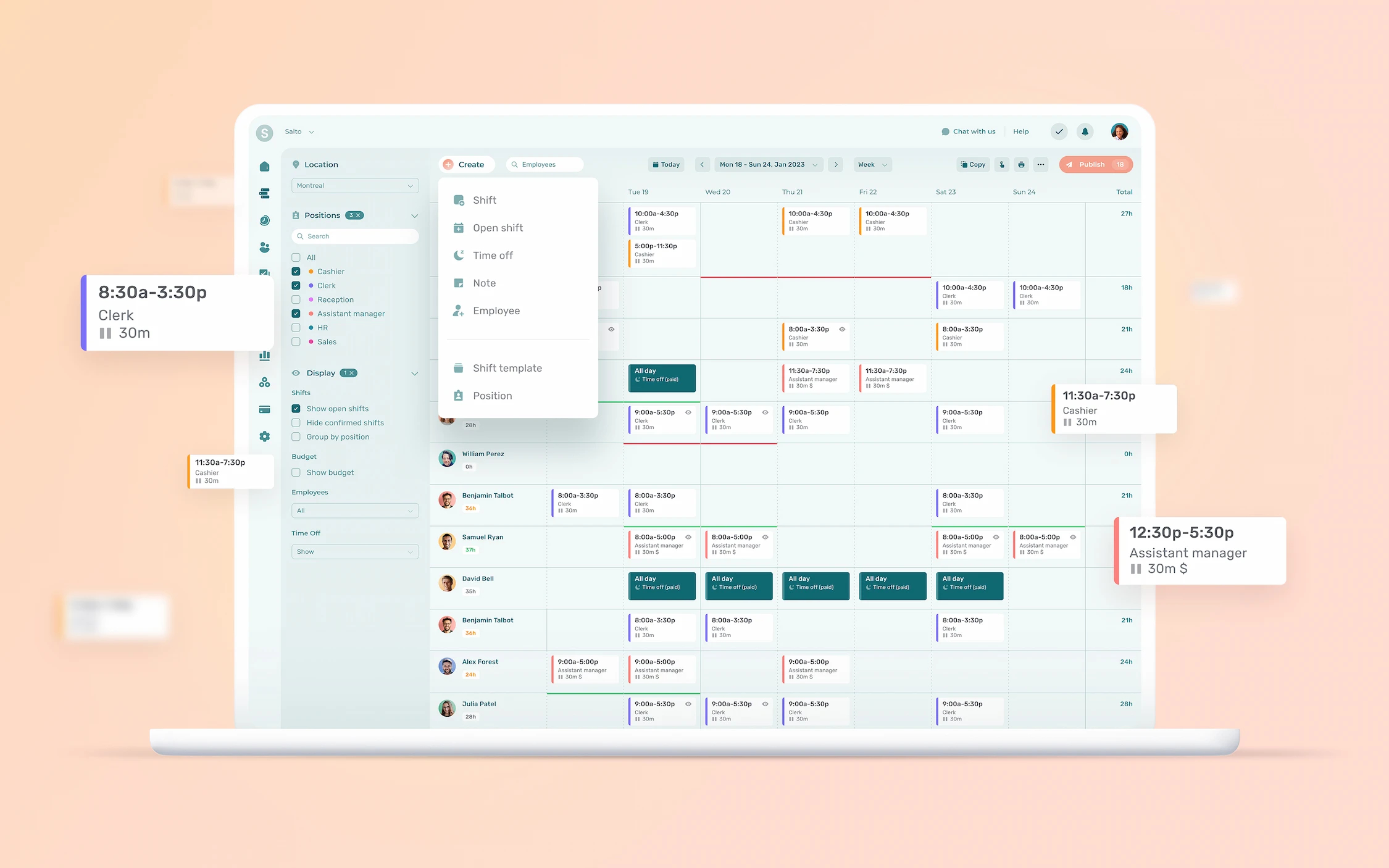
Retailers that choose to take advantage of extended hours will need to rethink how they plan work. Here are the main challenges to anticipate.
Additional Evening Shifts on Weekends
Going from 5 PM to 9 PM on Saturdays and Sundays means adding four hours of operations per day. To cover these time slots, you’ll either need to extend existing shifts or create new evening shifts.
Either way, your current schedule templates will likely need updating. If you use rotating schedules, build in rotations that account for weekend evenings now.
More Availability to Collect and Manage
Adding evening shifts means you need to check each employee’s availability for these new time slots. Students, parents, and part-time employees all have different constraints.
A Higher Risk of Overtime
If you don’t hire additional staff to fill the new shifts, you’ll need to pay close attention when building schedules and calculating hours worked. Without a tool that sends alerts, it’s easy to exceed overtime thresholds without noticing, especially for employees who readily pick up extra shifts.
On top of a well-planned schedule, rigorous timesheet tracking becomes essential to avoid payroll surprises.
More Frequent Shift Swaps
More time slots means more opportunities for shift swaps between employees. That’s great for flexibility, but it can quickly get complicated if swaps are handled informally, through texts or phone calls. Set clear rules and a centralized process for shift swaps.
The Impact on HR Management

Hiring and Staffing
We touched on this above, but if your store decides to stay open later on weekends, will your current team be enough to cover the additional shifts? Hiring new part-time employees may become necessary.
Good news: evening and weekend shifts can attract a complementary workforce profile to your existing team.
💡 Weekend evening shifts are often less popular. Decide early on how you’ll distribute them fairly to avoid friction within the team. It’s a good opportunity to update everyone’s availability.
Work-Life Balance
Evening shifts on Saturdays and Sundays can be tough on employees with family responsibilities. To prevent this measure from hurting retention, respect preferences whenever possible and distribute less popular shifts fairly.
Labour Standards Compliance
The pilot project changes the permitted business hours, but Quebec’s labour standards remain the same. Obligations regarding weekly rest, breaks, overtime, and statutory holidays still apply. Make sure adding evening shifts doesn’t create compliance issues.
When in doubt, consult the CNESST or your HR advisor.
Labour Standards Reminder
Quebec’s labour standards apply regardless of store hours. Here’s what retailers need to know.
- Weekly rest: Every employee must receive at least 32 consecutive hours of rest per week.
- Breaks: After 5 consecutive hours of work, a 30-minute meal break must be provided (unpaid, unless the employee cannot leave their workstation).
- Learn more about rest periods and breaks
- Overtime: Any hour worked beyond 40 hours per week must be paid at time and a half.
- More details on overtime
How to Prepare Your Store: Action Steps
Here are concrete steps to approach this change with confidence. 🧘♀️
- Survey your team. Before extending your hours, check in with your employees. Who’s available on weekend evenings? Updating availability will give you a clear picture of where you stand.
- Update your schedule templates. If you use recurring schedule templates, adjust them to include Saturday and Sunday evening shifts.
- Centralize time tracking. An employee who picks up an extra shift can cross the overtime threshold without anyone noticing. A time tracking tool linked to your schedules lets you compare hours worked against hours planned, and step in when needed.
- Set rules for shift swaps. Define clear guidelines: who can swap with whom, within what timeframe, and with or without manager approval. The clearer the rules and the sooner they’re shared with the team, the less confusion there’ll be.
- Reassess your staffing needs. If the additional shifts create a staffing gap, consider hiring one or two more part-time employees. These roles can attract interesting profiles to round out your team.
An Opportunity Worth Seizing, With the Right Tools
Extended store hours are an opportunity for Quebec retailers to capture customers who prefer shopping in the evening over turning to online stores. But this flexibility comes at a cost: it demands scheduling and HR management that can keep up.
Retailers still relying on Excel spreadsheets or manual methods may find the transition challenging. A purpose-built employee scheduling tool lets you create shifts in a few clicks, centralize availability, track hours in real time, and stay compliant with labour standards without having to verify everything manually.
The good news? The change is already in effect. You might as well make the most of it.

The information in this article is current as of March 11, 2026 and is based on announcements from the Quebec government regarding the retail store hours pilot project.
How long does the Quebec extended retail store hours pilot project last?
The pilot project runs for one year, starting March 11, 2026. The Quebec government will evaluate the results before deciding on next steps.
Are retailers required to stay open until 9 PM every day?
No. The measure is entirely voluntary. Each retailer decides whether to take advantage of the extended hours, and can adjust their schedule based on their reality, their clientele, and their available staff.
Do labour standards change with extended business hours?
No. Quebec’s labour standards (CNESST) remain fully in effect. Rules regarding breaks, weekly rest, overtime, and statutory holidays apply exactly as before. Only the permitted business hours have changed.
How can you avoid unplanned overtime?
Unplanned overtime rarely happens by accident. It results from imprecise scheduling, unmanaged shift swaps, or poor tracking of hours worked.
To prevent it:
- Check each employee’s total weekly hours before finalizing the schedule.
- Set clear rules for shift swaps.
- Review clocked hours during the week rather than at payroll time.
A tool like Agendrix centralizes all three steps and lets you catch overages before they show up on the pay stub.
Do you need to hire new employees if you extend your hours?
Not necessarily. It depends on your current headcount and your team’s availability. If the additional shifts create a staffing gap, hiring part-time employees or students can be a good solution. These profiles are often available on evenings and weekends.
What types of stores are affected by Quebec's extended store hours pilot project?
The pilot project applies to non-food retailers across Quebec: clothing stores, hardware stores, boutiques, furniture stores, and other general retail outlets. Grocery stores and pharmacies are not included, as they already operate under separate exemptions under Quebec law. The measure is voluntary, meaning eligible retailers can choose whether or not to extend their hours within the new 6 AM to 9 PM window.