

Key takeaways
- Cover first, judge later. Your first job is the shift, not the story. Fill the gap before you dig into why.
- Offer the shift, don’t force it. Ask available staff to pick it up on a voluntary basis, then reshuffle if no one bites.
- Write details down while it’s fresh. Note the time, who you contacted, and how you covered it. Facts, not feelings.
- Lead the conversation with curiosity. When they resurface, ask what happened before you reach for your absence policy.
- One miss is an incident. Three is a pattern. Treat a repeat no show differently from a one-off.
A no call no show is one of those moments that tests every manager. This is your playbook for the first hour: cover the shift, keep your head, and set up the conversation that actually fixes it.
Picture a Saturday morning at a mid-size grocery store in Hamilton. The doors open in twenty minutes and one of your cashiers just isn’t there. No text, no call, nothing. That’s a no call no show, and how you handle the next hour matters more than the absence itself.
In retail, the average full-time worker missed almost 11 days in 2025 (Statistics Canada, 2026). On a team of ten, that is more than 100 shifts a year you have to cover.
Most of those absences are planned, or at least phoned in. The no call no show is the one you can’t plan for, and it becomes your problem the second the shift starts. The good news: a no show is a process, not a crisis. Work the steps below in order and you keep the floor running, protect your team, and end up with the facts you’ll need later.
The first 15 minutes: confirm it’s really a no show

Before you label it a no show, rule out the boring explanations. Plenty of “no shows” turn out to be something smaller once you look.
Start a mental clock at the scheduled start time and give it the grace window your policy sets, usually ten to fifteen minutes. Use that window to check, not to stew. Look at the channels your team actually uses, roughly in this order:
- The scheduling or messaging app, where a “running late” or “sick today” note often sits unread.
- Your work cell and texts.
- The team group chat.
- Whether the shift was swapped or offered to someone else and nobody looped you in.
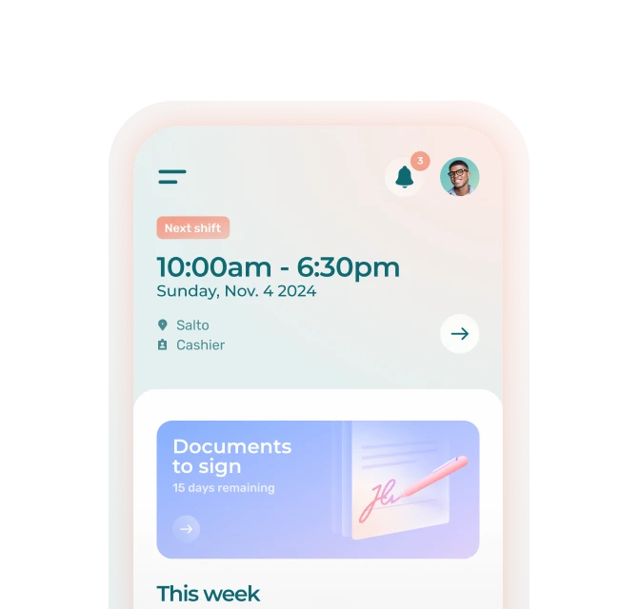
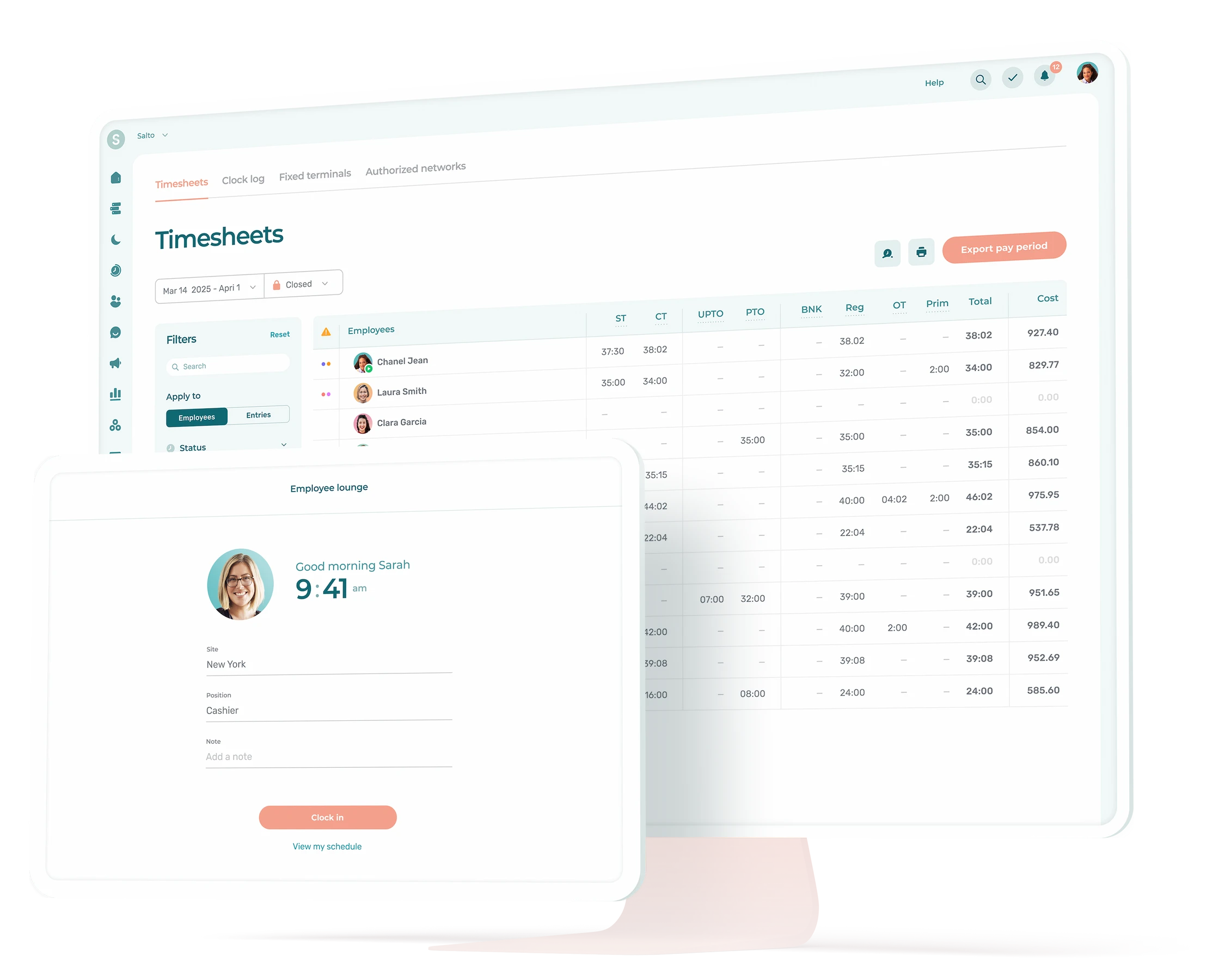
If you use a time and attendance app, you can also check whether the person clocked in at a spot you didn’t expect, like a back entrance or a second location.
Here’s how fast this can save you. Priya manages a café in Moncton. Her opening barista is a no show, so she starts phoning around. It turns out he posted in the team chat at 5:50 a.m. that he’d been up sick all night. Priya just never checks the chat before opening. The absence was real, the no show wasn’t, and two minutes of looking would have spared her the guesswork.
Then tell a late arrival apart from a true no show. Someone stuck in traffic who texts “here in ten” is late. A no call no show means no contact and no arrival. Same empty spot on the floor, different response.
Now make one contact attempt, and keep it human:
“Hi Marcus, you’re on the schedule for 9. Everything okay?”
That message does two jobs. Sometimes it wakes up someone who slept through an alarm and they’re in within the hour. And if this turns into a pattern later, it shows you gave a fair chance to explain.
It helps to know exactly what you’re dealing with:
| What you’re seeing | What it is | Your move |
|---|---|---|
| Ten minutes late, sent a text | Late arrival | Note it, carry on, address it if it repeats |
| No contact, no arrival, shift underway | No call no show | Confirm, cover, document |
| Several no shows in a row, unreachable | Possible job abandonment | Follow your policy’s abandonment steps |
Cover the shift fast
Once you’ve confirmed it, the floor comes first. For the next few minutes, your only job is filling the gap. How smoothly that goes depends a lot on your tools.
Without a scheduling app, you’re on the phone. That usually means scrolling your contacts and calling or texting down the list, hoping someone answers. The trouble is you’re calling half-blind. You might dial the person who closed at midnight, someone already at 40 hours this week, or the one who booked today off three weeks ago. Every wrong call burns minutes you don’t have. In addition to being annoying to your team.
If the phone is your reality, make it less painful before you ever need it. Keep an up-to-date availability list on a shared sheet, know your three or four reliable pickup people, and when you message the group, be specific. “Cashier shift open today, 9 to 2 at the Hamilton store, first to reply gets it” beats a vague “anyone free?”
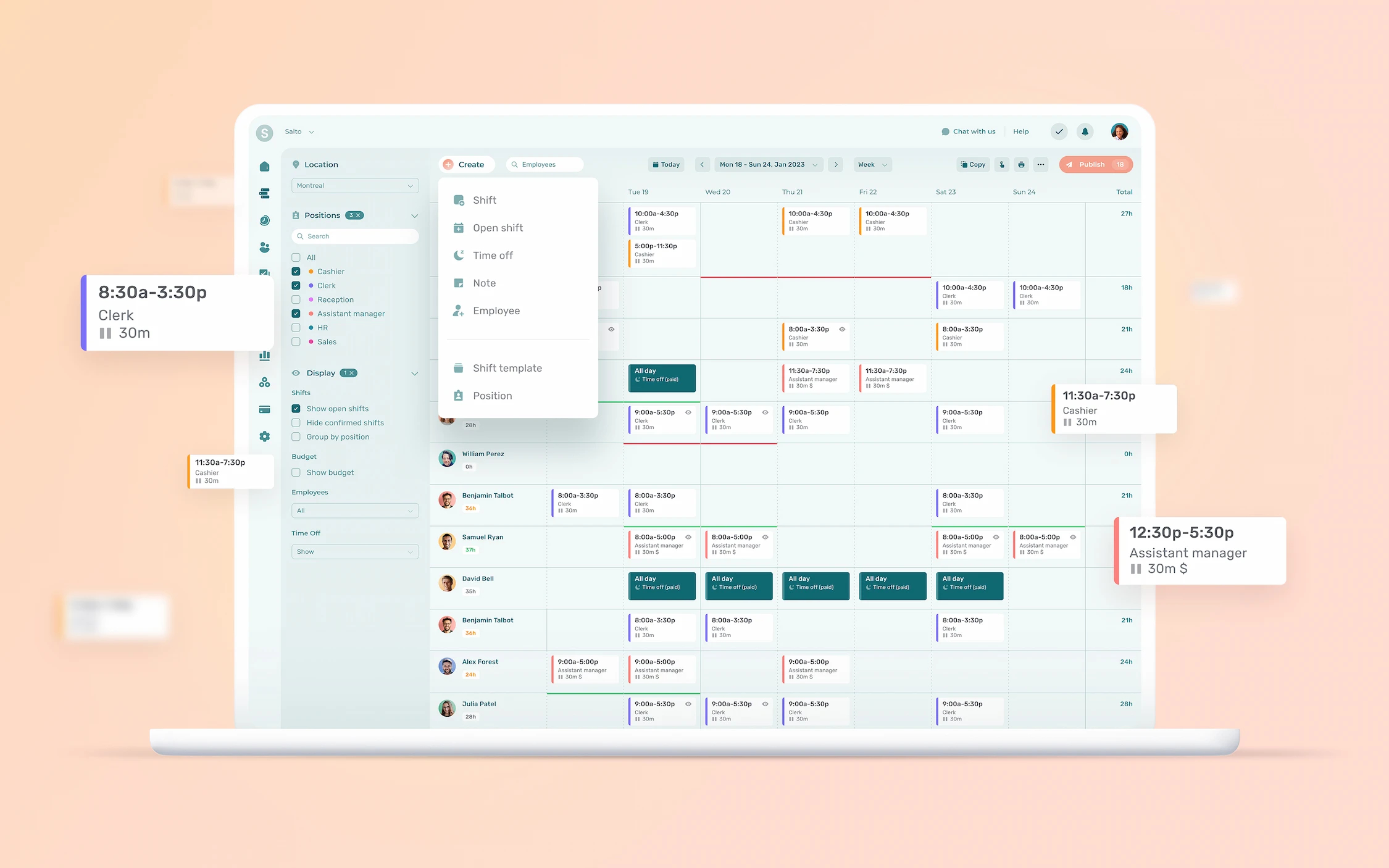
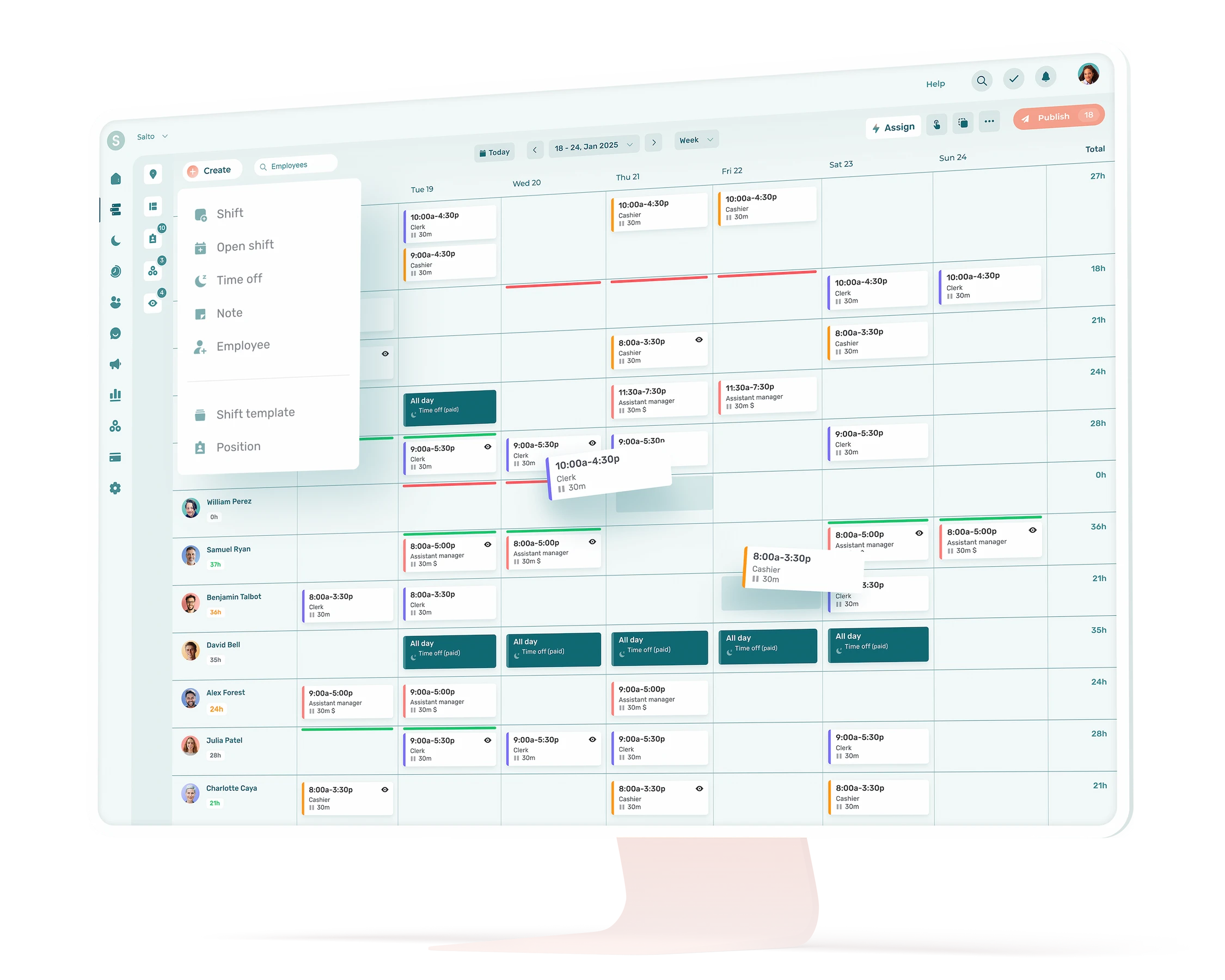
With a scheduling app, that whole process collapses into one action. You post the open shift, and only the people who can actually take it get notified: same position, same location, no conflicting shift, no approved time off. They tap to claim it, you approve, and it’s done, often before you’d have finished dialling. Good employee scheduling software also flags who’s close to overtime, so you don’t plug one hole today and hand yourself an overtime bill tomorrow.
Picture a Friday dinner rush. A server at a Kelowna restaurant is a no show at 4:45. The manager, Daniel, posts the 5 p.m. shift to the app. Two qualified servers get the notification, one is already heading into town and claims it at 4:53. The section is covered before the first table even sits down.
If nobody bites, don’t force it. Reshuffle the shift you have: move a floater to the till, stagger a break, spread the gap across the people already in. Adjust today, not the whole week. And keep forced overtime out of it. It patches the moment and quietly lines up the next call-in, because worn-out people call in too.
Document it while it’s fresh
Five minutes of notes now saves an hour of he-said-she-said later. Do it while the details are sharp, not next week when “sometime that morning” is the best you can remember.
Write down five things:
- The date and scheduled start time.
- Whether and how you tried to reach them.
- Whether they responded, and what they said.
- How you covered the shift.
- Any knock-on effect worth noting, like a late opening or a teammate who stayed on.
Keep it factual and flat, the way you’d want it read back to you in a meeting. Skip the commentary. No “again,” no “typical,” no sighing in text form.
A clean entry looks like this:
Sat. Aug. 8. Marcus scheduled 9:00, cashier. No text or call. Texted at 9:12, no reply. Emma picked up the shift at 9:20 through an open shift. Store opened 15 minutes short-staffed.
Keep every entry in one place so you’re not digging through texts and sticky notes months from now. Log it against your employee attendance policy so every incident is handled the same way, for everyone. That consistency is what protects you, the teammates who covered, and the employee too if it turns out there was a real reason behind the absence.
The conversation after: curious, not accusatory

Have this conversation at their next shift, in private, not over text and not on the floor with customers watching. An ambush gets you defensiveness, and defensiveness gets you nothing.
Open with a real question:
“Hey, you missed Saturday and I couldn’t reach you. What happened?”
Then listen. A no show can be a dead phone, a family emergency, a mix-up over the schedule, or something at home you can actually help with. It can also be none of those. You find out by asking, not by leading with a warning.
Where it goes next depends on the answer.
If it’s a one-off with a genuine reason, solve the problem and move on. Say a care aide in Guelph, Aisha, missed a shift because her kid’s daycare closed with no notice. That’s a scheduling conversation, not a discipline case. Acknowledge it, show her how to give you a fast heads-up next time, and if you can, build a little more flexibility into her coming shifts. If anything, this may happen to other parents you employ. This can be a great time to clarify things with the whole team for such circumstances.
If the reason is thin, or this has happened before, name it plainly:
“This is the second time this month, and both times the shift went uncovered until I found someone. I need a call before your shift if you can’t make it. Here’s what happens if it keeps up.”
Clear, calm, and specific about the next step. Either way, close the loop so the person leaves knowing exactly what you expect. It’s the same muscle you use for chronic lateness and last-minute call-ins, so borrow from how you already handle lateness and no shows.
When one miss becomes a pattern
You can only see a pattern if you’re tracking. With every incident in the same log, “I feel like Marcus does this a lot” becomes “Marcus has three no shows since June.” Facts beat vibes when you’re making a call about someone’s job.
From there, follow the progressive steps your policy already lays out, and apply them the same way every time:
- A documented conversation after the first unexcused no show.
- A written warning if it happens again.
- A final warning, then termination if the pattern holds, in line with your policy and your local employment standards.
The trap is inconsistency. If your top performer gets a pass and your newest hire gets written up for the same thing, you’ve turned a fair process into a personal one, and you’ve left yourself exposed if the decision is ever challenged. Same rules, same steps, everyone. Rules for absence and termination vary by province, so check yours before that final step. This article offers general guidance, not legal advice.
Set things up so the next one stings less
You can’t prevent every no call no show at work, but you can make each one easier to absorb and rarer to begin with.
💡 A few things that actually help:
- Put your absence policy in writing, and make sure people read it. A no call no show policy only works if the team knows what counts as a no show, how to report an absence, and what happens if they don’t. Make sure reading it is part of the onboarding process for all new employees.
- Keep a light backup plan for your busy shifts. A voluntary on-call spot for Friday nights or Sunday openings brings you peace of mind. Keep it voluntary and rotate it so it stays fair.
- Turn on shift reminders. A lot of “no shows” are just forgotten shifts. An automatic reminder in your scheduling app the night before and the morning of catches the honest mistakes.
- Make reporting an absence easy. If calling in means an awkward phone call to a boss who might sigh, some people just won’t. One clear channel and a team communication tool that reaches you fast gives a proper and quick heads-up.
- Look for the pattern in the schedule, not just the person. If the same Sunday opening gets missed over and over, the shift might be the problem. A lot of common scheduling problems, like too little notice or a slot nobody wants, are fixable once you spot them.
- Notice the people who always show up. Reliability that gets ignored quietly wears thin. A quick thank-you to whoever picked up the slack costs nothing and buys a lot of goodwill.
Coverage first, judgment later
Every manager gets a no call no show eventually. The whole game is in the response: cover calmly, ask before you judge, and keep a plan B in your back pocket. No, you won’t stop every no show. But you can make the next one a five-minute fix instead of your whole morning.
See how Agendrix helps you fill open shifts and reach your whole team in seconds. Start your free trial.
What does no call no show mean?
A no call no show is when an employee misses a scheduled shift without telling anyone beforehand. There’s no call, no message, and no arrival. It’s treated as more serious than a late arrival or an excused absence because it leaves the shift uncovered with zero warning.
How long should I wait before calling it a no show?
Most managers use the grace window in their attendance policy, often ten to fifteen minutes past the scheduled start. Use that time to check your messaging channels and make one contact attempt. If there’s still no word and no arrival by then, treat it as a no show and start covering. You can always update your notes later if a real reason turns up.
What should I do first when an employee is a no show?
Confirm it’s actually a no show by checking every channel and making one quick contact attempt. Then cover the shift by offering it to available staff on a voluntary basis. Once the floor is running, document what happened while it’s fresh, and save the conversation about why for when the person is back.
How do I find a replacement fast?
Finding a replacement fast is easiest when you can broadcast the open shift to everyone qualified at once and let them claim it, rather than calling people one by one. Keep it voluntary so whoever comes in actually wants to be there. If nobody picks it up, reshuffle tasks among the staff already on the clock instead of forcing overtime.
Should I text an employee who is a no show?
Yes, one clear and neutral message is worth sending, something like “You’re scheduled for 9, everything okay?” It sometimes brings in a person who slept through an alarm, and it shows you gave a fair chance to respond. Keep it to a single attempt and stay factual, since the message may end up in your records.
What is a no call no show policy?
A no call no show policy is a written set of rules covering what counts as a no show, how employees are expected to report an absence, and the consequences for missing a shift without notice. A clear no call no show policy keeps your response consistent and fair, since everyone is measured against the same standard. It works best as part of a broader attendance policy the whole team has read and agreed to.
Can you fire someone for a no call no show?
In many cases a no call no show can lead to discipline up to termination, but it depends on your written policy and the employment standards in your province or region. Consistency matters: applying your policy the same way for everyone is what keeps the decision defensible. This is general information, not legal advice, so confirm the specifics for your jurisdiction before acting on a termination.
How many no call no shows count as job abandonment?
There’s no universal number. Many employers define job abandonment in their policy as a set number of consecutive no shows, with three being a common threshold. What matters is that the number is written down in advance and applied consistently, rather than decided case by case after the fact.