

Key takeaways
- A handover is not a diary. The end of shift report exists to tell the next person what to act on, not to record everything that happened.
- One question sorts every note. Does this matter for the next shift, every shift, or everyone? Only the first belongs in the handover.
- Five fields cover almost every business. Carry-over, open loops, coverage, equipment and stock, customer flags.
- Verbal handovers vanish. If it’s important but isn’t written down somewhere searchable, it didn’t happen, and nobody can check later who was told what.
- Group chats are the wrong home for this. No record you can search, no way to confirm anyone read it, and the whole thing lives in accounts you don’t control.
Your closers write a full page. Your openers read the first line and skip the rest. It’s not a bad handover report, it’s just too long. A good end of shift report is short on purpose, and here’s what earns a spot in one.
What an end of shift report actually is
An end of shift report is a short, scannable written record that the outgoing employees leave for the incoming ones, covering what changed during the shift and what still needs attention. It goes by a lot of names depending on where you work: shift report, shift handover, pass-down, handover notes, shift log. Same job in every case.
Not every shift change needs a written report. If nothing happened that the next person has to act on, the honest report is no report and a thirty-second conversation instead.
Nobody has yet measured what a sloppy handover costs a restaurant or a store. Hospitals have.
A 2025 review by the US Agency for Healthcare Research and Quality looked at a decade of research on structured handovers. Across nine hospitals in Canada and the US, medical errors dropped from 24.5 to 18.8 per 100 admissions after they were introduced.
The stakes in your shop or restaurant are lower, but the mechanism is identical: what the outgoing person knows either transfers or it doesn’t.
Why use an end of shift report?
The purpose of a handover is narrow, and that narrowness is the point. It answers one question for the person walking in: what do I need to know right now that I couldn’t have known before I got here?
Everything else has a better home. Work that repeats belongs on the task list. News the whole team needs belongs somewhere everyone sees it, like in your communication tool. Anything that will still matter two shifts from now is too big for a handover note. It should be raised to a manager.
Jessica manages a garden centre in Winnipeg. Her closing staff were writing half a page every night. Three months in, she asked her openers what they did with the notes. Two admitted they had stopped reading past the first line, which was always “Nothing much to report.” Buried in the six sentences underneath: a customer coming back at 9 a.m. for an order nobody had prepared. 😬
The three-destination test
Most handover advice tells you what to include. Almost none tells you what to take out, which is why so many shift logs turn into a place where information goes to be forgotten.
Here is the filter. Before writing anything down, ask where it actually needs to go. There are only three possible destinations, and only one of them is the handover.
| Where it goes | The question | Examples |
|---|---|---|
| The handover | Does this matter for the next shift only? |
Fitting room three has a broken lock, maintenance called. Customer returning tomorrow morning for an approved refund. Delivery came short by two cases. |
| The task list | Does this matter every shift? | Restocking the front display, counting the float, wiping down the pass. |
| The announcement | Does this matter to everyone? | New statutory holiday pay rules, next month’s schedule change, summer hours starting. |
📝 If it only matters for the next shift, it’s a handover note.
✅ If it matters every shift, it’s a task.
📣 If it matters to everyone, it’s an announcement.
An announcement buried in Tuesday’s closing notes reaches exactly one person: whoever opens on Wednesday. That’s not announcing anything.
The five things a handover needs to capture
Once you’ve applied the three-destination test, almost everything left fits into five fields. This holds up across retail, food service, care, security, hospitality, and other industries.
1. Carry-over. What happened this shift that the next person has to do something about. Not what happened generally; what requires action.
2. Open loops, with a name attached. Anything unresolved needs an owner and a deadline. “Supplier still hasn’t called back” holds no one accountable. “Supplier hasn’t called back, Andrew is chasing them before noon tomorrow” is a handover note. Without a name, an open loop just gets passed along until someone finally deals with it or it quietly stops mattering.
3. Coverage. Who was in, who was late, who didn’t show, what got left uncovered. This is the field that saves you later when you’re trying to work out why Saturday went badly.
4. Equipment and stock. What’s broken, low, ordered, or waiting on a repair visit. Short and specific. “Fridge is running warm, thermometer reading 8 degrees at 4 p.m., service call booked for Thursday morning” beats “fridge issue.”
5. Customer or resident flags. Anything that needs follow-up next shift. A complaint that’s still open, a special order, a resident who had a difficult afternoon.
Get the end of shift report template
We turned these five fields into a template you can print or copy. Every section has a “nothing to report” box, so a blank line never reads as a forgotten one. The open loops section won’t let you log an item without naming who’s on it and when. And the last page is a short list of the three things that should never end up on a handover note.
💡 Get into the habit of writing “nothing” where there are no handover notes, or add a “nothing to report” checkmark for each section so empty fields don’t read as “forgot to fill it in.”
What this looks like in your industry
Here’s what some end of shift notes could look like in various industries.
| Sector | What usually matters most | Typical handover note |
|---|---|---|
| Retail | Equipment, cash handling, held items |
“Return processed for a damaged coffee maker, customer coming back Saturday to pick up the replacement. Floor model of the same unit is now the only one left.” “Held order under Jenner at the counter, pickup Saturday at 10 a.m.” |
| Restaurant | Prep, equipment, reservations, sold out items |
“Fresh out of the curry salmon, delivery short.” “Walk-in door not sealing, propped with a crate as a temporary fix.” “Table of 12 at 7 p.m. tomorrow, confirmed.” |
| Home care and residences | Resident condition changes, family contact, medication timing | “Mr. Chen ate very little at lunch and seemed low. Daughter called, wants a call back before 10 a.m. Bath moved to evening at his request.” |
| Security | Incidents, access, patrol gaps | “Door four badge reader intermittent, logged with facilities at 2 p.m. North lot patrol skipped at 11 p.m., alarm response took the whole window.” |
| Hotels | Room status, guest requests, arrivals |
“Room 214 heating not working, maintenance notified, guest moved to 220.” “Late arrival expected after 1 a.m., key packet is at the desk.” |
Each of these takes under a minute to write. Notice what’s missing: no “it was busy,” no “everything fine otherwise,” no general commentary. The most useful handovers are short because the filter did its job before anyone started typing.
A handover that takes ten minutes to write will take ten minutes to read, and that’s usually ten minutes nobody has at the start of their shift.
The 90-second verbal handover
Written is not a replacement for spoken, and spoken is not a replacement for written. You want both, and the spoken version should be quick.
Here’s what a good one sounds like. Renee is finishing the day shift, Sebastian is picking up the evening.
Renee: Two things you need. Card reader on till one is frozen, I restarted it a few times and it’s still slow, so run everything through two and three until someone looks at it. And there’s an online order held at the counter under Smith for this evening, 7:30 p.m. pickup, it’s paid.
Sebastian: Anything on the delivery?
Renee: Came short two cases of the soil mix. I flagged it with the supplier, Anna’s chasing it before noon Thursday. It’s in the notes.
Sebastian: Got it. Anything else?
Renee: No, quiet otherwise.
Ninety seconds or less. The written notes are already there, so the verbal handover is a pointer. Sebastian asks two questions and walks away knowing what to do.
The structure underneath it is simple and worth teaching explicitly: what changed, what’s still open, anything you’d want to know if you were me.
Where your handover actually lives
Paper on the counter still works, which is why it has survived. It just can’t be searched, and it can’t be read by anyone who isn’t standing there.
The group chat that replaces it fails differently. The handover gets mixed in with shift swaps and someone’s photo of the parking lot, nobody can confirm who read what, and it all runs on personal phone numbers. An employee who quits takes the record with them and keeps everyone else’s contact details. There’s a privacy angle too, and it’s easy to miss: in Quebec, Law 25 covers personal information about your employees, not just your customers. It expects you to know where that information is held and who can reach it. Notes about your staff and your customers living in accounts you don’t control are a hard thing to answer for.
A digital handover fixes the mechanics: notes attach to the shift so you can find March in March, and announcements carry read confirmations so you know who’s seen what. A team communication app doesn’t get any of this off personal phones, it gets it out of personal accounts. Access ends when employment does, and the record stays with the business instead of walking out in someone’s chat history.
Four ways shift handovers go wrong
The dumping ground. Everything gets written down because nobody has decided what shouldn’t be. Run the three-destination test out loud for a couple of weeks and people stop asking.
The novel. Long handovers usually come from your most conscientious people, which is why nobody wants to correct them. Cap it at one screen and say why: shorter gets read.
Verbal only. The outgoing and incoming staff talk it through, agree on everything, and leave no record. Two days later they remember it differently and there’s no way to settle it. Say it out loud for emphasis, write it down for the record.
The ghost handover. The outgoing person is gone before the next shift starts. This is a scheduling problem wearing a communication costume, and no template fixes it. Build a ten minute overlap into your employee scheduling software, then check it’s actually happening in your time and attendance software.
Three weeks to a shift handover people read
Week one. Decide the five fields and write them on whatever your team already uses, tool or paper. Give everyone the three-destination test in one sentence and ask them to apply it. That’s the whole rollout.
Week two. Read what people actually wrote. You’ll find recurring items that belong on the task list and announcements that should have gone to the whole team. Move them, and tell everyone why you moved them. That’s the part that teaches the test.
Week three. Now look at where it all lives. If you’re flipping through a paper book or scrolling a chat thread to answer a question from last month, that’s your answer. If you’re finding things in seconds, leave it alone.
Do that and the habit spreads without you. It’s the same pattern behind most improvements in team communication: the channel matters less than whether anyone maintains it.
Write less, hand over more
Most teams don’t need a better shift handover. They need a shorter one, and the nerve to leave things out. Go read last night’s end of shift report and count how many lines actually needed to be there.
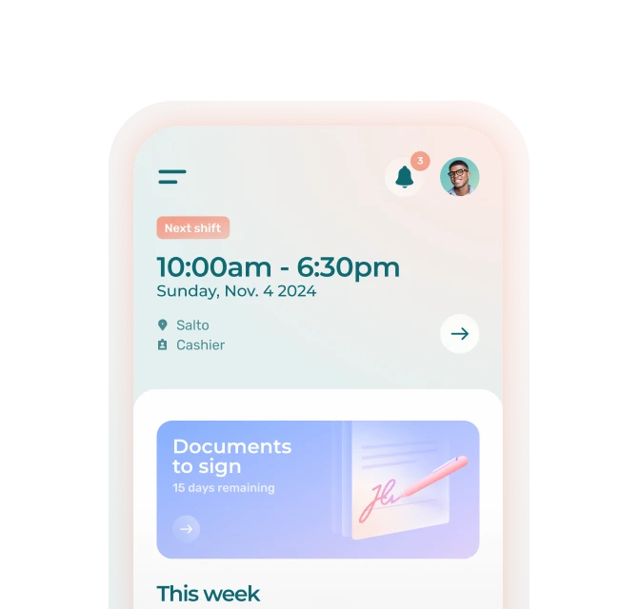
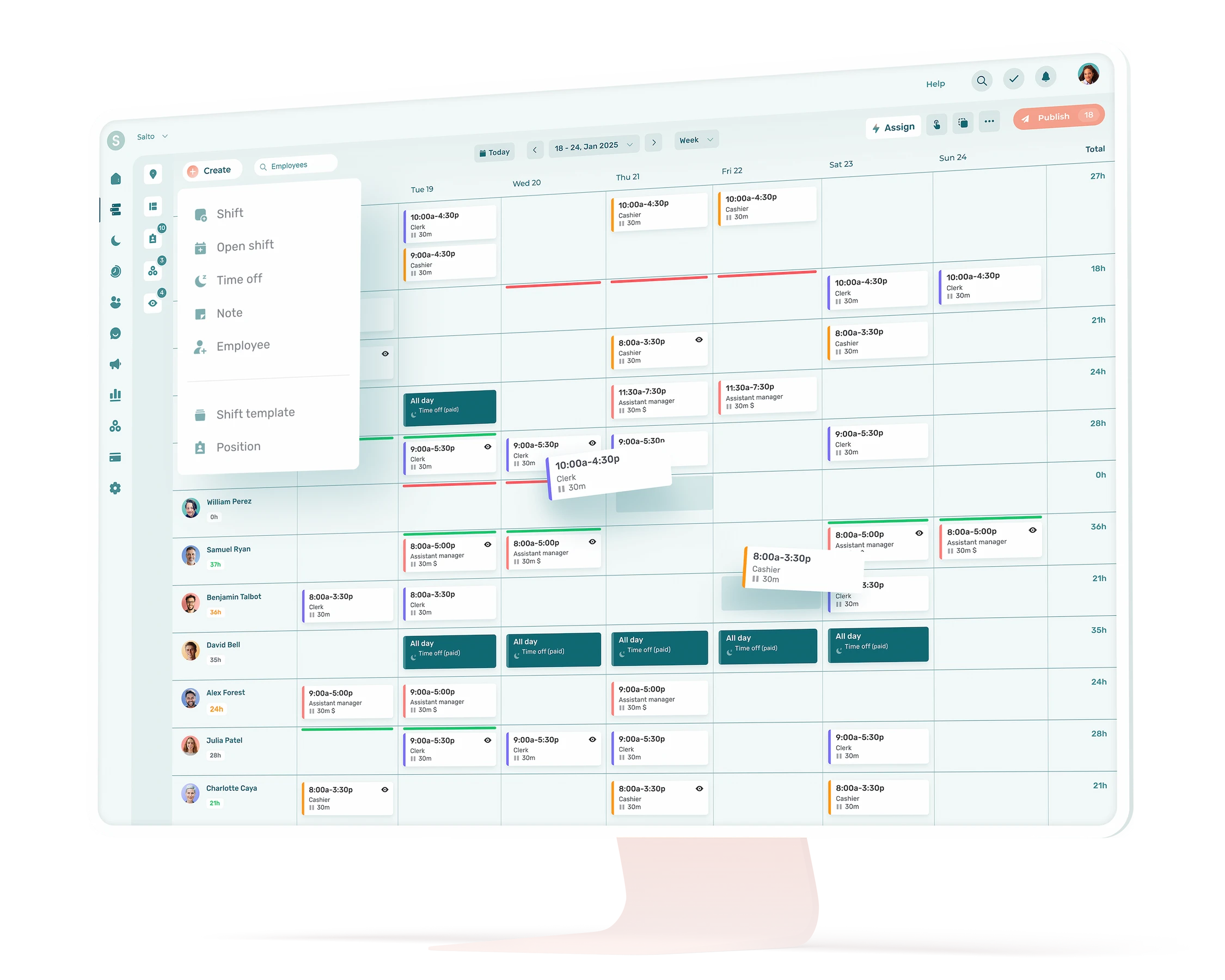
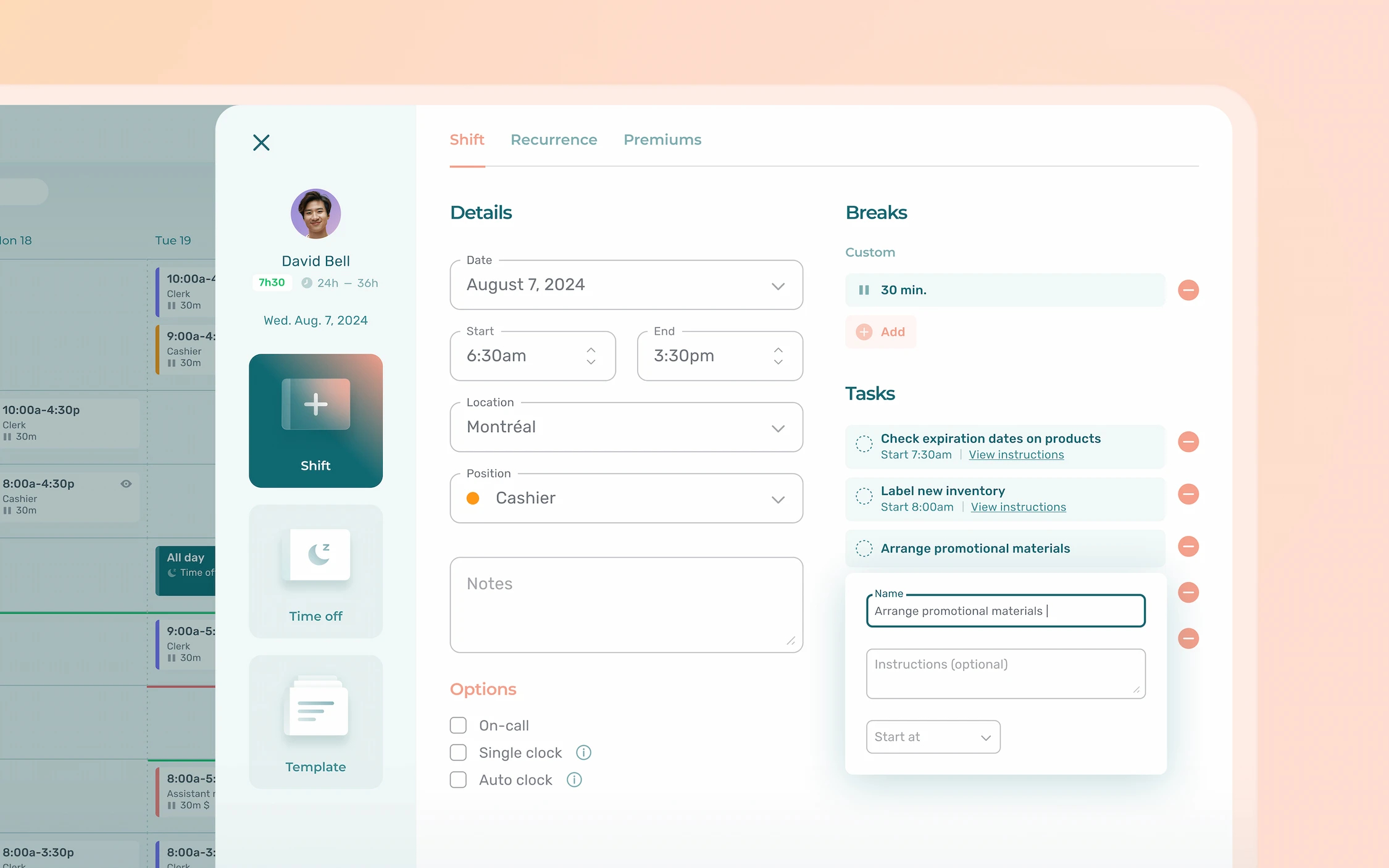
See how Agendrix keeps shift notes, tasks, and team announcements in one place.
What is an end of shift report?
An end of shift report is a short written record left by the outgoing employee for the incoming one, covering what changed during the shift and what needs attention next. It’s also called a shift report, shift handover, pass-down report, or shift log. The point is to tell the next person what to act on, not to summarize everything that happened.
What should be included in an end of shift report?
Five fields cover most businesses: carry-over items that need action, open loops with a named owner and a deadline, coverage details (who was in, late, or absent), equipment and stock issues, and customer or resident flags needing follow-up. Anything that repeats every shift belongs in a task list instead, and anything the whole team needs to know belongs in an announcement.
How long should a shift handover take?
The written portion should take under two minutes if the filtering is done properly, and the verbal handover should run about 90 seconds. If it takes longer, the report is probably carrying recurring tasks or general commentary that belong somewhere else.
What's the difference between a shift report and a shift handover?
In everyday use they mean the same thing. “Shift report” tends to describe the written document, while “shift handover” describes the whole exchange, written and spoken. Some sectors have their own vocabulary: pass-down report in security and manufacturing, handover notes in care settings.
Is it a problem to do shift handovers over WhatsApp or a group chat?
It creates three issues. You can’t reliably search the record later, you can’t confirm who read what, and it runs on personal phone numbers, so an employee who leaves takes the history with them and retains everyone’s contact details. There’s also a privacy question, since notes about your staff and your customers sitting in accounts you don’t control are difficult to answer for if anyone asks where that information lives.
Do small teams need a shift handover process?
Yes, and often more than large ones. Small teams have less redundancy, so one piece of information sitting in one person’s head is a genuine single point of failure. The process can be very light: five fields and one filter question is enough.
What is a shift log?
A shift log is the running record of handover notes over time, whether that’s a paper book on the counter or a digital record attached to each shift. Its value is in being able to look back. If you can’t search it, it’s a diary rather than a log.
How do you get staff to actually read the handover?
Make it short enough to read in under a minute and consistent enough that people trust it’s worth opening. The fastest way to kill readership is padding: when three-quarters of a report is routine filler, people learn to skim it, and then they miss the one line that mattered.