Key takeaways
- Artificial intelligence (AI) handles operational tasks like scheduling, time tracking, compliance, and other administrative work, but the real leadership work falls to humans.
- Essential manager soft skills include active listening, conflict resolution, real-time adaptability, coaching, emotional intelligence, change management, and accountability under pressure.
- These interpersonal abilities create the trust and connection that keep teams engaged and productive, even during challenging shifts.
As AI takes over scheduling, time tracking and admin grind, managers aren’t off the hook. They finally have time to focus on what matters: leading their people through the challenges of peak service hours.
Only 29% of frontline employees are satisfied with internal communication quality, compared to 47% of office employees (Hubengage, 2026). That gap is exactly where soft skills come in, especially as AI takes on more of the operational load.
When AI Handles Operations, Managers Handle People

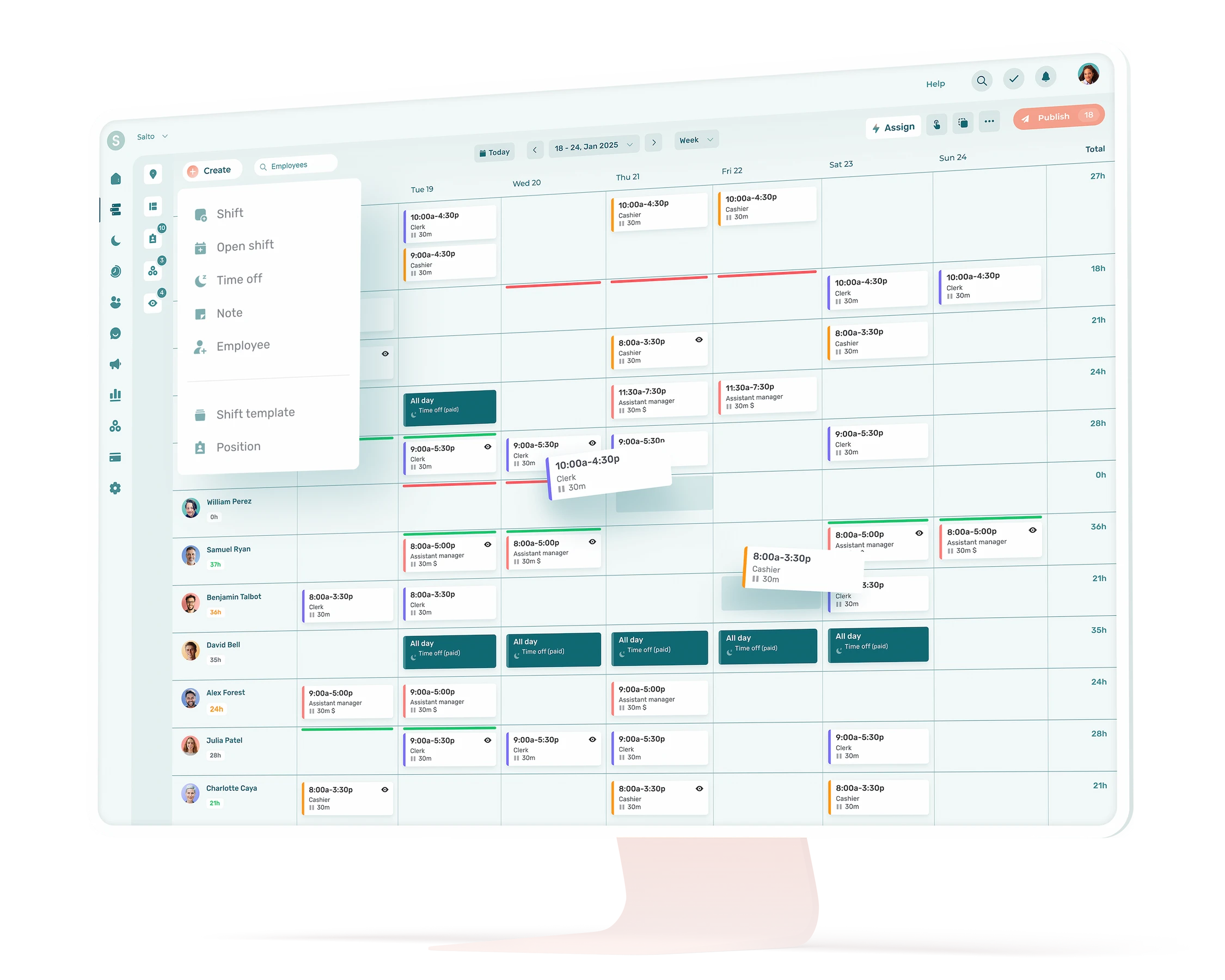
Artificial intelligence is reshaping how managers work. AI-powered employee scheduling uses data like demand history, availability, skills, and labour rules to draft fair, compliant shift plans in seconds. Modern employee scheduling software can now handle complex shift patterns, overtime calculations, and compliance checks automatically.
This automation doesn’t give managers more downtime, it gives them more bandwidth for the work that actually moves the needle. While AI handles the operational complexity, managers can focus on what technology can’t solve: reading team dynamics, resolving conflicts, coaching in real-time, and making the split-second decisions that keep service running smoothly.
The managers who thrive aren’t the ones fighting this change, they’re the ones leaning into what makes them irreplaceable: their ability to read a room, defuse tension, and inspire someone to push through a difficult shift.
Here are seven soft skills that have become essential for frontline managers in the AI era. They’re the human abilities that technology can’t replicate and the leadership capabilities that turn operational efficiency into team performance. Master these skills, and you’ll find that when AI handles the administrative burden, you’re free to do what great managers do best: lead people.
1. Active Listening: The Foundation of Everything Else
Active listening means catching not just what people say, but what they’re not saying. It’s the difference between surface-level check-ins and actually understanding your team.
When your pharmacy technician mentions they’re “fine” but keeps checking their phone. When your restaurant server volunteers for overtime every shift but seems exhausted. When your retail associate asks the same question five times in a row. Those are the moments that tell you that something’s actually going on.
In practice: During handoff between shifts, resist the urge to multitask or hide in the backstore or your office. This is a great moment to catch any potential issues. When talking to an employee, face the person speaking. Focus on your conversation. Ask follow-up questions.
“When you say the morning was ‘challenging,’ what specifically went wrong?” This isn’t just politeness, it’s intelligence gathering that prevents bigger problems later on.
The AI advantage: While time and attendance software can flag patterns like frequent tardiness or overtime requests, it can’t decode the human story behind the data. A manager who actively listens picks up on burnout signals, family stress, or skill gaps before they show up in performance metrics or poor customer service.
🩺 Seniors’ residence scenario: Your nursing assistant clocks in on time but seems distracted during morning briefing. Instead of assuming they’re not paying attention, you ask privately if everything’s okay. You learn they’re worried about a family member who is in the hospital, which explains the distraction and allows you to provide appropriate support.
2. Conflict Resolution: Turning Drama Into Solutions
Every shift-based workplace has personality clashes. The morning shift blames the evening shift for leaving messes. Experienced workers clash with newcomers. Service blames the kitchen and vice-versa. Someone always feels they’re doing more than their fair share.
The technique: Focus on the situation, not the person. Instead of “You always leave things unfinished,” try “Let’s figure out a handoff process that works for everyone.” Address conflicts immediately, but privately. Public confrontations embarrass everyone and solve nothing. Read our article on handling conflict at work.
🍝 Restaurant scenario: Two servers constantly bicker about closing procedures. Instead of choosing sides, you bring them together during a quiet moment, map out the actual closing tasks, and create a checklist both can follow. Then, using your scheduling app, you assign tasks directly in the shift, leaving no room for ambiguity. Turns out the conflict wasn’t about personalities: it was about unclear expectations around side work distribution.
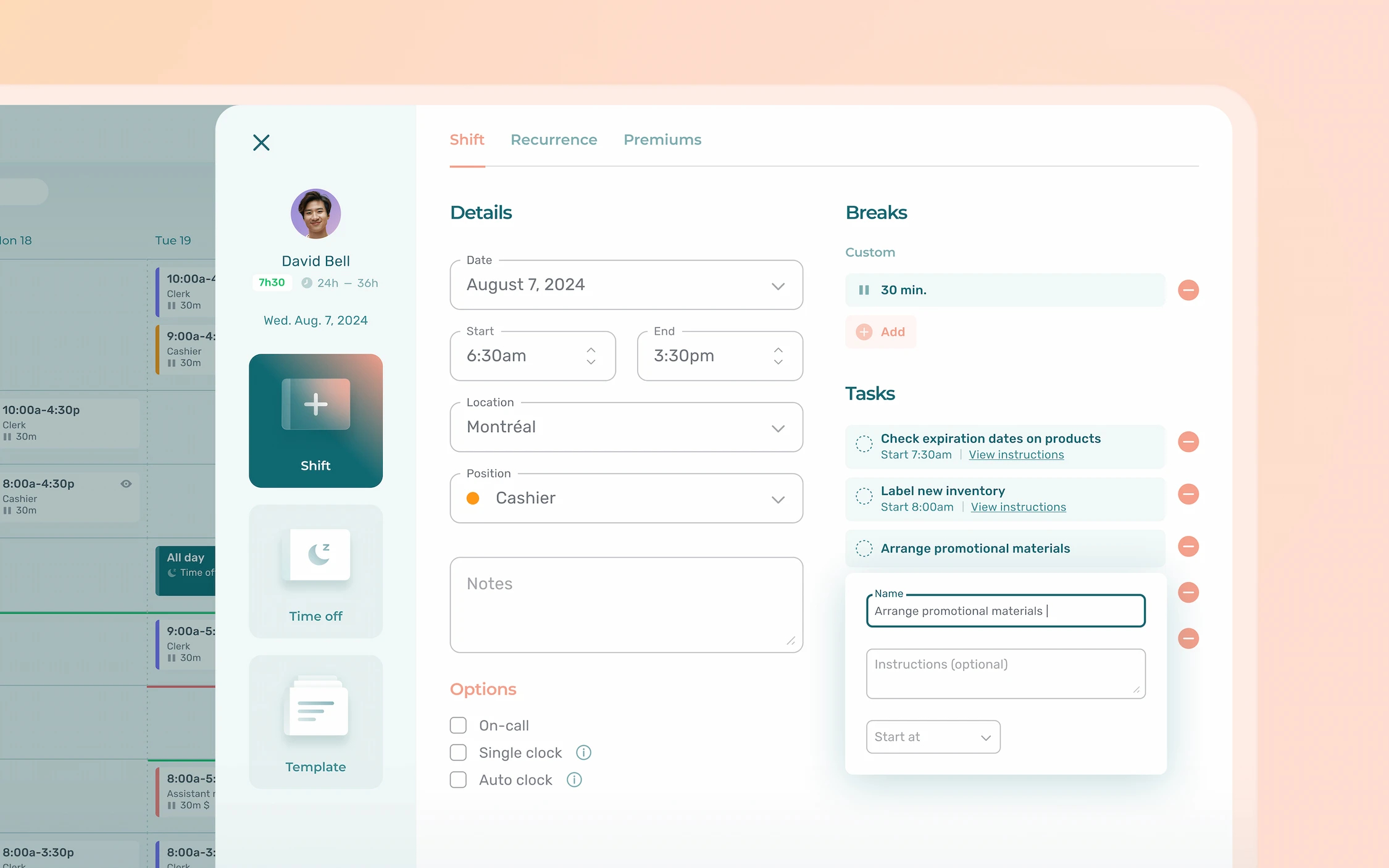
The AI context: While scheduling algorithms ensure fair shift distribution, they can’t prevent the human friction that occurs when people work closely together under pressure. Your conflict resolution skills become the bridge between algorithmic fairness and human cooperation.
3. Real-Time Adaptability: Grace Under Pressure
Plans change. Equipment breaks. People call in sick. Customers complain, show up without a reservation, change their minds, and demand certain standards. The test of a manager isn’t how well they follow procedures, it’s how they adapt when procedures don’t fit reality.
The skill: Making decisions quickly with incomplete information, communicating changes clearly, and maintaining team morale while everything’s shifting. This requires reading both the situation and your people simultaneously.
🛍️ Retail example: Black Friday morning, your main POS system crashes and two associates call in sick. An adaptable manager quickly shifts to mobile payment processing, finds backup staff using their scheduling app, and communicates the new plan to the team. They check in regularly to ensure nobody’s overwhelmed and adjust as needed throughout the day.
The AI limitation: AI can predict busy periods and suggest optimal staffing levels (even help you prepare a better plan B for next year), but it can’t read the stress level in someone’s voice, know that your best cashier just got yelled at by a customer, or adjust expectations for a team member who’s covering two positions. These judgment calls require human intuition and empathy. And no computer program is going to jump on the floor to cover for a no-show.
🚧 Construction scenario: Traffic due to road work delays your crew’s arrival to a job site, and the client is frustrated. You quickly coordinate with available team members, communicate realistic timelines to the client, and adjust the day’s priorities. Your crew sees you handling the pressure calmly, which helps them stay focused on their work despite the disruption.
4. Coaching and Development: Growing People Mid-Shift
For shift-based teams, formal training happens during onboarding, often quickly and in the line of fire. And real skill development happens on a busy Thursday evening when you have thirty seconds to help someone improve. The best managers are master coaches, turning everyday moments into learning opportunities.
The approach: Catch people doing things right, not just wrong. “I noticed how you handled that confused customer. Your patience really showed.” When correction is needed, focus on the next attempt: “Try approaching it this way next time.”
AI-assisted, human-delivered: You might use AI to design your onboarding plan or identify skill gaps from performance data, but the actual coaching is purely human work. Walking past a new pharmacy technician struggling with insurance verification, you don’t ignore it or pull up an AI tutorial. You spend two minutes showing the process face-to-face, explain the why behind the steps, and provide the reassurance that builds both competence and confidence.
The payoff: Coached employees become problem-solvers, not approval-seekers. They handle issues independently, freeing you to focus on bigger challenges while creating a culture where people take ownership of their work.
🔧 Hardware store scenario: After a new cashier struggles with a complicated return, you spend two minutes during the next lull showing them how to handle similar situations. When a similar situation comes up later in their shift, you watch from nearby and give quick feedback once the customer leaves.

5. Emotional Intelligence: Reading the Room and Managing Stress
Managing frontline teams means constant pressure from multiple directions. You’re balancing budget constraints, customer complaints, staffing shortages, and team dynamics, sometimes all before lunch. Emotional intelligence isn’t a nice-to-have soft skill; it’s essential for surviving and helping your team thrive under pressure.
Self-awareness: Recognize when you’re stressed, frustrated, or overwhelmed, and how that affects you and your team. Your mood sets the tone for everyone around you, especially during challenging shifts.
Social awareness: Notice when team energy is low, when someone’s having an off day, or when group dynamics are tense. These observations guide your leadership decisions and timing of important conversations. For more on adaptation, learn about situational leadership.
In action: You arrive at work already stressed about your budget targets. Instead of bringing that energy to the floor, you take two minutes to reset your mindset. During the morning briefing, you notice your team seems flat after a difficult week. You adjust your approach, sharing a positive customer review from yesterday and acknowledging everyone’s hard work during recent challenges.
AI support: While automated time tracking apps can alert you to attendance patterns that might indicate stress (like increased sick days or tardiness), only human emotional intelligence can guide appropriate responses and supportive conversations.
Emotional fatigue from handling difficult customers and peak service pressure accelerates burnout, making emotional support from managers critical for retention.
6. Change Management: Making Transitions Smooth
Change is constant in shift-based work. New policies, updated procedures, seasonal adjustments, technology rollouts, staff turnover, latest products. How you introduce and manage change determines whether your team adapts smoothly or resists every update.
The human element: People need context, not just instructions. Explain the why behind changes. “We’re adjusting break schedules because customer patterns show we need more coverage from 2-4 PM” lands better than “New break times start Monday.”
Managing resistance: Some pushback is normal. Address concerns directly, involve team members in implementation when possible, and be consistent with new standards. Mixed messages create confusion and resentment. Anonymous employee surveys are a great way to better understand where the team stands.
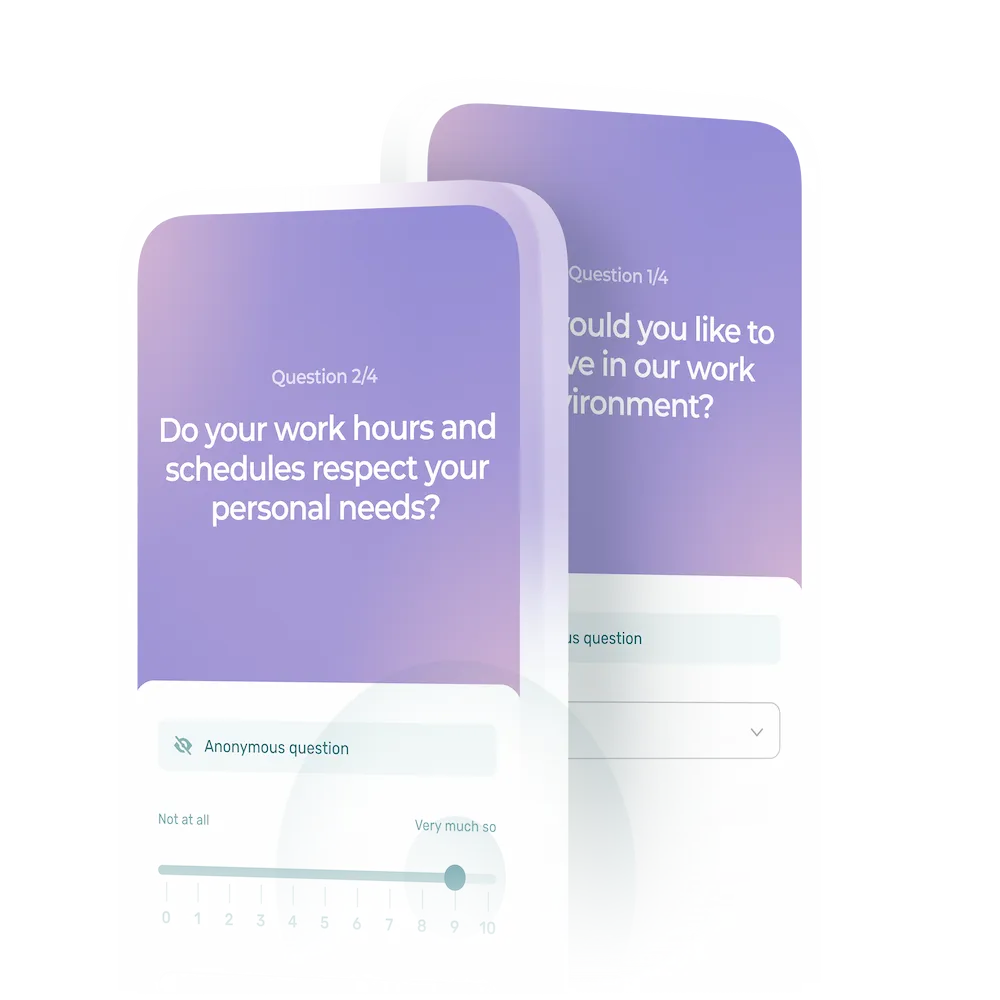
Communication strategy: Use your communication tool to ensure everyone receives the same information, but follow up with face-to-face conversations to address questions and gauge reactions. Digital communication delivers the facts; personal conversations build buy-in.
🥼 Healthcare example: Your clinic is implementing new patient intake software. Instead of just announcing the change, you explain how it will reduce wait times and allow staff to spend more quality time with patients. You train champions on each shift and create quick-reference guides. When team members struggle with the transition, you provide individual coaching rather than generic reminders.
7. Accountability and Follow-Through: Owning Your Decisions and Results
Making decisions is only half the job. Great managers take responsibility for outcomes, follow up to ensure solutions actually work, and create a culture where everyone owns their commitments. This means admitting mistakes when you’re wrong, adjusting course when needed, and ensuring promises made to employees and customers are kept.
The skill: Taking ownership publicly when things go wrong, following up on commitments, and creating systems so nothing falls through the cracks. It’s about being the person your team can count on to see things through.
In practice: When you tell an employee you’ll look into their scheduling request, actually do it and get back to them within the promised timeframe. When you implement a new policy, check back in a week to see how it’s working. When you make a mistake, own it quickly rather than making excuses or blaming circumstances (or even worse, your team).
🍕 Restaurant scenario: You promised a server you’d address the kitchen’s slow ticket times affecting their tips. Instead of letting it slide, you track order completion times for a week, have a conversation with kitchen staff about priorities during rush periods, and follow up with the original server about improvements. This builds trust and shows your commitments aren’t just empty promises.

Team impact: When managers consistently follow through, employees trust that their concerns matter and issues will be addressed. This creates psychological safety where people feel comfortable bringing up problems early rather than letting them fester.
The Skills That Matter When Everything Else Is Automated
The irony of our technological age is clear: the more automated our workplaces become, the more we need distinctly human skills. While AI streamlines operations and predicts customer demand, managers must master the art of leading people through uncertainty, change, and the daily challenges that no algorithm can solve.
These seven soft skills aren’t nice-to-have extras for managers: they’re the core competencies that separate effective leaders from overwhelmed administrators.
The managers who excel in this new landscape understand that technology amplifies their impact but doesn’t replace their judgment. They use AI as a tool that frees them to do the uniquely human work of leadership.
Want to get started with AI at work? Try these 14 prompts.
Ready to free up time for real leadership? Try Agendrix’s workforce management app for shift workers, free for 21 days.
What are soft skills for managers?
Soft skills for managers are interpersonal abilities like active listening, conflict resolution, coaching, emotional intelligence, and adaptability that help them lead teams and make judgment calls. Unlike technical skills, these human abilities handle the situations no procedure or algorithm can solve, which is why they matter more as workplaces adopt AI.
Why do soft skills and AI matter together for today's managers?
Soft skills and AI work best as a combination: AI handles the operational load (scheduling, time tracking, compliance), and managers use soft skills to handle people, conflict, and real-time decisions. This split lets managers spend more time on the work that actually drives team performance and retention, instead of being buried in admin.
Which soft skills can AI not replace?
AI cannot replace any soft skill, because soft skills are inherently human abilities that depend on empathy, context, and real-time judgment. Tools can support managers by handling the operational load (scheduling, time tracking, reminders), but the human work of listening, coaching, resolving conflict, and reading a room can’t be outsourced to an algorithm.
The seven soft skills covered in this article (active listening, conflict resolution, coaching, emotional intelligence, real-time adaptability, change management, and accountability) are simply the ones that matter most for frontline managers today.
What are the most essential soft skills for frontline managers?
The most essential soft skills for frontline managers are conflict resolution, real-time adaptability, coaching, and emotional intelligence. These four matter most because shift-based work creates constant interpersonal pressure: customer issues, no-shows, rushed decisions, and short one-on-one windows where a manager’s response shapes morale fast.
What's the difference between soft skills and hard skills for managers?
Hard skills are technical, teachable abilities tied to specific tools and tasks (using scheduling software, reading a P&L), while soft skills are transferable human abilities like leadership, empathy, and problem-solving. Hard skills help you get hired; soft skills determine whether you actually succeed at leading people.
How does emotional intelligence help managers lead hourly teams?
Emotional intelligence helps managers recognize when employees are stressed, burned out, or struggling before it shows up in performance or attendance. That awareness leads to better scheduling decisions, more supportive conversations, and stronger relationships, which are among the top drivers of retention on shift-based teams.
How can a manager improve their soft skills?
Managers improve their soft skills through deliberate practice in real workplace situations: daily active listening, short coaching moments, private and timely conflict resolution, and regular feedback from their team. Soft skills grow through repetition on the floor, not through reading, so the fastest progress comes from treating every shift as a coaching opportunity.
Can soft skills be learned, or are they innate?
Soft skills can be learned and improved at any stage of a manager’s career. While some people have natural tendencies, skills like active listening, conflict resolution, and emotional intelligence all develop through training, feedback, and consistent practice in real workplace situations.
How do soft skills affect employee retention in frontline industries?
Managers with strong soft skills directly lower turnover by creating work environments where employees feel heard, coached, and supported. In high-churn industries like retail, restaurants, and healthcare, a manager’s communication, empathy, and conflict resolution are among the strongest predictors of whether an employee stays past their first six months.
How is AI changing the role of frontline managers?
AI is shifting frontline managers away from admin tasks like building schedules and tracking hours, and toward higher-value leadership work like coaching, team dynamics, and adaptability. The managers who thrive in this shift are the ones who double down on human skills in the age of AI rather than compete with what automation already does better.