

Key takeaways
- Friendship at work boosts engagement. Canadian and global workplace research shows employees who feel connected to coworkers are more engaged, motivated, and likely to stay.
- But unmanaged friendships create risk. Favouritism, cliques, and blurred professional boundaries can damage trust within teams.
- Managers must protect fairness. Clear expectations, transparent scheduling, and consistent performance standards are essential, especially in shift-based workplaces common across Canada (retail, hospitality, healthcare).
- Connection drives performance, structure protects culture. Encourage healthy workplace relationships, but support them with clear processes and leadership consistency.
Is friendship at work a strength, or a leadership risk? On one hand, research suggests that strong workplace relationships boost engagement, motivation, and retention. On the other, managers worry about favouritism, cliques, blurred boundaries, and conflicts spilling into performance issues.
If you manage a team, you’ve probably wondered:
- Is friendship at work good or bad?
- Should managers encourage workplace friendships?
- What if employees become too close?
- Can being friends with a direct report hurt my credibility?
So, what’s the real answer?
The truth is, friendship at work can either strengthen your team, or quietly undermine it. The difference isn’t the friendship itself. It’s how it’s managed.
A 2025 KPMG study found that 57% of workers would accept a lower salary just to work with close friends.
In this guide, we’ll break down what managers need to know about workplace friendships: the benefits, the risks, and the practical steps you can take to encourage healthy connections without compromising professionalism.
What the Research Says About Friendship at Work

Before setting rules or drawing boundaries, it’s worth asking: does friendship at work actually improve performance?
Research suggests it does. Let’s explain how.
1. Engagement and Performance
Studies have shown that employees who say they have a “best friend at work” are significantly more likely to be engaged.
86% of employees with close work friendships are significantly more likely to report job satisfaction compared to those without.
And engagement isn’t a soft metric.
Engaged employees are more likely to:
- Take initiative
- Deliver better customer service
- Stay focused during busy periods
- Go beyond minimum expectations
For managers, that translates into stronger daily execution.
In shift-based environments especially, engagement often shows up in small but critical behaviours: helping a coworker during a rush, covering a shift without complaint, or communicating proactively about issues.
Friendship at work reinforces those behaviours because people naturally support those they feel connected to.
Connection doesn’t always come from social events
On the recommendation of Gallup consultants, a manufacturing supervisor started a morning meeting by asking employees to share something personal about themselves. Two managers who had been at odds for months participated. During the discussion, they discovered they were both war veterans. That shared experience shifted how they saw each other, and according to the supervisor, their collaboration improved significantly afterward.
The lesson isn’t about shared backgrounds.
It’s about humanization.
When employees see each other as people, not just roles, friction decreases and performance improves.
The same principle applies in any shift-based environment. A quick personal check-in at the start of a shift, or a two-minute handoff conversation that goes beyond task lists. These small moments build the kind of familiarity that makes teams move faster when things get busy.
🎯 Key takeaway: Engagement grows when employees feel personally connected. Managers can create small moments that unlock big performance gains.
2. Retention and Workplace Satisfaction
Employees rarely stay in a job just because of tasks.
They stay because of people. The colleagues who make a hard shift bearable, a slow day interesting, and a stressful week survivable.
Workplace friendships create:
- A sense of belonging
- Emotional support during stressful periods
- A reason to stay when another offer appears
When turnover is costly (hint: it always is 😉) strong team connections become a retention strategy.
But this is where many managers hesitate.
Because while friendship at work boosts engagement, it also introduces real leadership challenges.
When Friendship at Work Becomes a Liability

Friendship at work isn’t automatically positive.
It can create instability.
Here’s what managers worry about, and why those concerns are valid.
1. Friendship at Work Can Create Favouritism (or the Perception of It)
Even if you treat everyone fairly, employees may perceive bias if:
- You socialize outside work with certain team members
- Some employees consistently receive preferred shifts
- Performance issues are handled inconsistently
Perception erodes trust faster than reality.
Leadership credibility depends on consistency AND transparency.
2. Friendship at Work Can Create Cliques and Exclusion
Strong friendships can unintentionally isolate others.
When small groups:
- Make inside jokes others don’t understand
- Influence decisions informally
- Advocate for each other on scheduling or task assignments
…team cohesion weakens.
In customer-facing environments, that tension often spills over into service quality.
3. Friendship at Work Can Blur Professional Boundaries
The biggest risk of workplace friendships isn’t closeness.
It’s hesitation.
Managers who are too close to their team members often find themselves avoiding the conversations that matter most: giving constructive feedback, enforcing policies, addressing underperformance. Not because they don’t see the problem, but because the relationship makes it uncomfortable to act on it.
That hesitation is where standards slip. And when standards slip, performance follows.
Should Managers Be Friends With Employees?
This is one of the most common questions around friendship at work.
The honest answer: it depends on your role.
If You Supervise Them Directly
This is where risk increases.
Being close friends with a direct report can create:
- Real or perceived favouritism
- Confidentiality challenges
- Team resentment
Why? Friendship with a direct report carries more leadership risk because you influence their performance reviews, you control scheduling or promotions.
If a friendship develops, you must:
- Maintain documented performance processes
- Apply policies consistently
- Be transparent in scheduling and PTO approvals
- Separate personal conversations from professional ones
Your leadership role must always come first at work.
If They’re Peers
The risk is lower, but professional boundaries still matter.
👉 Feel free to read our article to know more about how to set boundaries at work.
Even friendly teams need:
- Clear communication norms
- Defined responsibilities
- Accountability standards
Friendship at work should strengthen collaboration, not compromise clarity.
How to Encourage Healthy Friendship at Work

You don’t control relationships, but you influence the environment where they grow.
Here are 10 practical strategies to support workplace friendships without letting them undermine your team.
1. Set Clear Expectations Early
Define what professionalism looks like on your team: respect during shifts, no gossip or exclusion, equal access to opportunities, consistent standards for everyone.
When expectations are clear from the start, friendships can develop without ambiguity about what’s acceptable.
🎯 Key takeaway: Friendship should never override performance. Make expectations visible and measurable.

2. Build Transparency Into Scheduling
Scheduling is one of the most common friction points when friendships are involved. Problems arise when friends swap shifts informally, when time-off approvals feel uneven, or when certain team members always end up working together.
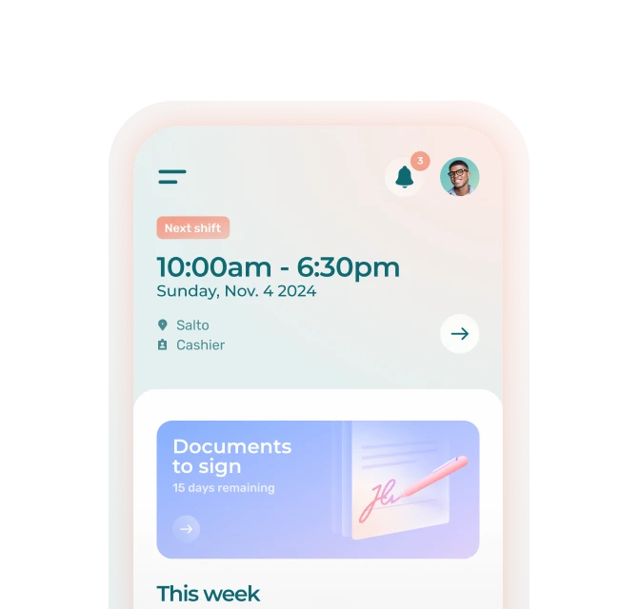
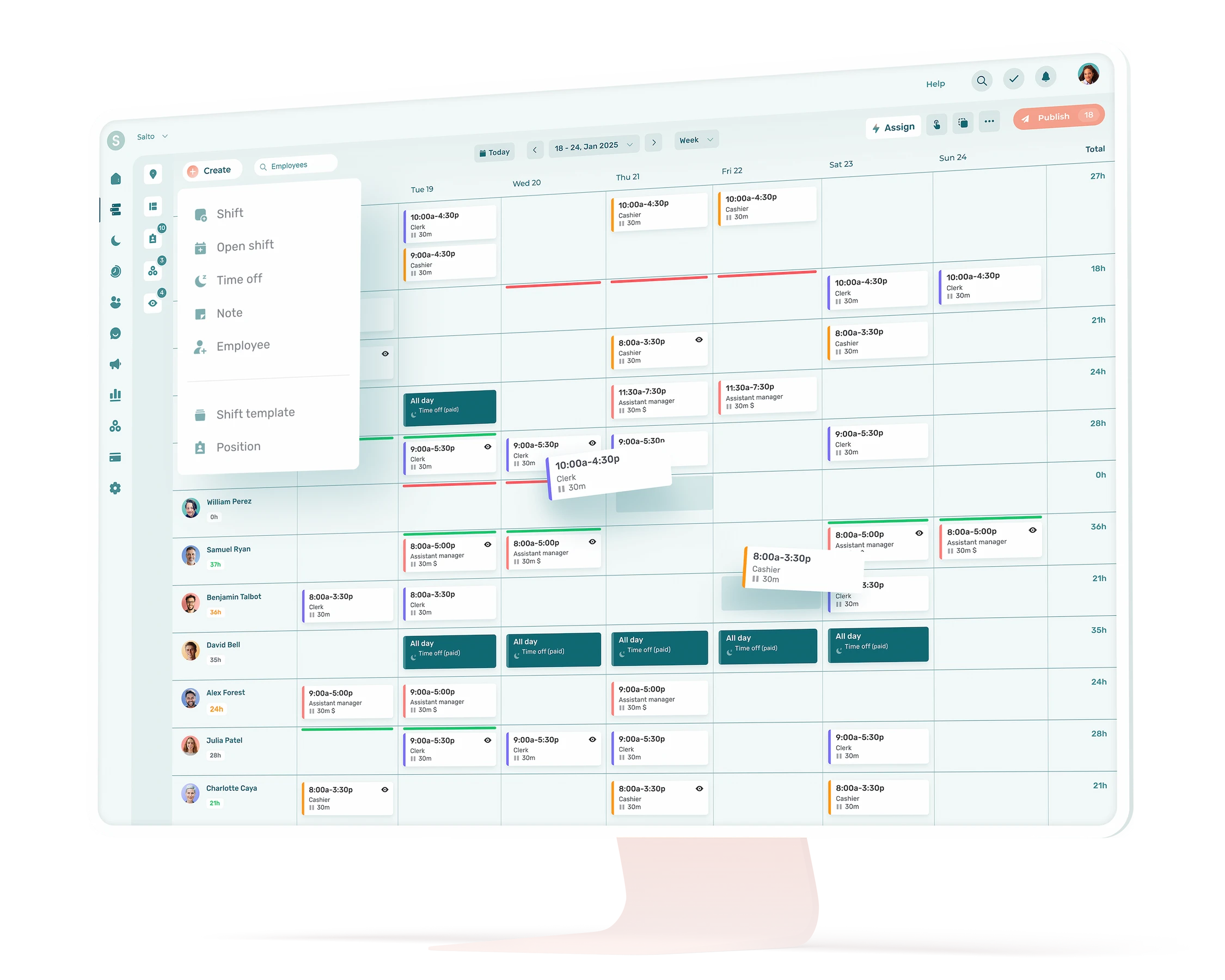
A centralized scheduling tool like Agendrix allows managers to track availability, approve requests consistently, monitor shift swaps, and maintain a clear record of every decision. When the process is visible and documented, fairness becomes structural rather than personal.
Images app
🎯 Key takeaway: Avoid informal agreements between friends. Structure prevents suspicion.
3. Apply Policies Without Exception
If a rule applies, it applies to everyone, regardless of personal relationships. Inconsistency is where credibility erodes.
🎯 Key takeaway: Consistency protects your leadership credibility. No exceptions means no resentment.
4. Separate Personal and Professional Roles
If you’re close to someone on your team, give feedback formally, keep performance conversations documented, and avoid discussing confidential topics socially. The relationship does not change the standard.
🎯 Key takeaway: Clarity prevents confusion. Keep friendship and authority clearly defined.
5. Encourage Team-Wide Interaction


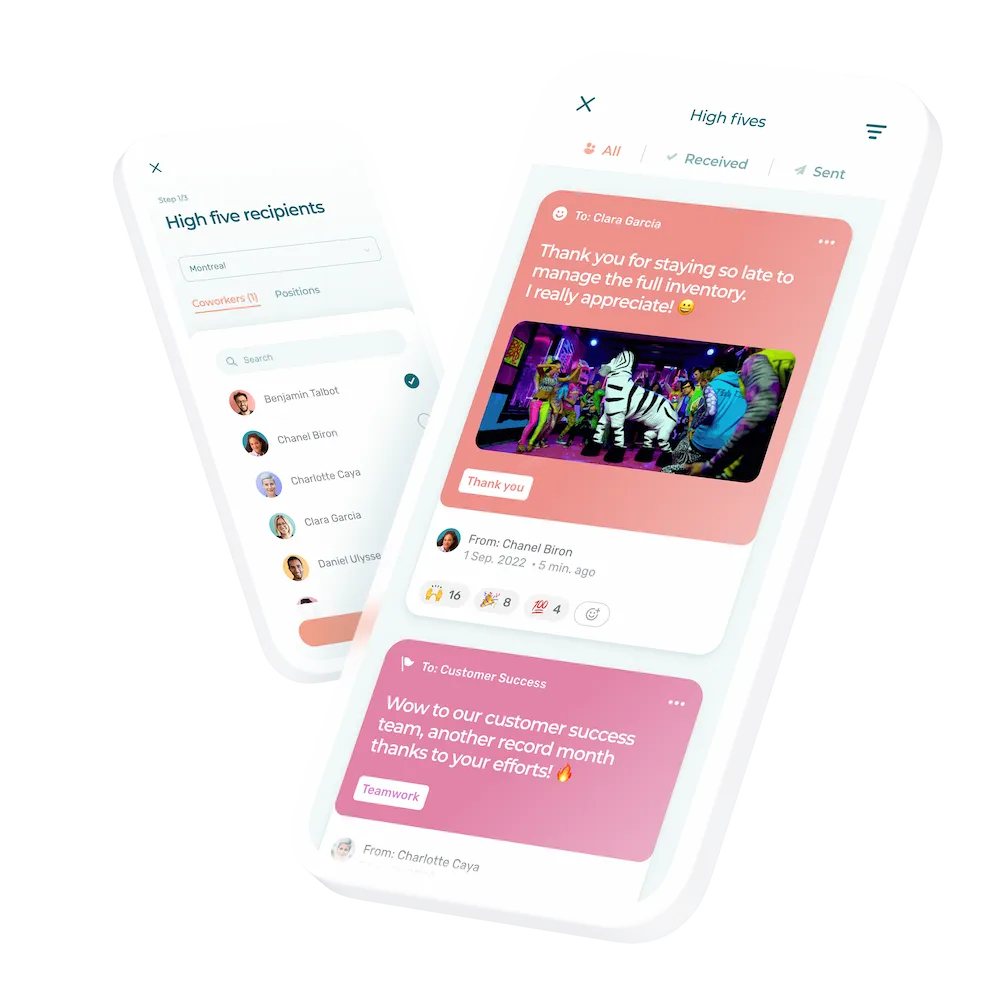
You don’t need forced bonding activities. But rotating pairings occasionally, celebrating team wins, and creating shared goals all help prevent social circles from hardening into cliques.
Visual high fives
🎯 Key takeaway: Broader exposure builds stronger teams. Don’t let social circles define who collaborates with whom.
6. Communicate the Reasoning Behind Decisions
When team members understand why a decision was made, they are less likely to assume bias. Explaining the logic behind scheduling calls and performance decisions is not over-communication, it’s good leadership.
🎯 Key takeaway: Transparency reduces gossip.
7. Train Supervisors on Boundary Management
Managers need specific guidance on giving corrective feedback to someone they’re close to, handling conflict between friends on the team, and maintaining authority without becoming distant. These are skills, not instincts.
🎯 Key takeaway: Boundary management is a leadership skill. Train for it intentionally.
8. Watch for Signs of Exclusion
Inclusion requires active attention. Watch for inside jokes that consistently leave someone out, new hires who struggle to integrate, or informal influence groups forming around scheduling and task assignments.
🎯 Key takeaway: Inclusion requires active leadership. Pay attention to who feels left out.
9. Address Friendship Conflicts Early
When friends fall out, the tension spreads fast. Intervene early, focus on behaviour and shared expectations rather than the relationship itself, and don’t wait for it to affect service or team morale.
🎯 Key takeaway: Address behaviour immediately. Small tensions grow into cultural problems when ignored.
10. Model What Healthy Professional Friendship Looks Like
You can be approachable and human while still enforcing standards, making objective decisions, and holding people accountable. How you show up sets the norm for everyone else.
🎯 Key takeaway: Leadership sets the emotional tone of the workplace. Be friendly, but always be fair.
Friendship at Work in Shift-Based Teams


In retail, hospitality, healthcare, and manufacturing, friendship at work plays a unique role.
Shift work creates:
- High-pressure peak hours
- Last-minute absences
- Physical and emotional fatigue
When employees trust each other, they:
- Step in faster
- Communicate more clearly
- Support one another during busy periods
In shift work environments, friendship at work isn’t a luxury. It’s operational resilience.
But it must be supported by structure, especially when schedules constantly change.
Real-World Scenarios Managers Face
What If Two Close Friends Stop Speaking?
The tension will spread before you even notice it: in shift handoffs, task assignments, and the general mood of the floor. Intervene early. Focus on behaviour and shared expectations, not the friendship itself. Your job isn’t to repair the relationship. It’s to make sure it doesn’t affect the team.
The rule: You don’t manage friendships. You manage behaviour and results.
What If an Employee Accuses You of Favoritism?
Stay calm and avoid defensiveness. Walk them through the objective criteria behind the decision: scheduling rules, documented performance standards, approval processes. If your decisions are structured and visible, they can speak for themselves.
The rule: Transparency and accountability are your strongest proof. Walk the talk.
What If a Friendship Becomes Romantic?
Review your workplace policy first. Then look at reporting lines and any potential conflicts of interest. In some cases, restructuring responsibilities is the right call. Not as a punishment, but as a way to protect everyone involved, including yourself.
The rule: Structure removes ambiguity. Apply it early and apply it consistently.
What If One Friend Underperforms?
This is where most managers hesitate and where standards quietly slip. Don’t delay feedback, don’t compensate informally, and don’t hold the friendship as a reason to go easier. Apply the same documentation and performance process you would for anyone else on the team.
The rule: Accountability doesn’t have exceptions. Especially when it’s uncomfortable.
A Simple Decision Framework for Managers
If the friendship:
- Improves performance → Support it
- Encourages collaboration → Reinforce it
- Creates exclusion → Address it
- Interferes with accountability → Intervene
- Affects fairness or perception → Restructure processes
You are not managing friendships. They just happen to be part of human nature. Focus on managing performance, improving culture, and fostering trust.
The Bottom Line: Friendship at Work Needs Structure
Friendship at work is neither automatically good nor inherently dangerous.
It’s powerful.
When supported by:
- Clear boundaries
- Transparent processes
- Consistent leadership
It even becomes a competitive advantage.
As a manager, your job isn’t to prevent friendship at work. It’s to ensure it doesn’t impact fairness, clarity, and accountability, so connection strengthens your team instead of dividing it.
Because engagement grows from relationships. And performance grows from engagement.
Is friendship at work good or bad?
Friendship at work is generally positive. Research shows employees with close work friendships are significantly more likely to report job satisfaction and stay with their employer longer.
The risk isn’t the friendship itself, it’s when there’s no structure around it. Clear expectations, consistent decisions, and transparent processes allow workplace relationships to strengthen a team rather than divide it.
Should managers encourage friendships at work?
Yes, with structure. Managers should create conditions where team members can connect: shared goals, team-wide interactions, open communication, while maintaining consistent performance standards and fair processes for everyone. Encouraging friendship doesn’t mean ignoring accountability.
Is it unprofessional to be friends with someone you manage?
It can create real challenges. When you directly supervise someone, the risk isn’t the friendship itself but the perception of bias it creates. Decisions around scheduling, feedback, and performance must be documented and applied consistently, whether or not a personal relationship exists.
What are the risks of workplace friendships for managers?
The main risks are favouritism (or the perception of it), cliques that exclude others, and hesitation around accountability. Managers who are too close to their team members sometimes avoid the difficult conversations that matter most: feedback, performance issues, policy enforcement. That hesitation is where standards slip.
How can managers prevent cliques from forming at work?
Rotate pairings when possible, create shared team goals, and encourage collaboration across the group. Watch for inside jokes that consistently leave someone out, or informal influence forming around scheduling and task assignments. Address exclusion early: it spreads faster than most managers expect.
What happens when two close coworkers stop speaking?
The tension will show up in shift handoffs, task assignments, and team morale before you fully realize it. Intervene early and focus on behaviour and shared expectations, not the friendship itself. Your job isn’t to repair the relationship, it’s to make sure it doesn’t affect the team.
Why does friendship at work matter more in shift-based environments?
In retail, hospitality, and healthcare, teams face high-pressure peaks, last-minute absences, and physical fatigue on a regular basis. When team members trust each other, they respond faster, communicate more clearly, and support one another during busy periods. In shift-based work, those connections aren’t a nice-to-have, they’re what keeps operations running when things get difficult.