Gamification in the Workplace: 7 Practical Ways to Engage Your Shift-Based Teams
Key takeaways
- Gamification in the workplace means weaving game mechanics (points, challenges, recognition) into daily work to boost motivation and employee engagement.
- It works especially well for shift-based teams because it relies on short, visual, and instantly rewarding actions that match the pace of shift work.
- You don’t need a massive tech budget. A whiteboard, a simple mobile app, or even a team bulletin board can be enough to launch a first gamified initiative.
- Results are measurable: lower turnover, better punctuality, higher customer satisfaction, and a stronger team culture.
- The most common mistake is turning gamification into disguised surveillance. The goal is to recognize good work, not to rank or punish.
Motivating a team that works in shifts, without a desk or a computer, takes creativity. Gamification in the workplace gives you simple ways to make it happen.
According to Gallup’s State of the Global Workplace 2025 report, only 21% of employees worldwide say they’re engaged at work, a two-point drop from the previous year.
For shift-based teams (restaurants, retail, healthcare, cleaning services), the challenge is even bigger. These employees don’t have a fixed desk, constant access to a computer, or the luxury of long classroom training sessions. That’s exactly where gamification employee engagement strategies become a powerful lever to re-energize your teams.
What Is Gamification in the Workplace?

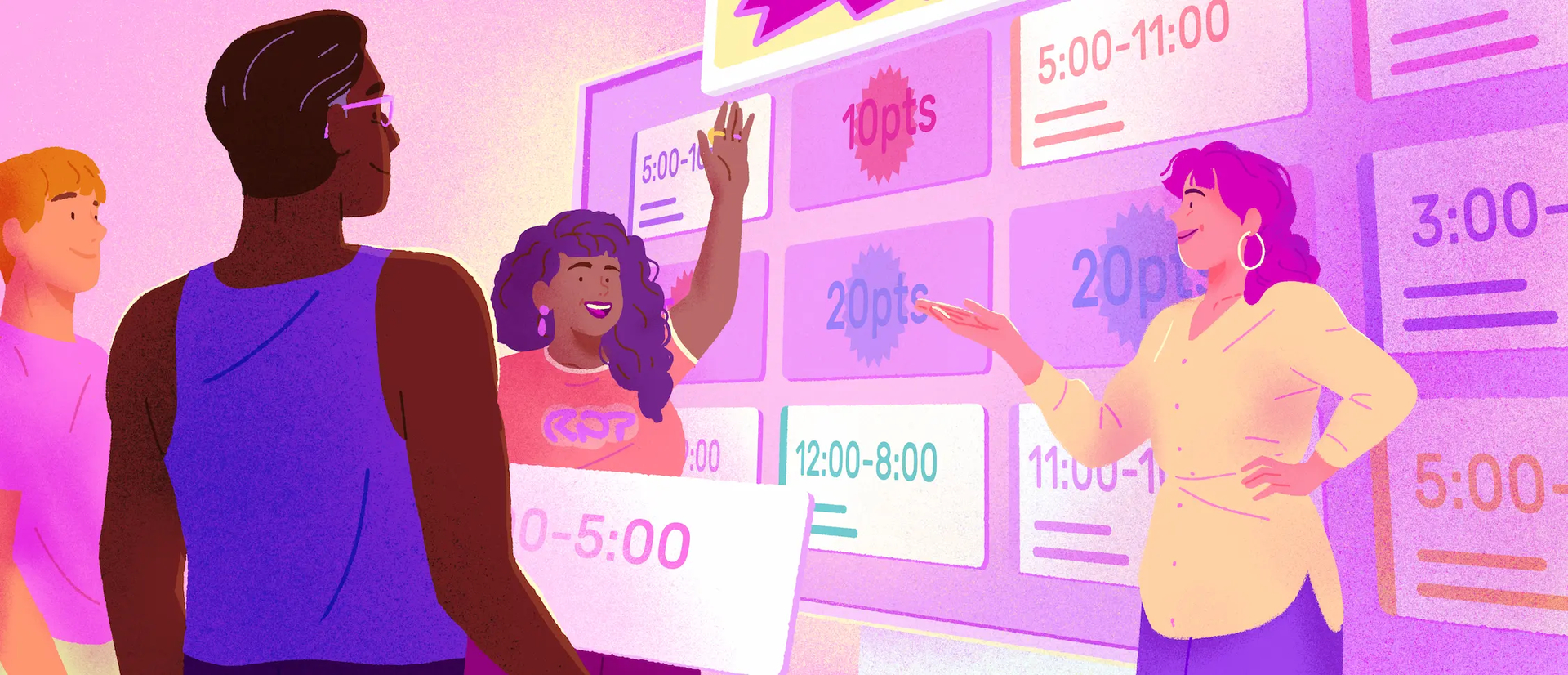
Gamification at work is the practice of using game mechanics in a professional setting. Think points, challenges, levels to reach, recognition badges, or progress boards.
The goal isn’t to turn work into a video game. It’s to borrow what makes games engaging and apply it to everyday tasks to make them more motivating.
In office settings, gamification often runs through digital platforms or learning management systems (LMS). It works just as well for shift work. You simply need to adapt the mechanics to the pace, the tools, and the reality of shift-based teams.
What makes gamification effective is that it taps into the same drivers as workplace motivation. It addresses three core needs: feeling competent (I’m improving), feeling autonomous (I choose how to get better), and feeling like part of the team (we’re moving forward together). That’s exactly what’s missing in many frontline workplaces, where employees can sometimes feel invisible or interchangeable.
Why Gamification Is a Natural Fit for Shift-Based Teams
Most published content on gamification in the workplace targets office or remote teams. But shift workers face very different realities:
- Their shifts are structured and often repetitive.
- They don’t have continuous access to a workstation.
- Feedback from their manager is often rare, or limited to what goes wrong.
- Recognition tends to stay private, invisible to the rest of the team.
That’s precisely where gamification at work makes the most sense. Game mechanics work best when they’re simple, visible, and immediate, three qualities that fit frontline work perfectly.
According to data compiled by SC Training in 2025, 85% of employees exposed to game mechanics at work say they feel more engaged.
When you know how fragile engagement is among shift-based employees, that’s hard to ignore.
A retail employee who sees their name on a recognition board after hitting a sales target feels valued right away. A cleaning service worker who completes a speed challenge during room inspections feels competent and appreciated. Neither of these initiatives requires a special budget or a complex tool.
7 Gamification Initiatives for Shift-Based Teams
1. Launch Team Challenges Every Shift
Set a collective goal for each shift: average service time in fast food, number of completed sales in retail, or satisfaction score in a seniors’ residence. When the team hits the target, they unlock a tangible perk (extended break, first pick on next week’s schedule, shared gift card, free meal).
Why it works: A team challenge eliminates the risk of unhealthy competition between colleagues. It strengthens team spirit and gives every shift a shared purpose.
2. Make Recognition Visible With Badges
Create a set of badges (physical or digital) that employees can collect: “Punctuality Pro,” “Smile of the Month,” “Zero Incidents.” Display them on a bulletin board, in a team communication app, or directly on the schedule.
Why it works: Badges make visible what usually stays invisible. A reliable employee who always shows up on time deserves recognition, not just the one who lands an exceptional sale.
3. Gamify Your New Employee Onboarding
Onboarding in shift-based industries is often rushed into a few hours. Turn it into a gamified journey: each skill mastered (cash register, closing, safety protocol, customer service) unlocks a visible step on a progress board. The employee can see where they stand and what’s left to learn.
Why it works: In high-turnover industries (restaurants, retail), a structured and engaging onboarding process reduces departures within the first 90 days. New hires feel guided and motivated rather than left on their own.
4. Test Knowledge in 3 Minutes at the Start of Each Shift
Before the lunch rush or store opening, run a quick 3-to-5-question quiz on products, current promotions, or safety protocols. The team or individual with the best score accumulates points week after week.
Why it works: It’s a short format (2 to 3 minutes) that keeps knowledge fresh without feeling like formal training. In healthcare or safety-sensitive settings, it’s also a great way to reinforce best practices.
5. Let Each Employee Choose Their Own Challenge
Give every employee the option to pick a personal goal for the month (improve their service speed, reduce cash register errors, earn more positive customer comments). Display progress visibly, without ranking colleagues against each other.
Why it works: This approach feeds the sense of autonomy. The employee chooses what to improve, and visible tracking provides constant feedback without depending solely on their manager.
6. Reward Good Behaviours With a Points System
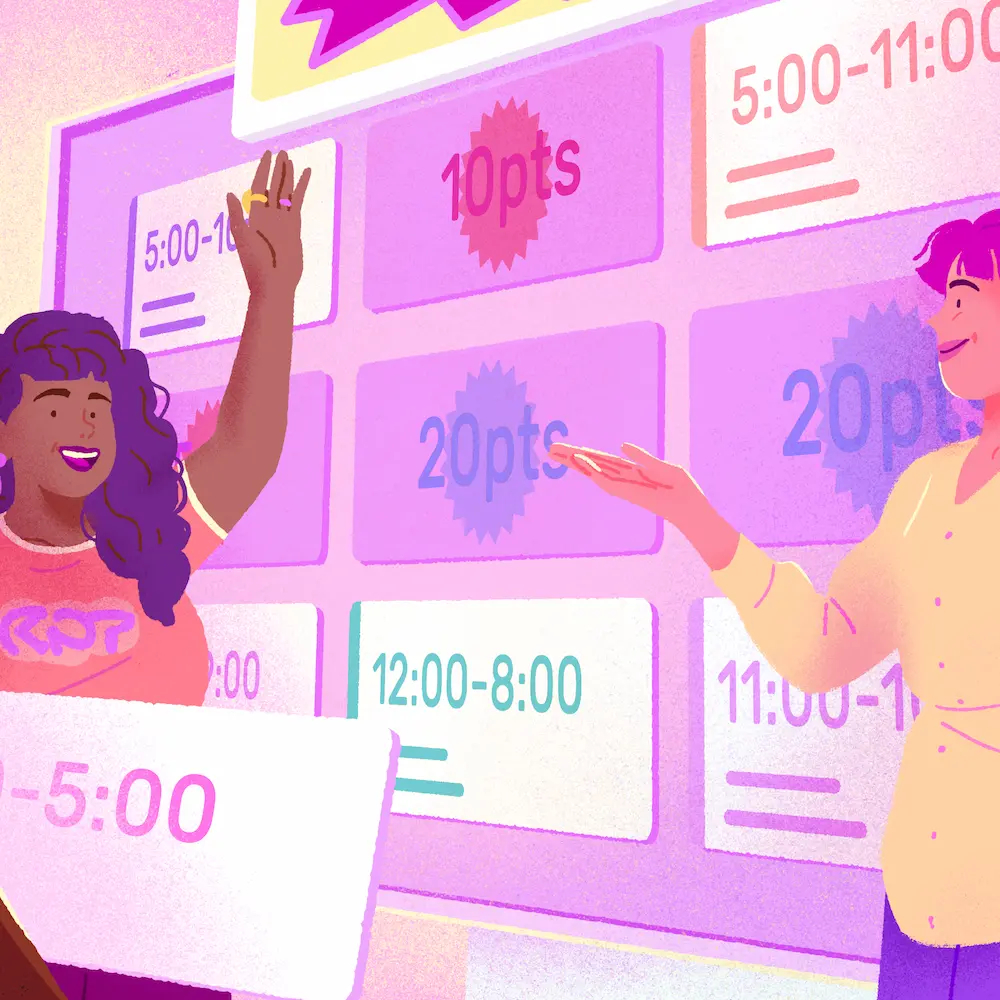
Award points for behaviours you want to encourage: covering for a colleague at the last minute, submitting a suggestion that gets adopted, zero absences in a month, or completing a training module. Points can be exchanged for tangible perks: first pick on the schedule, a bonus day off, a gift card, or even a reserved parking spot.
Why it works: Rewards aligned with what frontline employees actually value (schedule flexibility, recognition) have far more impact than a generic trophy.
7. Create a Friendly Rivalry Between Your Locations
If your company has multiple locations, create a monthly ranking on a key metric: customer satisfaction rate, punctuality rate, or cleanliness audit score. The winning location earns public recognition and a team perk.
In fast food, for example, some franchises run contests between locations on a specific product. The winning location walks away with gift cards. That’s all it takes to create excitement.
Why it works: Inter-location competition builds a sense of identity and local pride. It works especially well in restaurant chains, pharmacy networks, or security companies.
Pitfalls to Avoid
Gamification at work can backfire if it’s poorly designed. Here are the most common mistakes.
Launching an initiative without maintaining it. A points board that stops getting updated after two weeks sends a worse message than no board at all. Before you start anything, make sure you can keep it alive.
Turning the game into surveillance. If leaderboards are used to identify and punish low performers, you’ll create distrust, not engagement. Gamification should recognize good work, not try to control staff.
Rewarding only individual performance. For frontline teams, the work is collective. If only top performers get recognized, you risk alienating the rest. Prioritize team challenges and varied recognition (punctuality, helpfulness, progress).
Ignoring employee feedback. The game mechanics that work for a kitchen crew aren’t the same as those for a security team. Involve your employees in choosing the challenges and rewards. They’re the players.
Using gamification as a substitute for good working conditions. Badges don’t make up for low pay, unstable schedules, or a disrespectful manager. Gamification amplifies a healthy culture and strengthens employee engagement, but it doesn’t replace the foundations.
How to Get Started
You don’t need specialized software to launch a first gamification initiative. Here’s a realistic starting point for an SMB.
- Pick a single behaviour you want to encourage (punctuality, customer satisfaction, training completion, helping out colleagues).
- Define a simple mechanic: a visible board, a paper-based points system, or a dedicated channel in your team communication app.
- Set a tangible, achievable reward.
- Run a one-month pilot with a single team or location.
- Measure results and gather feedback. Adjust, then expand.
The principle is simple: start small, measure, and iterate. You can always add more structure once you see early results.
Did You Know Agendrix Can Support Gamification at Work?

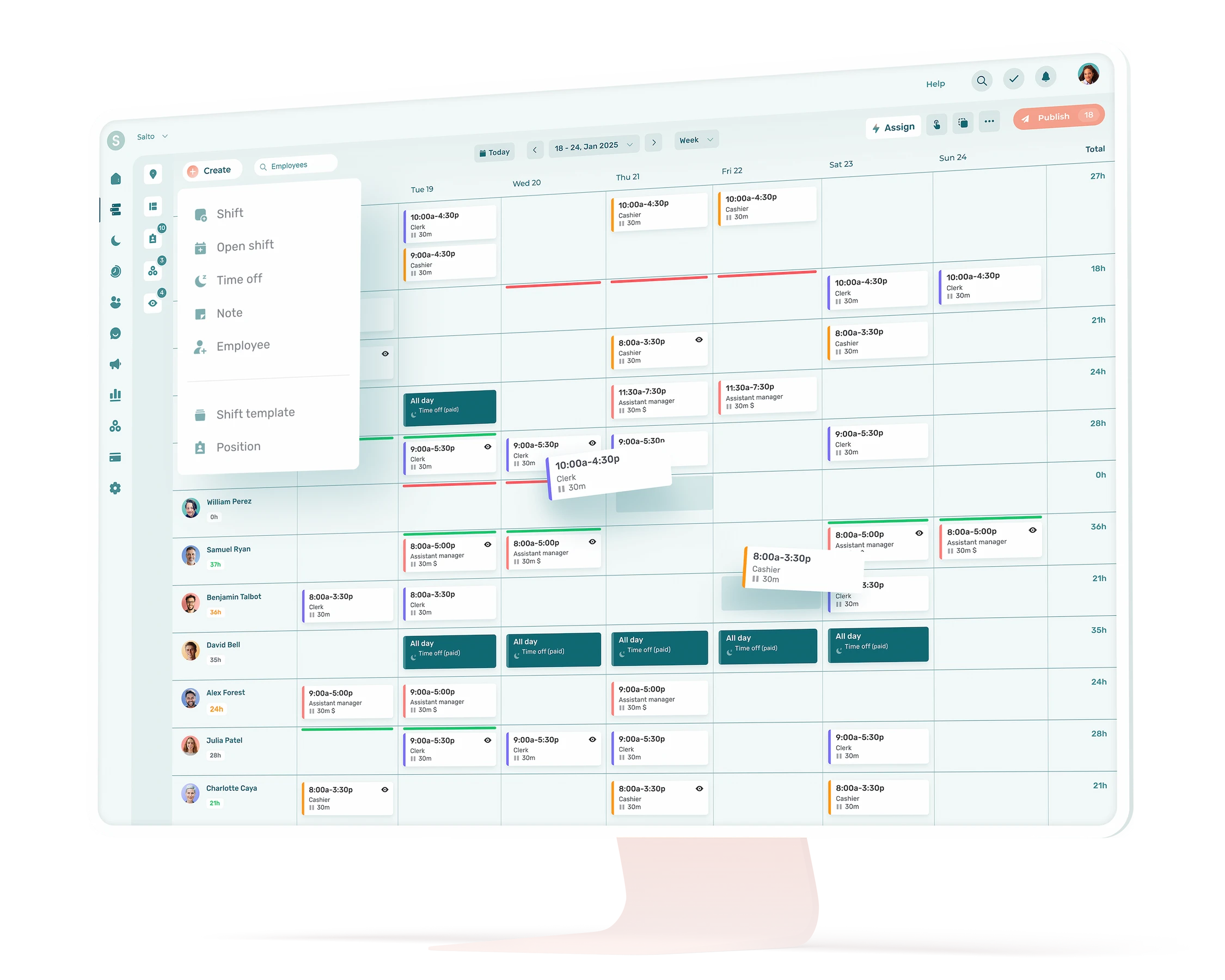
As your gamification initiatives grow, a team management tool that centralizes communication and tracking makes all the difference. That’s exactly what Agendrix does.
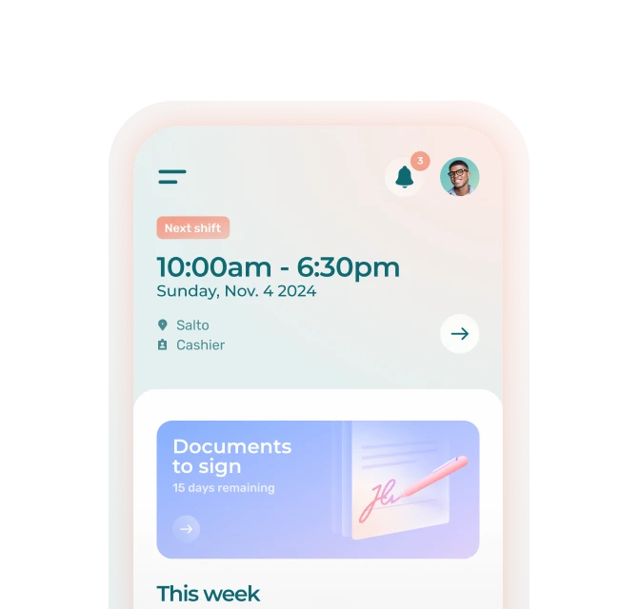
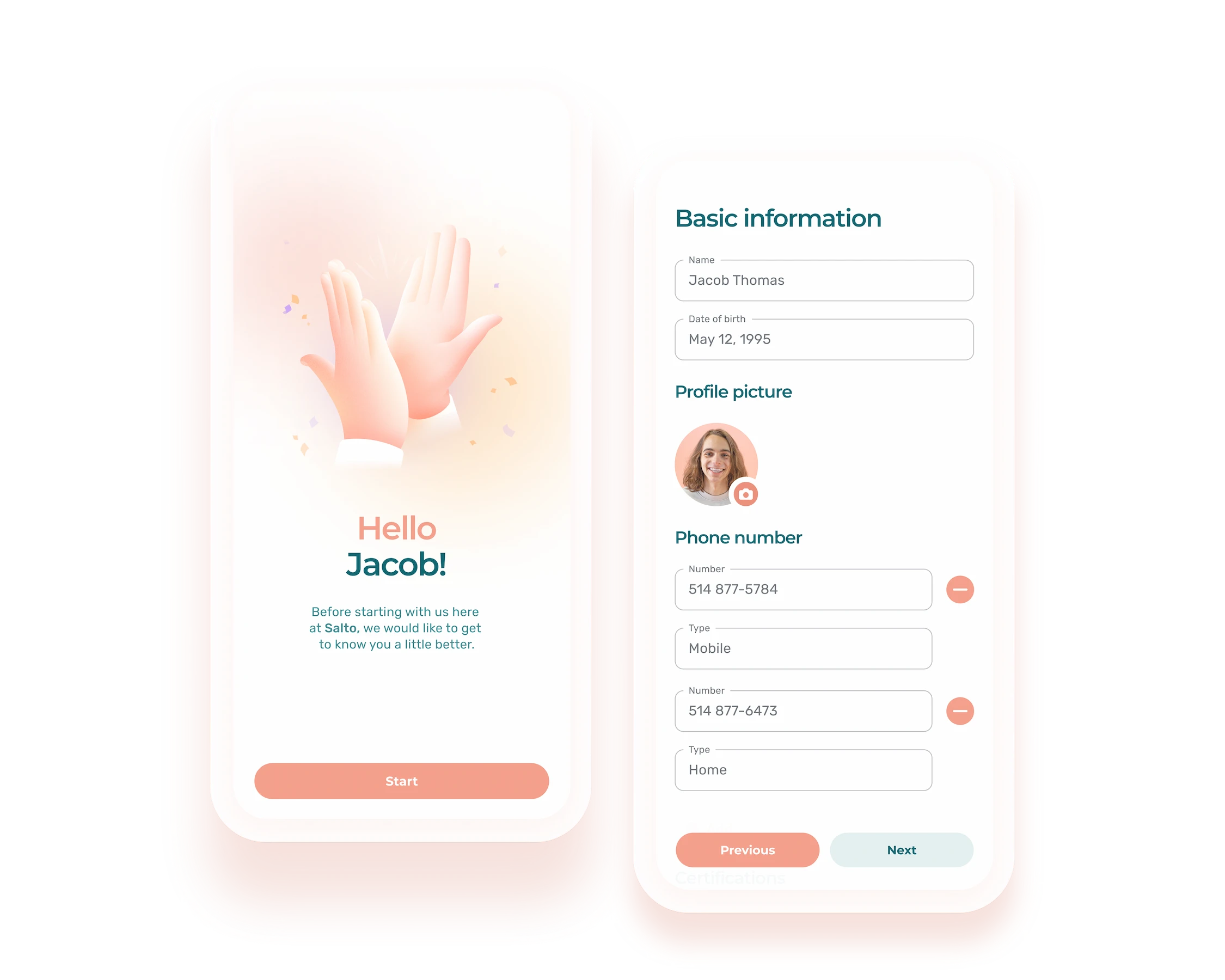
The news feed gives you a space to highlight wins, share challenge results, and display recognition, all visible to the entire team, even those who aren’t working the same shift. With the High Fives feature, employees and managers can also send each other recognition cards, publicly or privately. Recognition becomes a team effort, not just a manager’s job.
Attendance and punctuality tracking happens automatically, giving you reliable data to fuel your points systems or team challenges without manual tracking.
And schedule management lets you offer the rewards your employees value most: first pick on shifts, schedule flexibility, and bonus days off.
In short, you don’t need a dedicated gamification platform. A solid team management tool already does most of the heavy lifting.
It’s Worth the Effort
Gamification in the workplace isn’t a trend reserved for tech companies with unlimited budgets. It’s an accessible, practical lever built for the realities of frontline teams and SMBs. Your employees may not have a desk, but they have the same needs as everyone else: to grow, to be recognized, and to feel like they’re part of a team that’s moving forward. Gamification is simply a means to show them you get it.
What is gamification in the workplace?
Gamification in the workplace is the practice of applying game mechanics to a professional setting. It uses elements like points, badges, challenges, and progress boards to make everyday tasks more engaging and motivating. The goal is to boost participation and employee motivation, not to turn work into a video game.
Does gamification work for employees who don't work at a desk?
Yes, and it’s actually one of its strongest use cases. Game mechanics like team challenges, physical recognition boards, and start-of-shift quizzes are perfectly suited to shift-based environments: restaurants, retail, healthcare, security, and cleaning services.
How do you prevent gamification from becoming a form of surveillance?
The key is to centre gamification on recognition and progress, not on ranking and punishment. Prioritize team challenges over individual leaderboards. Involve your employees in choosing the mechanics and rewards. Use the data to celebrate, not to sanction.
What budget should you plan for implementing gamification in an SMB?
You can start with almost no budget: a whiteboard, stickers, or a simple shared file is enough to launch a pilot project. To go further, team management software with built-in communication and recognition features can make tracking easier at scale, often for just a few dollars per employee per month, with no major technology investment.
Does gamification actually improve employee retention?
When implemented well, gamification helps improve retention by addressing the main drivers of turnover: lack of recognition, absence of feedback, and feeling invisible. It doesn’t replace good working conditions, but it amplifies a positive culture that’s already in place.
What metrics should you track to measure the success of a gamification initiative?
The most relevant metrics depend on your initiative’s goal: punctuality rate, customer satisfaction score, turnover rate, number of safety incidents, training completion rate, or participation rate in proposed challenges. Compare results before and after implementation over a period of at least three months.
Is gamification suitable for all shift-based industries?
It applies to the vast majority of frontline sectors: restaurants, retail, hospitality, healthcare, seniors’ residences, security, cleaning services, logistics, and pharmacies. The mechanics simply need to be adapted to each environment. A speed-of-service challenge works in a restaurant, while a protocol compliance challenge is more relevant in healthcare.