

Key takeaways
- Banked time replaces overtime pay with paid time off. Overtime hours go into a bank, and the employee draws on that balance later to take paid days off.
- The standard ratio is 1.5 hours off for each overtime hour. Alberta is the main exception at 1:1, and British Columbia banks overtime wages rather than hours.
- You can’t impose it. Banked time requires the employee’s request or a written agreement, depending on the province. In most provinces, the hours must be used within 3 to 12 months, or paid out.
- Banked time isn’t for everyone. Some employees prefer the cash, and time off taken at the wrong moment leaves you with open shifts to fill.
- Everything depends on reliable tracking. Counting balances by hand quickly leads to gaps between your numbers and your employees’.
Banked time, also called time in lieu, lets an employee take their overtime hours as paid time off instead of overtime pay. In Canada, each province sets its own ratio, paperwork, and deadline. Here’s what the rules say where you operate, and how to keep every hour accounted for.
According to Statistics Canada’s Canadian Survey on Working Conditions, 17% of Canadian workers do unpaid work in their free time several times a month, at times they weren’t scheduled to work. Hours that go unrecorded can’t be paid or banked.
What is banked time?
Banked time is the balance of overtime hours an employee chooses to set aside instead of being paid for them. They use that balance later as paid time off.
In payroll and HR, the same practice goes by several names: time in lieu, lieu time, time off in lieu of overtime, TOIL, banked overtime, or banked hours. They all mean the same thing.
The usual approach when someone works overtime is to pay those hours at time and a half, as explained in our guide to calculating overtime. Banked time takes a different route: time and a half applies to time off instead of the paycheque.
Take Hannah, a clerk at a hardware store in London. During month-end inventory, she works 50 hours. In Ontario, overtime starts after 44 hours a week, so that’s 6 overtime hours. Hannah would rather have time than money, so she asks to bank them. Banked at time and a half, those 6 hours become 9 hours of paid time off. Three weeks later, on a quiet Friday, she uses 8 of them for a long weekend. The extra hour stays in her bank.

Banked time rules by province
There’s no single Canadian rule for banked time. Like stat holiday pay, it depends on where you operate. Each province and territory sets its own employment standards, and federally regulated businesses follow the Canada Labour Code. Here’s how the rules compare.
| Jurisdiction | Overtime starts after | Banked time ratio | How it’s set up | Deadline to use it |
|---|---|---|---|---|
| Federal (Canada Labour Code) | 8 h/day or 40 h/week | 1.5 h per overtime hour | Employee request + written agreement | 3 months after the end of the pay period, up to 12 months by written agreement (non-union), or longer under a collective agreement |
| Alberta | 8 h/day or 44 h/week, whichever is greater | At least 1 h per overtime hour | Written overtime agreement, individual, group or collective | 6 months after the end of the pay period, or longer under a collective agreement |
| British Columbia | 8 h/day or 40 h/week | Overtime wages banked (1.5x or 2x) | Employee’s written request | No set deadline. The employee can ask at any time to be paid out or to take paid time off |
| Manitoba | 8 h/day or 40 h/week | 1.5 h per overtime hour | Written or collective agreement | 3 months after the end of the pay period, unless a longer period is prescribed or approved by the director |
| New Brunswick | 44 h/week | Not permitted | Overtime must be paid | Not applicable |
| Newfoundland and Labrador | 40 h/week | 1.5 h per overtime hour | Employer-employee agreement | 3 months after the work week, or 12 months if the employee agrees |
| Northwest Territories | 8 h/day or 40 h/week | 1.5 h per overtime hour | Written individual, group, or collective agreement | 3 months after the end of the pay period |
| Nova Scotia | 48 h/week | Not provided for in legislation | Pay overtime by default | Check with Labour Standards |
| Nunavut | 8 h/day or 40 h/week | Not provided for in legislation | Pay overtime by default | Check with Labour Standards |
| Ontario | 44 h/week | 1.5 h per overtime hour | Written or electronic agreement | 3 months after the work week, or 12 months with the employee’s written or electronic agreement |
| Prince Edward Island | 44 h/week | 1.5 h per overtime hour | Employee’s written notice to the employer | 3 months after the end of the work week |
| Quebec | 40 h/week | 1.5 h per overtime hour | Employee request, or collective agreement or decree | 12 months after the overtime |
| Saskatchewan | 8 h/day or 40 h/week | 1.5 h per overtime hour | Written agreement signed by both parties | 12 months after the end of the pay period |
| Yukon | 8 h/day or 40 h/week | 1.5 h per overtime hour | Written agreement | The 12-month period in the agreement, or the calendar year |
A collective agreement can set different terms. Confirm with your local employment standards office before setting up a time bank.
👉 In New Brunswick and Newfoundland and Labrador, overtime pay is based on 1.5 times the minimum wage, not the employee’s regular wage.
Time in lieu in Ontario: the standard model
Ontario’s Employment Standards Act allows time off in lieu of overtime pay if you and the employee agree in writing, and an electronic agreement counts. The employee earns 1.5 hours of paid time off for each overtime hour. They must take it within 3 months of the work week in which it was earned, or within 12 months if the employee agrees. Overtime starts after 44 hours a week, with no daily threshold.
Exception: Alberta banks time at 1:1
Since September 1, 2019, overtime agreements bank at least 1 hour of time off for each overtime hour, not 1.5. The hours must be used within 6 months of the end of the pay period in which they were earned. Otherwise, you must pay them out at 1.5 times the regular rate. Each employee gets a copy of the agreement, and either party can end it with one month’s written notice.
Exception: British Columbia banks wages, not hours
BC banks overtime wages, not hours. At the employee’s written request, you credit their overtime pay (time and a half, or double time after 12 hours in a day) to a time bank. The employee can ask at any time to be paid out, to use the credit as paid time off, or to close the bank. You can close it with one month’s written notice, then have 6 months to pay it out or schedule the time off.
Banked time in Quebec: 12 months to use it
At the employee’s request, a Quebec employer can replace overtime pay with paid leave equal to the overtime plus 50%. The leave must be taken within 12 months, at a time you both agree on. If it isn’t, the hours must be paid. You can’t impose banked time, but you can turn down the request.
Federally regulated employers: the Canada Labour Code applies
Under section 174 of the Canada Labour Code, time off is possible only if the employee requests it and you both sign a written agreement. The employee gets at least 1.5 hours off for each overtime hour. They must use it within 3 months after the end of the pay period, or up to 12 months if agreed in writing. Unused time is paid at 1.5 times the regular rate within 30 days.
No banking rules: New Brunswick, Nova Scotia, and Nunavut
In New Brunswick, the government states that banking of hours is not permitted: overtime must be paid. Nova Scotia and Nunavut don’t provide for banked time in their legislation, so paying overtime is the safe default. Check with the labour standards office before setting up a time bank.
You can’t require employees to bank their overtime
Across Canada, banked time starts with the employee’s request or a mutual agreement, never with a decision you make alone. Yet it happens: in Quebec, a 2025 government report on labour standards (in French) found that nearly 1 in 10 employees who take their overtime as time off didn’t choose it. Their employer imposed it.
What you can do is present the option clearly, accept or decline each request, and keep a written record. In most provinces, the written agreement isn’t just good practice. It’s a legal requirement.

Is banked time right for your team?
The principle is simple, but it doesn’t play out the same way in every workplace. Before making it a habit, look at where it helps and where it calls for caution.
Where it makes a difference
Overtime costs spread out instead of hitting all at once. A store slammed during the holidays or a restaurant running back-to-back services all summer piles up overtime in bursts. When employees choose to bank those hours, payroll doesn’t balloon during the rush. The cost comes back later as time off, when the schedule and foot traffic allow. Just plan who will cover the shift if needed.
Better work-life balance. In demanding environments like healthcare or logistics, back-to-back shifts wear a team down fast. Taking a Friday off after a heavy week means rest, family time, and a chance to recover.
Offering a choice between money and time recognizes that for many employees, a day off is worth more than extra cash on their paycheque.
A real retention lever. Employers who adapt to individual preferences stand out. For an employee on the fence, this kind of flexibility can tip the balance.

Where to stay careful
For some, money comes first. On a tight budget, cash on the next pay is often worth more than a day off later. Banked time isn’t for everyone, and the choice belongs to the employee. Your role: present the option clearly, then respect their decision.
Time off that all lands at once. If employees bank hours during your busiest weeks and all want to use them as soon as things slow down, you end up understaffed overnight. Without an accumulation cap or an approval process, banked time creates the very gaps in your schedule you were trying to avoid.
Tracking that slips quickly. Kept by hand, a balance ends up in dispute: the employee counts one way, you count another, and the numbers no longer match. More on that below.
How to build a clear banked time policy
The law sets the floor. Your policy covers the rest, and without written rules, banked time always ends up causing misunderstandings. It doesn’t need to be long, but it should settle five points.
- The conversion ratio. Use your province’s legal minimum (1.5 hours off per overtime hour in most of Canada, 1 hour in Alberta) and state it in writing.
- The accumulation cap. Set a maximum number of hours per employee so balances don’t grow indefinitely.
- The deadline to use banked time. Align it with your province’s limit (3, 6, or 12 months depending on where you operate) and specify that unused hours will be paid out.
- Approval. Require a manager to approve both overtime and time off taken from the bank. It’s your safeguard against unnecessary overtime and coverage gaps.
- Departures. If an employee leaves before using their hours, the remaining balance must be paid out within the deadline set by your province, usually with the final pay, along with any vacation pay owed.
💡 Put the policy in writing in the employment contract or employee handbook, and keep a copy of every employee’s request or signed agreement. If there’s ever a dispute, it’s your proof the decision was theirs.
One last point that’s often overlooked: shift coverage. Every day of banked time taken is a shift to fill. Plan periods when time off is limited, like your peak weeks, and rely on your employee scheduling software to spot gaps before they widen.
How to track banked time without errors

Everything above depends on one condition: knowing at all times how many hours each employee has in their bank. That’s often where things get complicated.
On paper or in Excel, tracking quickly hits its limits. A longer shift no one wrote down, a miscalculated withdrawal, two versions of the same file: every gap shows up on payday. The more employees and shifts you have, the higher the risk of errors.
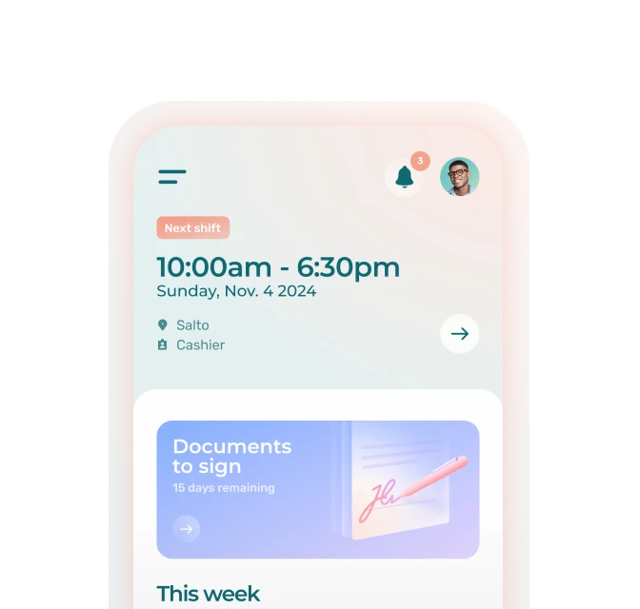
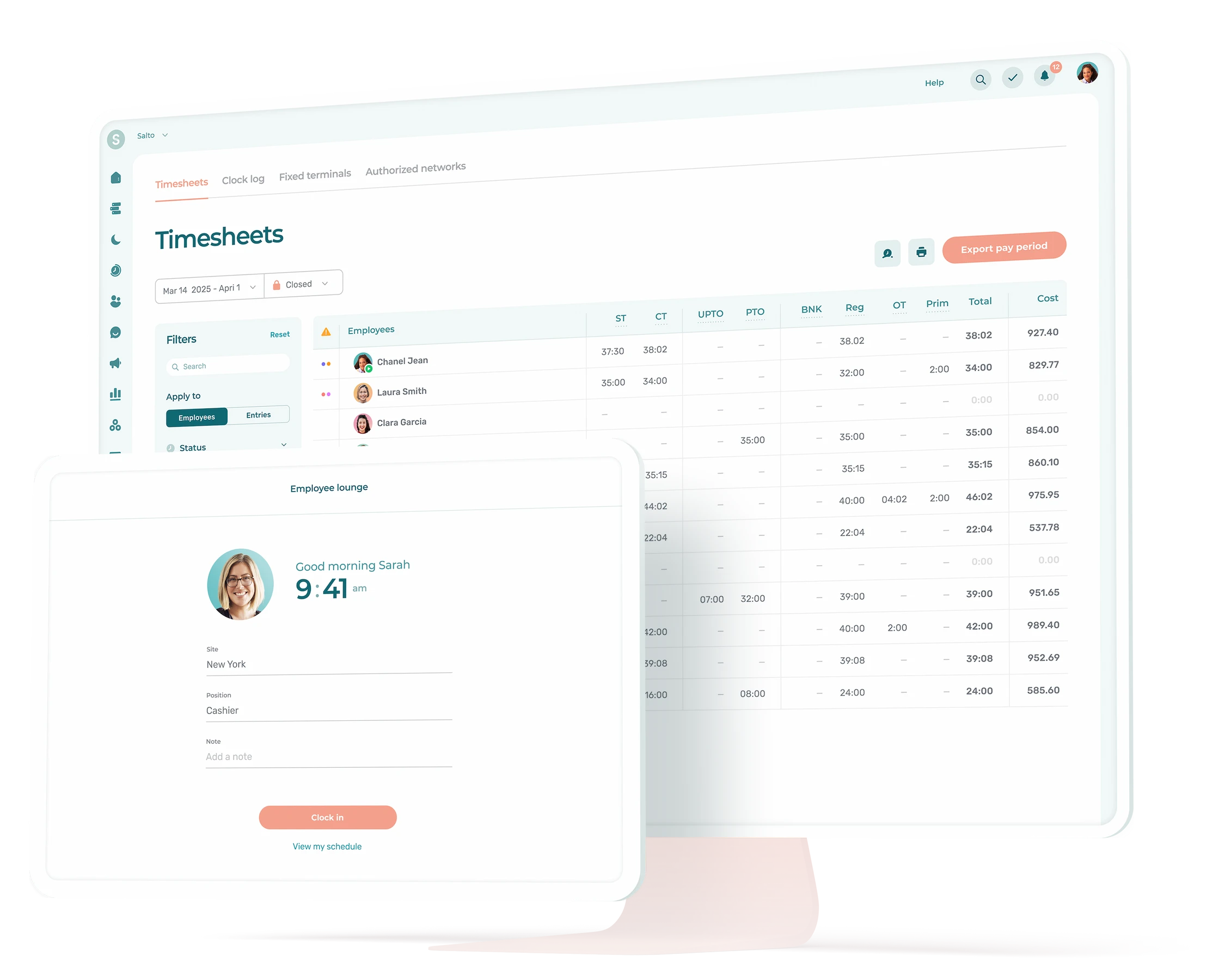
Time and attendance software solves the problem at the source. From timesheets, you bank overtime in a few clicks, with your province’s multiplier applied to the balance. Time off taken is deducted from the bank, and employees see their balance in the mobile app. With Agendrix time banks, there’s no separate file to maintain.
You spend less time reconciling numbers, and you can offer time in lieu without adding to your workload.
Give your team time, not just money
Offering a choice between time and money isn’t just a way to manage costs. It recognizes that your employees don’t all have the same needs: some want a bigger paycheque, others a Friday off. Well managed, banked time gives you that flexibility without losing out.
What’s the difference between banked time and time in lieu?
Banked time usually refers to the balance that builds up, and time in lieu (or TOIL) to the paid time off the employee takes from it. In Canada, both terms describe the same practice: taking overtime as paid time off instead of overtime pay.
How is time in lieu calculated in Canada?
In most provinces, each overtime hour gives 1.5 hours of paid time off, the same multiplier as overtime pay. For example, 4 overtime hours become 6 hours of time in lieu. Alberta is the exception: under an overtime agreement, the minimum is 1 hour of time off per overtime hour. In BC, the bank holds overtime wages rather than hours.
Is banked time legal in Canada?
Yes, in most provinces and territories, as long as you follow local rules: the right ratio, an employee request or agreement, and the deadline to use the hours. New Brunswick doesn’t allow it, and Nova Scotia and Nunavut don’t provide for it in their legislation.
How long do employees have to use banked time?
It depends on where you operate. The limit is 3 months in Ontario, Manitoba, Prince Edward Island, Newfoundland and Labrador, the Northwest Territories, and federally regulated workplaces.
Ontario, Newfoundland and Labrador, and federal employers can extend it to 12 months by agreement. Alberta allows 6 months, and Quebec, Saskatchewan, and Yukon allow 12. BC sets no fixed deadline. After the deadline, unused hours must be paid out.
Can an employer force you to take time in lieu instead of overtime pay?
No. Wherever banked time is allowed, it requires the employee’s request or a mutual agreement. An employer can decline an employee’s request but can’t impose banked time on their own. A collective agreement can set its own terms.
What happens to banked time when an employee quits?
The unused balance must be paid out. The timing varies: with the final pay in Quebec, within 7 days or by the next regular payday (whichever is later) in Ontario, and within 30 days for federally regulated employers. Put it in your policy to avoid any ambiguity when someone leaves.
Do salaried employees get time in lieu?
Usually, yes. A salary doesn’t remove the right to overtime: what counts is the number of hours worked and the employee’s role. Once a salaried employee goes past your province’s threshold, they can bank their overtime like anyone else. Some roles are exempt, notably managers and supervisors and certain professions. Check your province’s exemptions.
How do you track banked time without errors?
Manual tracking on paper or in Excel multiplies gaps between your numbers and your employee’s. Timesheet software that banks overtime directly from timesheets and deducts time off from the balance keeps everyone on the same number, in real time.