Skills-Based Hiring: The Practice That Helps You Hire Better and Keep Your Employees Longer


Key takeaways
- Skills-based hiring evaluates what a candidate can actually do, not just what’s on their resume or in their education.
- It tackles four HR challenges head-on: turnover, the labour shortage, internal hiring, and person-job fit.
- Implementation has two phases: 30 minutes of better-used interview time, followed by 30 days of close follow-up.
- The main trap: confusing being thorough with administrative overhead.
Two candidates drop off their resumes for the same position. On paper, they look alike. What happens next in your selection process decides not just who you’ll hire, but who’ll still be there six months from now.
A 2024 study from the Burning Glass Institute and Harvard Business School puts a number on this intuition: in companies that truly apply skills-based hiring, 58% of new hires are still in their role after two years, compared to 48% with a traditional hiring approach.
Let’s break down the practice and how it applies in a restaurant, a pharmacy, a retail store, and other frontline industries.
What is skills-based hiring?

Skills-based hiring starts from a simple idea: evaluate candidates on their actual ability to do the job, rather than on their resume, previous titles, or education.
In practice, that means structuring the interview around scenarios and situational questions, then filling out a simple evaluation grid. You look at what someone does when faced with a concrete problem, rather than what they say they can do.
The skills to evaluate fall into two complementary categories:
- Hard skills: the technical abilities tied to the role (ringing up a transaction without errors, taking a resident’s vital signs, preparing an order in the right sequence).
- Soft skills: professional posture (staying calm under pressure, handling an upset customer, working with a colleague on the evening shift, learning quickly).
Both count. And both can be evaluated, even in 30 minutes.
Why this practice is gaining ground in 2026
Skills-based hiring is gaining ground in SMBs because it hits four challenges managers know by heart, all at once.
The high cost of turnover
The first challenge is also the most draining. You feel it every time a new hire announces they’re leaving after three months: start over from scratch. Brief the team again. Retrain again. And keep morale up through all of it.
In hourly industries, where the margin on labour costs is thin, this is the number-one issue. Skills-based hiring tackles the problem at the root: a better match upfront makes it more likely your employees will stay. And fewer departures means fewer positions to refill.
That retention gap (from 48% to 58%) represents, for a single position, one or two fewer hires per year.

A labour shortage that’s not going away
Reducing turnover is one thing. You still need a candidate pool to draw from. When you filter on criteria that don’t predict performance (identical previous titles, linear career path, years of experience), you shrink an already tight pool even further.
Skills-based hiring opens the door to parents returning to the workforce, retirees who want to stay active, career changers, and newcomers whose skills aren’t officially recognized.
Internal hiring, easier to structure
Your candidate pool isn’t only external. Your supervisors and team leads are almost always former team members. But the promotion process often rests on a manager’s instinct and an employee’s seniority, more than on clearly demonstrated skills.
When you document your employees’ skills from the moment they’re hired, internal hiring becomes a structured exercise. You know who has shown the abilities required for the next step. And you avoid promoting an excellent salesperson who’ll turn into a mediocre supervisor, simply because they’ve been there three years.
Person-job fit, from day one
The fourth challenge is quieter, but just as decisive: most early resignations come from a bad match, not a bad employee. The person and the role didn’t line up. The resume suggested otherwise.
Evaluating actual skills, not declared ones, significantly improves person-job fit. Which brings us back to challenge #1: fewer bad matches, less turnover.
Make those 30 minutes of interview actually count
Here’s the real practical question: how do you evaluate all these skills when you have 30 minutes, not three hours? The answer starts with a simple observation. The standard interview wastes a lot of time on questions everyone answers the same way. “What are your strengths?” “I’m dynamic and I enjoy teamwork.” You could see that before you even asked.
The skills-based interview replaces those generic questions with scenarios: you place the candidate in a concrete situation and watch their thinking, their reasoning, and the solution they propose.
Questions, by sector
Here’s what that looks like across the sectors we work with.
- In restaurants: “A customer has waited 20 minutes for their food and is calling you over, clearly frustrated. What do you do in the next two minutes?”
- In retail: “A customer is comparing two products and can’t decide. What do you ask her first?”
- In a seniors’ residence: “Mrs. Thompson is refusing her bath this morning and getting agitated. Walk me through what you’d do in the next five minutes.”
- In a vet clinic: “An owner comes to pick up his dog after a procedure. You can see he’s upset. What do you say first?”
- In hospitality: “A guest at the front desk tells you the room isn’t what was advertised and demands an immediate refund. You don’t have the authority for that. How do you handle it?”
Three or four questions like these will give you a far more accurate read on a candidate than five questions about their past experience.


The scoring grid, filled in live
You still need to structure what you observe. During the interview, you fill out a simple grid: three to five targeted skills, a 1-to-5 scale per skill, filled in as you go, not after the fact. If you wait until the end of the day, gut impressions take over and the specific observations get lost.
At the end of the process, you compare scores and written notes, not gut feelings. That’s what raises the quality of the decision.
The first 30 days are the real evaluation
However well run, the interview only gives you 60% of the decision. The first 30 days confirm or invalidate the rest.
This is where you see in the real world what the candidate showed in the interview. Matthew’s speed on complex orders. Stephanie’s patience with anxious residents. Kevin’s accuracy at the register late in the evening.
Three check-ins to plan
So you don’t fly blind through these first weeks, plan three clear check-ins with the new hire.
- Day 7: a 15-minute conversation. What’s clear? What isn’t? Any skills you’d assumed they had that aren’t showing up?
- Day 14: direct observation during a shift. You validate the key technical skills, not just the soft ones.
- Day 30: a broader conversation, anchored on the skills you hired for. A clear decision before the end of probation.
After probation, the same logic carries over into one-on-ones, once a month or as needed, to track how skills evolve over time.
Keep your observations in one place
One last detail often makes the difference between a useful probation and a wasted one: where you record your observations. The classic trap is that notes from the day manager, the evening supervisor, and the team lead end up scattered across sticky notes, text messages, and quick hallway conversations. When it’s time to decide at the end of probation, no one remembers (or finds) the details.
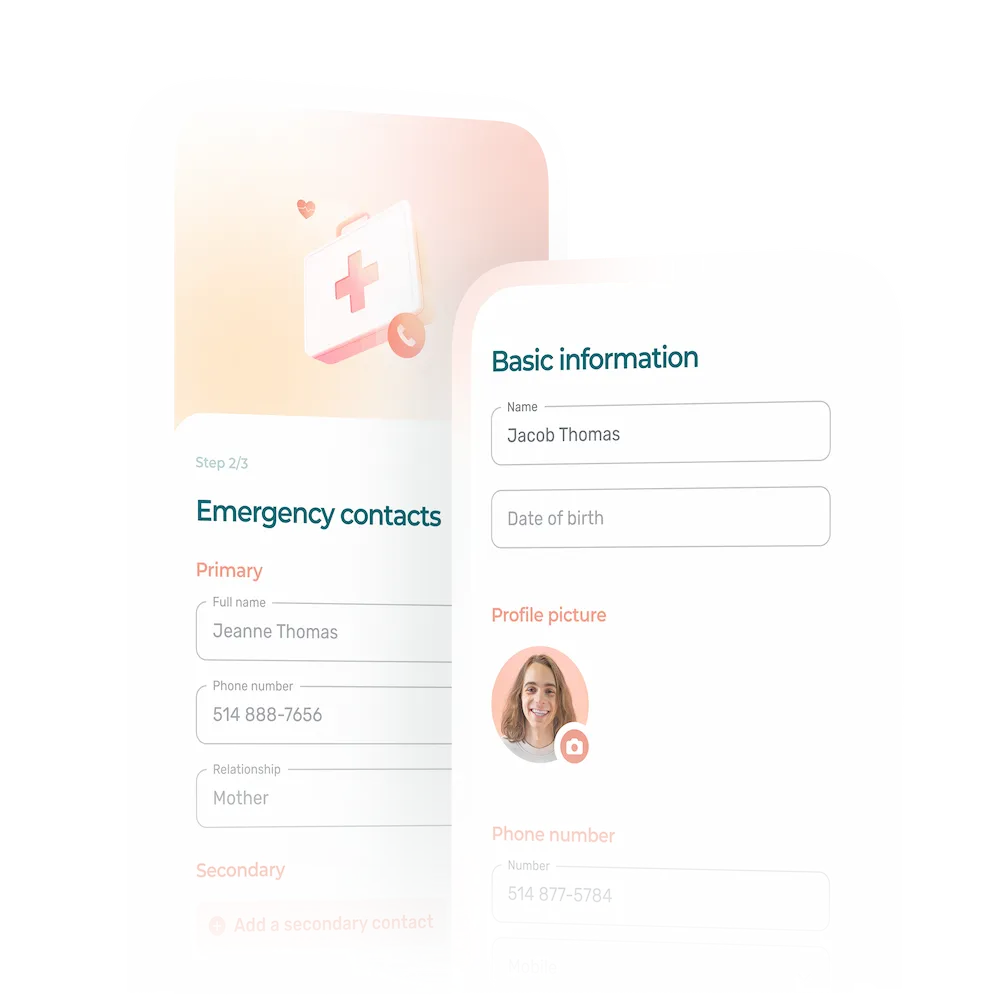
With a team management platform like Agendrix, you can record observations directly in the employee’s profile, set HR reminders for the day-7, day-14, and day-30 check-ins, and keep validated skills together in the person’s file. Every manager who interacts with the new hire sees the same notes in the same place.
Hire on what people can actually do
What a candidate does when faced with a concrete problem in an interview is the best indicator of what they’ll do on the job. Resumes, references, and past work history are useful filters, not proof.
In SMBs, where you’re under pressure to hire fast, rigour in selection is what keeps you from starting the process over three months later.
What is skills-based hiring?
It’s a hiring approach that evaluates candidates on what they can actually do (hard skills and soft skills), rather than on their resume, previous titles, or schooling alone. The main tool is the situational question, paired with a simple evaluation grid filled in during the interview.
Does skills-based hiring replace degree requirements?
No. For regulated roles (personal support workers, pharmacy technicians, veterinary assistants), the diploma is still legally required. Skills-based hiring complements selection once qualified candidates have been identified. For roles without a formal requirement, it becomes the main selection tool.
How do you evaluate soft skills in an interview?
Ask a situational question and watch the answer on three fronts: posture (calm, defensive, open), reasoning (logical, intuitive, structured), and conclusion (concrete action or vague answer). Then validate those observations on the job during the first 30 days.
How can HR software help with skills-based hiring?
A platform like Agendrix doesn’t replace the interview or the manager’s judgment. It takes over after the hire: you record probation observations directly in the new hire’s profile, set reminders for your 7-14-30 day check-ins, and keep validated skills in the same place as shifts, timesheets, and HR documents. Every manager who interacts with the new hire sees the same notes.