

Key takeaways
- One meal break is legally required in most Canadian provinces: 30 minutes after 5 consecutive hours of work.
- Coffee breaks are not required by law anywhere in Canada. If you offer them, they must be paid.
- The meal break is unpaid only when the employee is truly off-duty. If they must remain available, on premises, or in uniform, it counts as paid working time.
- Bathroom breaks are always paid working time and cannot be denied.
Work break laws in Canada are among the most misunderstood rules in workplace compliance, with each province setting its own requirements for meal breaks, coffee breaks, and pay. This 2026 guide breaks down the rules across Quebec, Ontario, British Columbia, Alberta, and federally regulated workplaces.
In most Canadian provinces, employees are entitled to a 30-minute unpaid meal break (often called a lunch break) after 5 consecutive hours of work. Coffee breaks are not legally required. The exact rules vary by province, and federally regulated workplaces follow the Canada Labour Code. Employers must apply the rules of the jurisdiction where the employee works.
As an employer, it’s your responsibility to ensure that you offer break times in accordance with current legislation. And let’s face it, your employees need them to be truly productive at work.
Taking regular breaks increases employee productivity and job satisfaction, reduces the risk of burnout and stress, and improves employee well-being.
Employees say a real lunch break makes them happier and more productive, yet 51% still skip it at least once a week, according to a 2026 report.
Rest periods are therefore as beneficial to employees as they are to the company. They also provide an important moment that helps solidify bonds between staff members and contribute positively to their experience within the company.
In this article, you will learn more about:
- Employers’ legal obligations: length of work breaks, exceptions, remuneration, and consequences of non-compliance
- A foolproof tool to facilitate break time management
Provincial break requirements at a glance
Across Canada, work break laws set out two main entitlements: a mandatory meal break (often called a lunch break) and, in some cases, additional rest periods for longer shifts. The exact rules vary by province and by federally regulated workplace. Here’s how the main jurisdictions compare.
| Jurisdiction | Meal break | Coffee breaks | Notes |
|---|---|---|---|
| Quebec | 30 min after 5 consecutive hours | Not required by law | Meal break paid if employee must remain available |
| Ontario | 30 min after 5 consecutive hours | Not required by law | Can be split into two periods totaling 30 min, by agreement |
| British Columbia | 30 min after 5 consecutive hours | Not required by law | Meal break paid if employee required to remain available |
| Alberta | 30 min after 5 hours (or 2 × 15-min) | Not required by law | Additional break required for shifts over 10 hours |
| Federal (Canada Labour Code) | 30 min every 5 consecutive hours (unpaid) | Not required by law | Applies to banks, telecoms, interprovincial transport |
How many breaks per shift in Quebec (and Canada)
Most Canadian provinces follow the same baseline: one 30-minute meal break after 5 consecutive hours of work. Whether you get coffee breaks on top depends on your employer’s policy, not the law.
| Shift length | Mandatory breaks in Quebec | Notes |
|---|---|---|
| Less than 5 hours | None required | Coffee breaks at employer’s discretion |
| 5 to 6 hours | One 30-min meal break | After 5 consecutive hours of work |
| 8 hours | One 30-min meal break | Most provinces follow the same rule |
| 10 hours | One 30-min meal break | Alberta requires an additional break beyond 10 hours |
| 12 hours | One 30-min meal break | Federally regulated workers may get additional breaks |
Four things employers commonly miss about work breaks
1. Coffee breaks are a discretionary policy, not a legal obligation. In every Canadian province, the 15-minute coffee break is a workplace culture norm, not a legal requirement. Employers can offer them, but no jurisdiction mandates them.
💡 Just because they’re not required doesn’t mean they don’t matter. Offering regular coffee breaks helps your team stay focused, reduces burnout risk, and signals that you care about more than the legal minimum.
2. Bathroom breaks are not “breaks” under the law. They cannot legally be denied and are treated as paid working time. Excessively monitoring or restricting them can expose an employer to a discrimination or health-and-safety claim.
3. Pregnancy, breastfeeding, and medical needs can require additional breaks. In the provinces, they come from the human rights duty to accommodate, assessed case by case: it’s not a fixed entitlement.
4. The 30-minute meal break is only unpaid if the employee is truly off-duty. If an employee must remain available, stay on the premises, or stay in uniform during the break, it counts as paid working time. This applies regardless of what the employer’s policy says.
Breaks are just one piece of your scheduling compliance picture. For a broader view of employer obligations around work hours, schedule changes, and required notice periods, see our guide on work schedule obligations.
Mandatory work breaks: what does the law say?
The law clearly defines employers’ obligations when it comes to breaks.
On the other hand, it’s important to note that the laws put in place are designed to ensure minimum standards. As such, they are not necessarily the best practices to follow. Most employers offer more break time than the law allows.
💡 Some employers must also comply with collective agreements or contractual provisions that differ from what the law stipulates, as is often the case in the healthcare or seniors’ residences sectors, for example.
How long is the break during the working day?
Break time in Quebec
In Quebec, employers are required to offer their employees a 30-minute (unpaid) meal break after 5 consecutive hours of work. During this break, the employee is not deemed to be available to the employer. They can therefore spend their time as they wish. This break cannot be split.
Employers can determine when breaks are taken, or leave them to the discretion of employees. Generally speaking, the conditions surrounding breaks are identified in employment contracts.
In all cases, the length of breaks required for employees to complete their tasks and rest adequately depends largely on the industry. For example, employees in a restaurant will not have the same reality as those in a call center or pharmacy.
Are the rules on break times different for night shifts?
Break times for night shifts are governed by the same laws as for day or evening shifts in Quebec. If additional break times are offered by the employer, they must be defined in the employment contract or agreement and remunerated.
To ensure employee productivity and efficiency, employers should offer extra breaks, especially during night shifts. These shifts are more difficult for employees, and offering more rest time can help them stay more focused and motivated.
Paying for work breaks
Meal breaks are not paid in Quebec. However, if the employer decides to offer additional break time, it must be paid for.
In Quebec, employers are not required to offer additional break times, but it is a widespread practice given all the associated benefits. Employees are generally not allowed to leave early just because they haven’t taken a break, since this time is paid for by the employer. The break must therefore be taken during the shift to allow the employee to rest.
What happens if an employer doesn’t respect break times?
If an employer does not respect the duration of the break to which employees are entitled, they can lodge a complaint with the competent authorities.
In Quebec, employees can contact the CNESST.
Can an employer deny employees a break?
Employers are required by law to let their employees take a meal break after a certain number of consecutive working hours. They can leave it up to employees to decide when to take their break, or set a specific time for them to do so.
However, employers may refuse to allow an employee to take a coffee break, since this is not required by law. They may not, however, prevent an employee from using the bathroom.
Break time: a productivity factor
Offering your employees more breaks and rest time shows that you care about their well-being at work. It’s also a widespread practice that contributes directly to your company’s reputation.
6 benefits of taking work breaks
1. Breaks reduce stress. They let employees decompress. After a difficult customer, a short break helps someone come back calmer and give the next person better service.
2. Skipping breaks fuels burnout. Rest lowers burnout risk, and younger workers are the most exposed.
3. Breaks build team cohesion. Better relationships between coworkers strengthen the team and the sense of belonging.
4. Breaks prevent eye strain. For screen work (call centre, office), stepping away from the screen rests the eyes.
5. Rested employees are more productive. Focus drops when the brain repeats the same task too long; short breaks restart it. As a manager, lead by example and put breaks on the schedule so you keep enough coverage.
6. Breaks are good for mental health. They give employees room to step back, vent frustration, and regain motivation.
Tips for optimizing breaks
There’s no single formula. Some experts recommend short, frequent breaks (say five minutes an hour) to limit mental fatigue; others prefer longer breaks that let people truly unplug. Pick what fits your team, and when you can, let employees choose their timing so you don’t cut their momentum.
Signs an employee should take a break
- They can’t concentrate effectively anymore
- They need to stretch or move
- They’re feeling frustrated
- They’re hungry
- They need to step back
Use time and attendance software to simplify break management
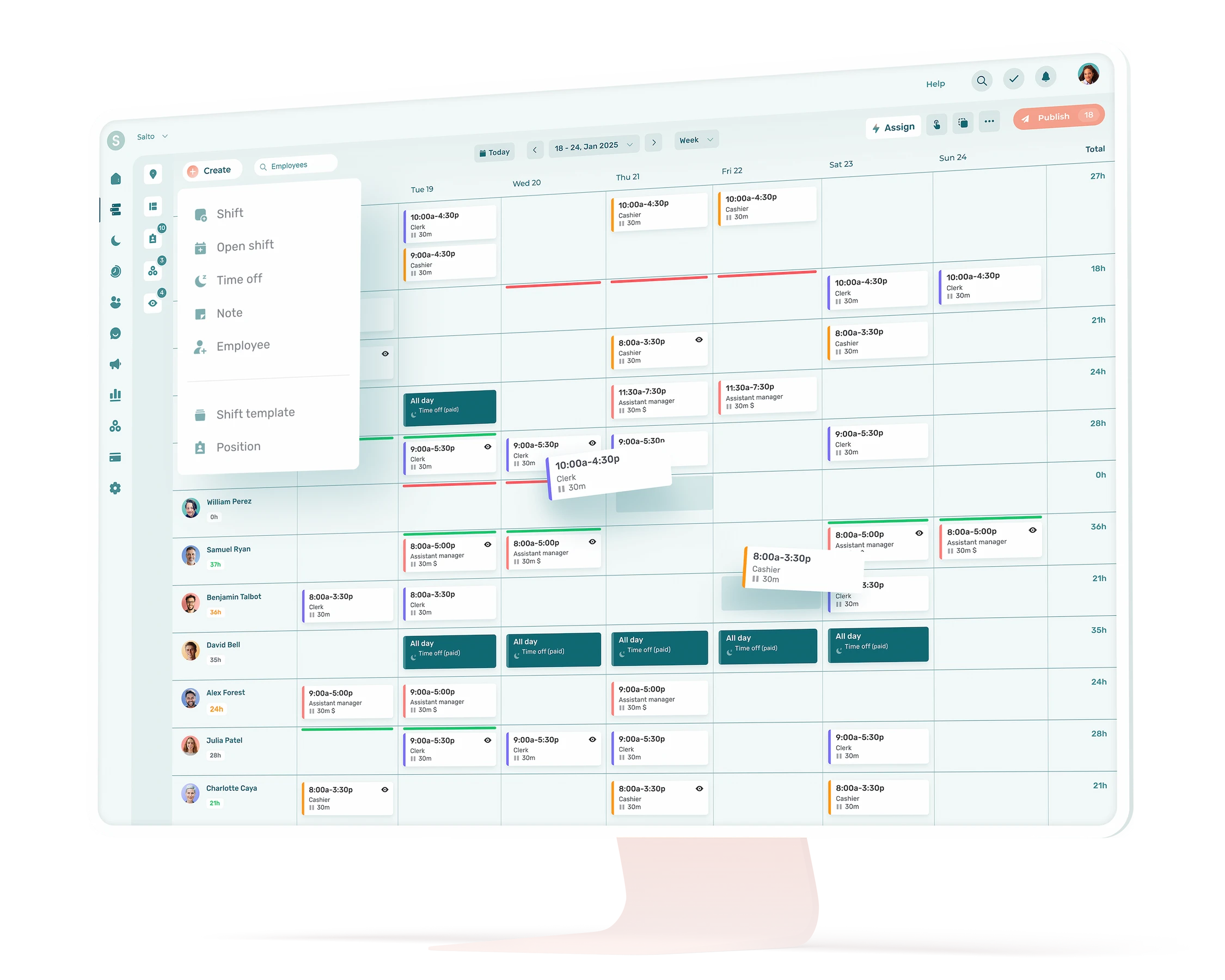
The most effective way to ensure that your employees take their breaks, and that they do so at the right time, is to schedule them.
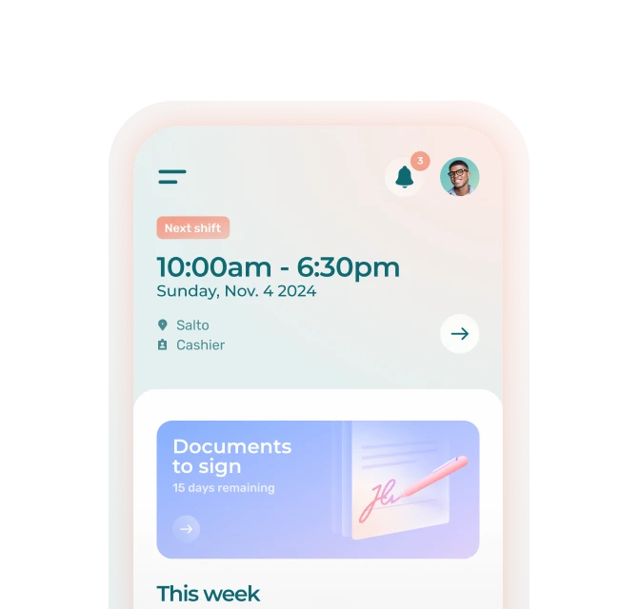
With time and attendance software like Agendrix, it’s easy to do. You can add break automation parameters according to your needs and the legislation or constraints to comply with. You can determine the duration of breaks, whether they are paid or unpaid, to which type of shift they apply, and even the branch concerned.
Once the settings have been saved, the applicable breaks will be added directly to your employees’ shifts. This way, you’ll always be sure to comply not only with the various laws in place, but also with the provisions of agreements and employee contracts.
For example, you could determine that employees who work a 6-hour shift are entitled to 30 minutes of unpaid meal break and 15 minutes of paid break. The actual working time would then be 5.5 hours.
Employees who work 8-hour shifts might be entitled to 30 minutes of unpaid meal break and 2 x 15-minute paid breaks. The actual working time would then be 7.5 hours.
Simplified time and attendance
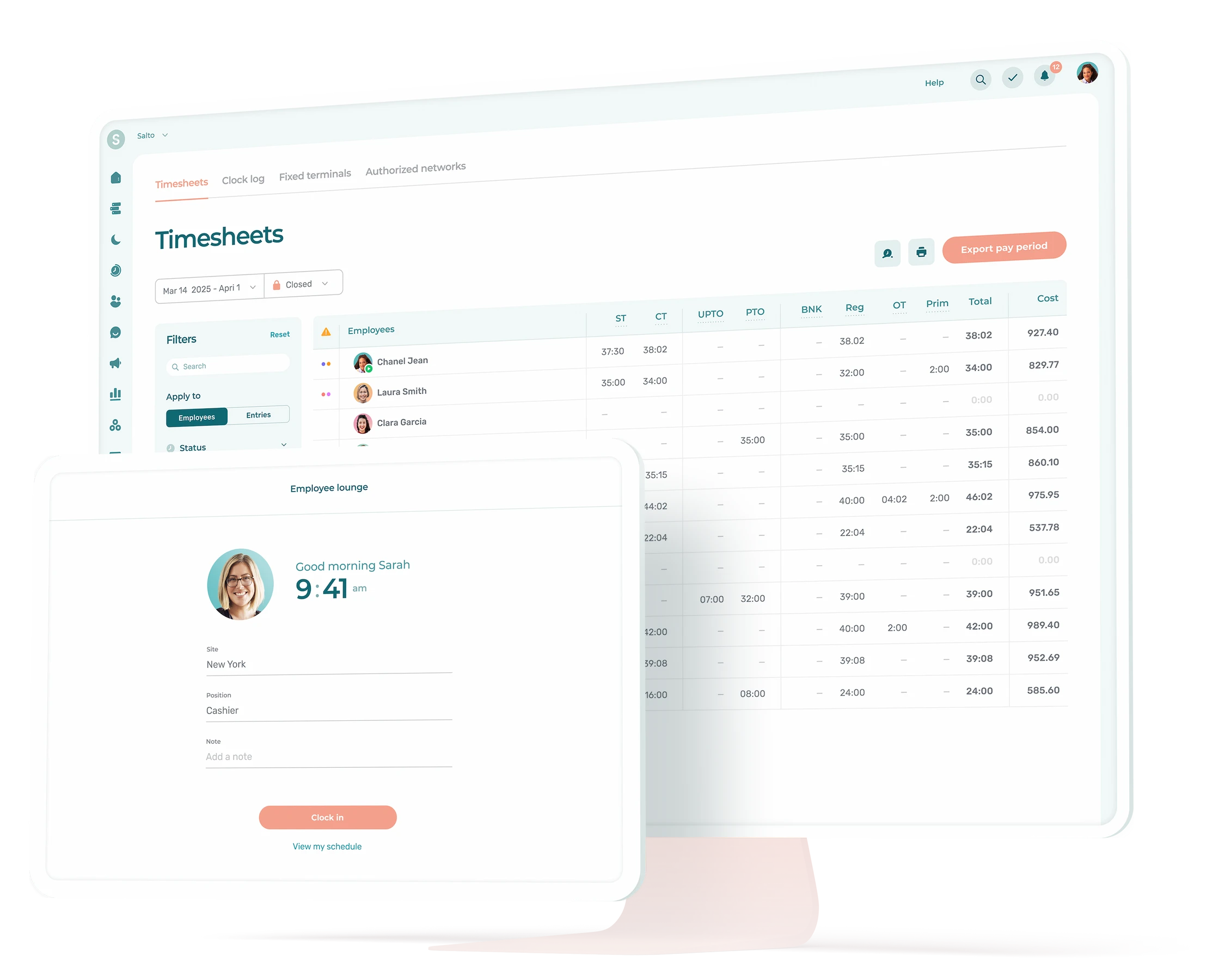
With time and attendance software, employees clock in, take breaks, and clock out directly from the software. As a result, timesheets are filled in automatically and working hours are calculated quickly.
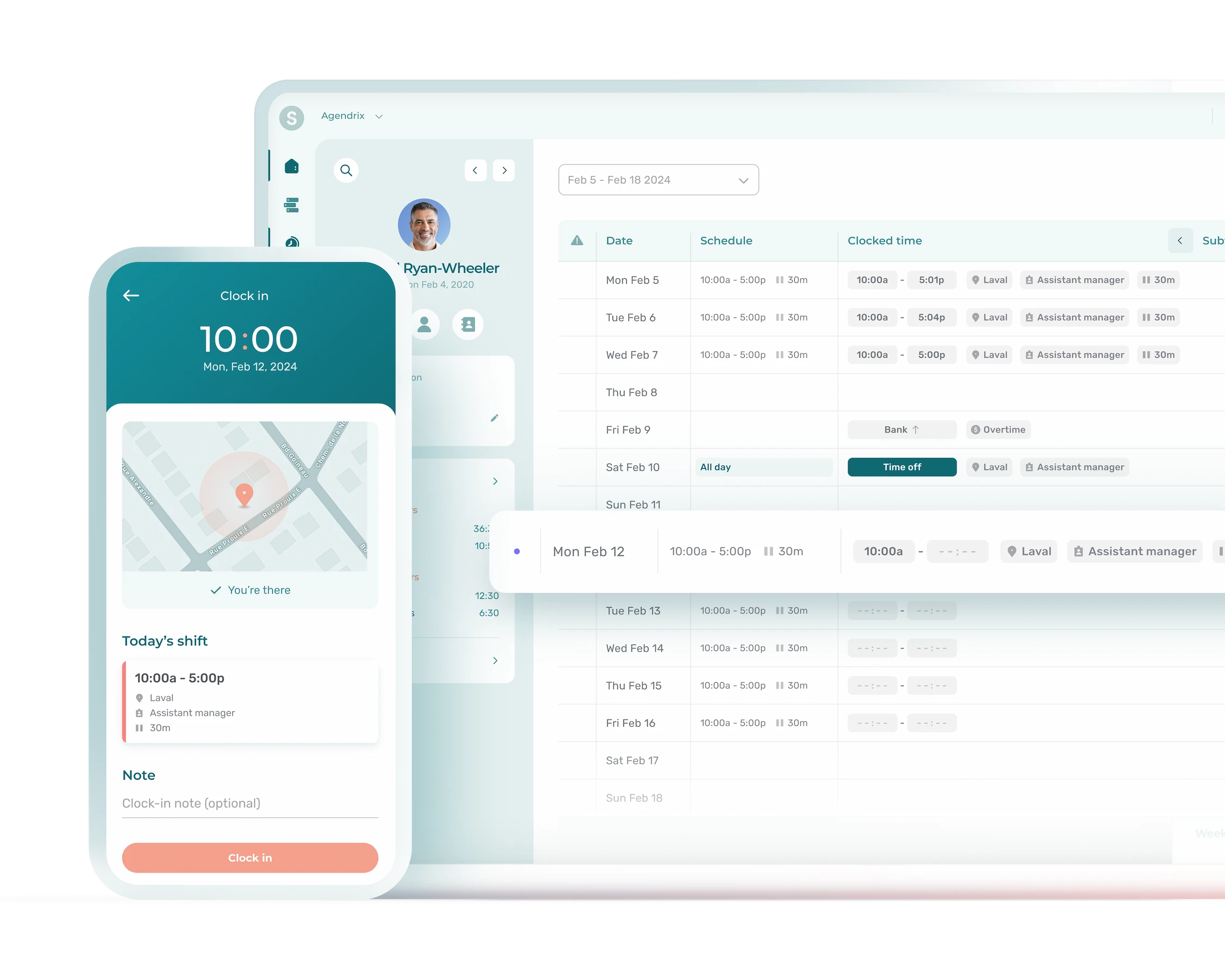
For example, Martine, manager at the Les Enfants Terribles restaurant, used to spend 3 hours a week validating timesheets, whereas with Agendrix, this task only takes 30 minutes.
Timesheet and payroll errors are also reduced. Paid and unpaid breaks are calculated automatically, saving managers an enormous amount of time.
The bottom line on Canadian break laws
Work break laws in Canada share a common baseline, but the details vary by jurisdiction. The smartest move for any employer is to document break entitlements directly in your scheduling system, communicate them clearly to your team, and audit your policies when provincial or federal rules change. This protects your business from compliance risk and signals to employees that their rights matter.
Are coffee breaks required by law in Canada?
No. Coffee breaks are not required in any Canadian province. Employers can offer them as a policy or contract benefit, but no jurisdiction sets a statutory minimum.
How long is a meal break in Quebec?
30 minutes, after 5 consecutive hours of work. The break is unpaid unless the employee must remain available to the employer during it.
Can my employer deny me a break?
An employer cannot deny a legally required meal break. They can decline a coffee break, since coffee breaks are not legally mandated. They cannot deny reasonable bathroom or medical breaks.
Do breaks have to be paid?
The standard 30-minute meal break is unpaid in most provinces. It becomes paid when the employee must remain available during the break, or when an employment contract or collective agreement specifies paid breaks.
What is the rule for breaks during a 12-hour shift?
In Quebec and most provinces, employers are only required to provide one 30-minute meal break, regardless of shift length. Alberta requires an additional break for shifts longer than 10 hours.
Are washroom breaks counted as work time?
Yes. Reasonable washroom breaks are treated as paid working time in every Canadian jurisdiction.
How long is a break for an 8-hour shift?
In Quebec, an 8-hour shift requires one 30-minute meal break after 5 consecutive hours of work. Many employers also offer one or two paid 15-minute coffee breaks as a workplace policy, but these are not legally required.
Do break rules apply to remote or hybrid workers?
Yes. Break entitlements apply equally to remote and on-site work. The challenge is enforcement: scheduling breaks directly in your team’s calendar or time-tracking software helps ensure remote employees actually take their entitled breaks.