

Key takeaways
- Keep your cool. The first few minutes set the tone for the whole transition. Acknowledge the news, say thank you and keep the relationship intact.
- Know your legal obligations. When an employee leaves, you must pay out their final wages and vacation pay, and issue a Record of Employment (ROE). The exact rules depend on your province’s employment standards.
- Employees owe notice too. Depending on your province, the law either sets a minimum notice period or simply requires “reasonable” notice. Either way, it’s worth spelling it out in your employment contracts.
- Scheduling is your blind spot. Filling the shifts they leave behind without burning out the rest of your team takes a real plan, not last-minute scrambling.
- A well-handled departure pays off. An employee who leaves on good terms becomes an ambassador for your business, and sometimes even comes back to work for you.
One of your employees just resigned. The next few days will shape how this transition goes for everyone. Here’s how to look after your team, meet your legal obligations, and part on good terms.
In a store, a restaurant, or a health clinic, a departure is never just a position to fill. There are shifts to cover, a final paycheque to get right, a team to keep steady, and a former employee to stay on good terms with. Resignation management doesn’t have to be overwhelming, as long as you know where to start.
Responding the right way when an employee resigns

Nobody likes hearing that an employee is leaving, especially a good one, and even more so when you’re already short-staffed on the floor. But your first reaction makes a big difference. A manager who sighs, gets defensive, or cuts the conversation short sends a clear message to the rest of the team: leaving means betrayal.
Do the opposite. Take the news calmly, thank the person for everything they’ve brought to the team and ask why they’ve decided to leave. You don’t need to have an answer ready on the spot. If the employee is valuable and the door isn’t fully closed, there’s nothing wrong with asking what might change their mind. Sometimes it’s a scheduling or pay issue you can fix. Sometimes it isn’t, and you need to know when to let go.
Ask for the resignation in writing, too. The law doesn’t require it (a verbal resignation is valid), but that doesn’t make it useless paperwork. A written resignation confirms the last day of work in black and white and avoids any confusion about the end date, especially if notice becomes a source of disagreement later.
How a job ends is part of the employee experience, just as much as the first days on the job.
Once the dust settles, you’ll need to break the news to the rest of the team, which can be a delicate task. Here’s our advice on how to announce an employee’s departure the right way.
Your legal obligations when an employee resigns
This is where things get technical, and where a mistake can be costly. In Canada, most businesses follow the employment standards of their province or territory. Federally regulated businesses, like banks, airlines, and telecom companies, follow the Canada Labour Code instead. The details vary from one province to another, but the main obligations are the same everywhere.
Final pay. You must pay the employee every amount they’re owed: wages, accumulated overtime, and vacation pay. Each province sets its own deadline for this final payment, so check your provincial employment standards to make sure you pay on time.
Vacation pay. If the employee has earned vacation pay for time off they haven’t taken, you must pay it out when they leave. In most provinces, the minimum is 4% of gross wages, and the rate usually goes up after a certain number of years of service. Saskatchewan is an exception, with a higher starting rate.
In Ontario, the province ran more than 14,000 employment standards claim investigations in 2025–2026. The two most common violations were unpaid wages and unpaid vacation pay. (Government of Ontario, 2026)
Record of Employment (ROE). When an employee quits, you must issue a Record of Employment. This applies in every province, even if the employee doesn’t plan to apply for Employment Insurance (EI). Service Canada uses this document to decide whether a person qualifies for EI benefits. You generally have five calendar days to issue it, but the exact deadline depends on your pay period and on whether you file online or on paper. A late ROE can delay your former employee’s benefits.
Watch out for constructive dismissal. If you indirectly push an employee out the door (by cutting their hours significantly, demoting them, or taking away responsibilities), the law could treat their “resignation” as a dismissal. This is called constructive dismissal. Picture an experienced server whose hours you drop from 35 to 12 a week, hoping they’ll eventually leave on her own. Even if she’s the one who hands in her resignation, the law could see it as a dismissal.
Resignation notice: what the law says
The rules on resignation notice aren’t the same across Canada, and they surprise a lot of managers.
In some provinces and territories, the law sets a minimum notice period that employees must give when they quit. This is the case in Alberta, Saskatchewan, Manitoba, Nova Scotia, Prince Edward Island, Newfoundland and Labrador, and Yukon. The minimum usually depends on how long the person has worked for you. In Saskatchewan, for example, employees who have worked for you for more than 13 weeks must give at least two weeks’ notice in writing.
Everywhere else, employment standards don’t set a minimum. Employees are still expected to give “reasonable notice,” based on rules set by the courts (or by the Civil Code in Quebec). But nothing says exactly how long that is.
In practice, that means two things. First, the classic “two weeks’ notice” isn’t a rule everywhere: depending on your province, it’s either a legal minimum or simply a common practice. Second, if you want a specific notice period, the most reliable way to get one is to write it into the employment contract.
What if an employee quits on the spot, with no notice at all? It happens, especially with a young workforce that changes jobs often. You can’t force them to stay, and you can’t hold back pay for work they’ve already done. What you can do is document the situation and, if they didn’t give the notice required by law or by their contract, talk it over with an HR or legal advisor.
Covering the shifts left behind
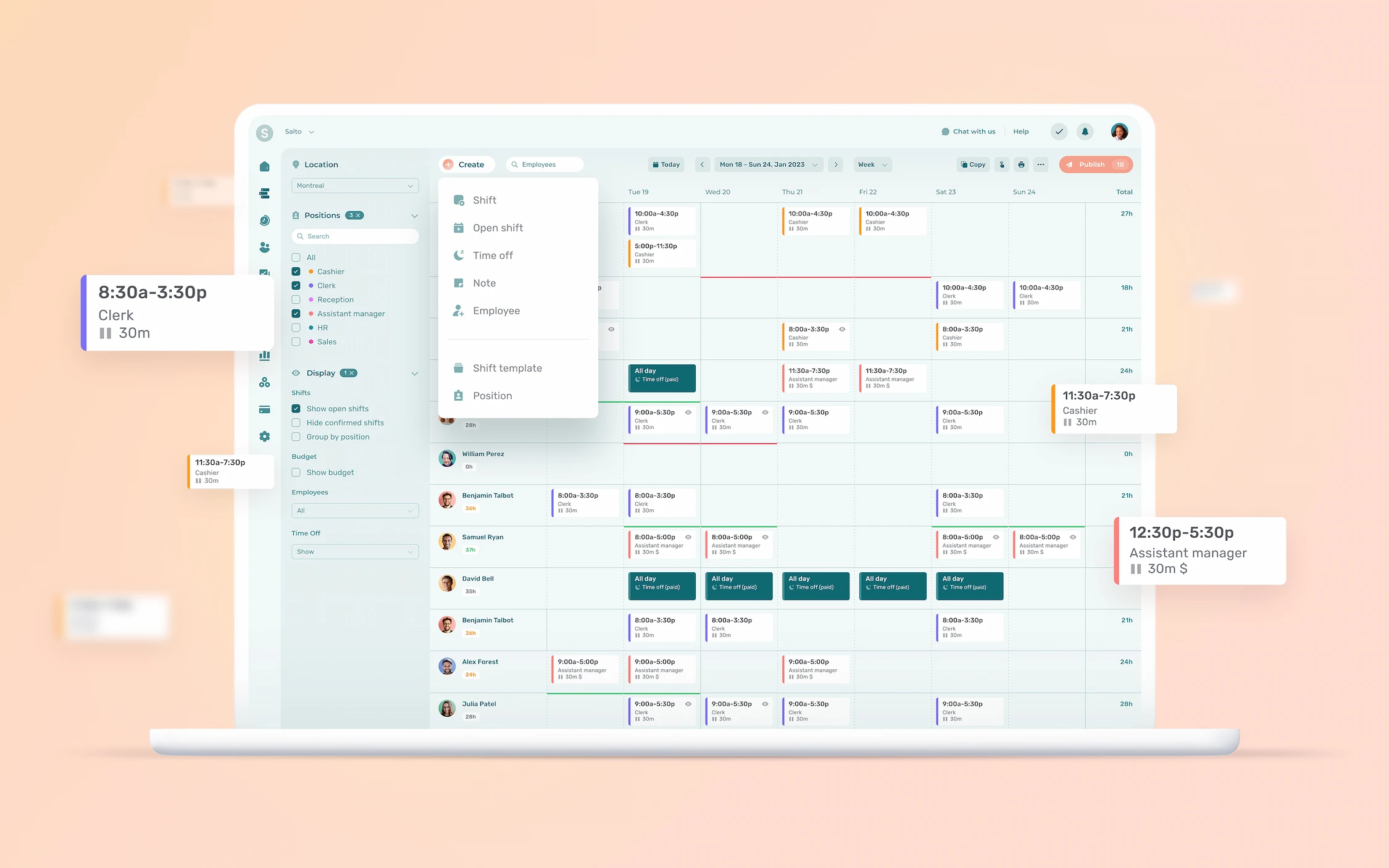
This is the step generic articles on resignation always miss, because they’re written with office jobs in mind. In a restaurant, a pharmacy, or a retail store, a departure isn’t just an empty position. It’s a whole series of shifts already on the schedule that suddenly have no one to work them.
Say an employee gives you two weeks’ notice on a Friday night. They could still have a dozen shifts on the schedule, sometimes weekend opening shifts nobody else wants. Every shift you don’t fill leaves you short-staffed.
Start on this early, well before the employee’s last day. Here’s how:
- Identify every shift the departing employee is scheduled for, including the coming weeks.
- Figure out who on your team has the availability and skills to pick them up, without overloading anyone.
- Resist the urge to hand everything to your most reliable employees. It’s the fastest way to trigger a second resignation.
- Use this as a chance to see whether some shifts could be reorganized instead of simply reassigned.
The right employee scheduling software makes this a lot less painful. You can see availability, open shifts, and who’s getting close to overtime at a glance.
Getting back equipment and access
Before the employee leaves for good, go over the equipment they have and the systems they can access.
A short checklist does the job:
- Keys, access cards, uniforms, and any loaned equipment
- Shared codes and passwords (cash register, software, company social media accounts)
- Access to online tools, email, and management apps
- Any device provided by the employer (phone, tablet, computer)
Remember to record everything in the employee’s records: last day worked, equipment returned, final pay issued. If a dispute comes up later, this written record can protect you.
Turning a departure into a chance to improve
A well-handled departure also gives you free insight into your workplace. That’s exactly what an exit interview is for: understanding why the person is leaving and spotting what you could improve before others follow.
Keep it simple. A few open-ended questions, a neutral tone, and above all, no pressure. An employee who feels judged won’t tell you anything useful. If you’re looking for ideas, we’ve put together a list of exit interview questions you can use.
Keep in mind that offboarding is just as important as onboarding. An employee who leaves on good terms speaks well of you, sends candidates your way, and sometimes comes back knocking a few years later.
Leading by example with a young team

If your team includes a lot of young people and students, you have an opportunity that many managers miss. For many of your employees, this is their first real job. The way you handle a departure, whether it’s theirs or a colleague’s, shows them how these things are done in the working world.
Take Thomas, 17, who just started his first job as a clerk at your grocery store. If he sees an older colleague leave on good terms, thanked in front of everyone instead of quietly shown the door, that’s the example he’ll remember. A manager who stays respectful, thanks the person who’s leaving, and wraps things up properly proves that you can leave a job with your head held high. Your young employees will carry that lesson into every job they have, and maybe even into how they manage a team of their own someday.
And honestly, that’s also what will keep them speaking well of you long after they’ve moved on.
Treat every exit like a first day
Nobody hires an employee while thinking about their last day. Still, the way someone leaves deserves the same care as the way they arrive. A clean, respectful, well-organized departure isn’t just a box to check. It’s what decides whether people remember you as a good employer or not.
👉 Want to keep your schedules, HR files, and employee departures in order? See how Agendrix makes managing your team simpler.
Do employees have to give notice when they resign in Canada?
It depends on your province. Some provinces and territories, like Alberta, Saskatchewan, and Manitoba, set a minimum notice period in their employment standards. Everywhere else, employees are expected to give “reasonable notice,” but there’s no set length. If you want to require a specific notice period, state it clearly in the employment contract.
What do I have to pay an employee who resigns?
You must pay them everything they’re owed: wages, overtime, and any vacation pay they’ve earned. In most provinces, vacation pay is at least 4% of gross wages. Your provincial employment standards set the deadline for this final payment.
Do I have to issue a Record of Employment when an employee quits?
Yes. You must issue a Record of Employment (ROE) every time an employee leaves, in every province, even if they don’t plan to apply for Employment Insurance. You generally have five calendar days to do it, but the exact deadline depends on your pay period and on whether you file online or on paper.
Do I have to provide a reference letter?
No. You’re not legally required to write a reference letter. In Quebec, however, if the employee asks for a certificate of employment (which only confirms the type of job they held and how long they worked for you), you must provide one.
Can I refuse an employee's resignation?
No. An employer can’t refuse a resignation that’s given freely and voluntarily. You can, however, talk with the employee about why they’re leaving and, if it makes sense, try to keep them before they go.
What is constructive dismissal?
It’s when an employer makes major changes to an employee’s working conditions without their agreement, such as a sharp drop in hours, a demotion, or a loss of responsibilities. The changes go so far that they push the employee to resign. The resignation can then be treated as a dismissal, which means you could owe the employee the same notice or termination pay as if you had let them go.
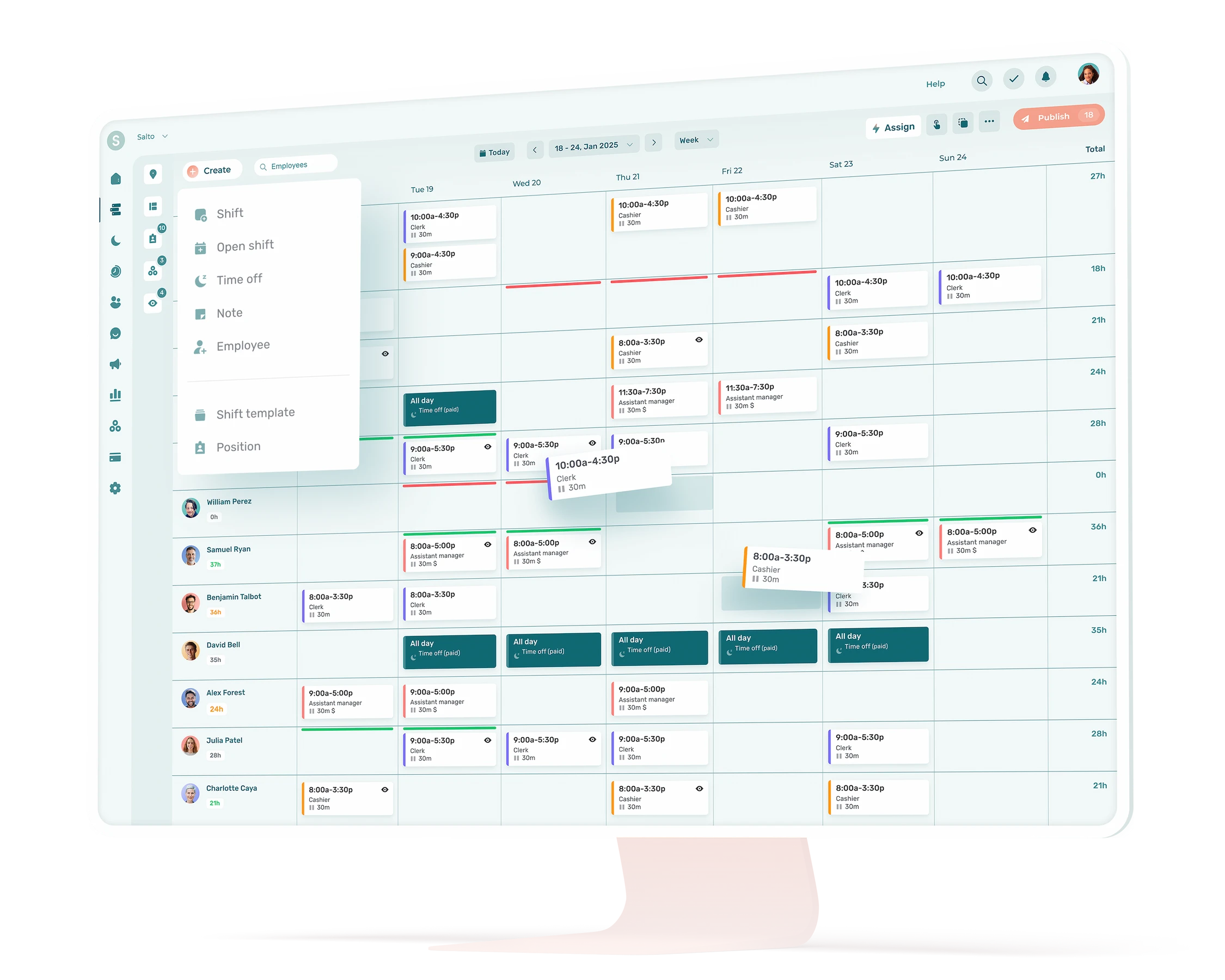
How do I handle the shifts of an employee who resigns?
Identify all of their scheduled shifts early, including those in the coming weeks. Then reassign them based on your team’s availability and skills, without overloading your most reliable employees. Employee scheduling software makes this much easier.